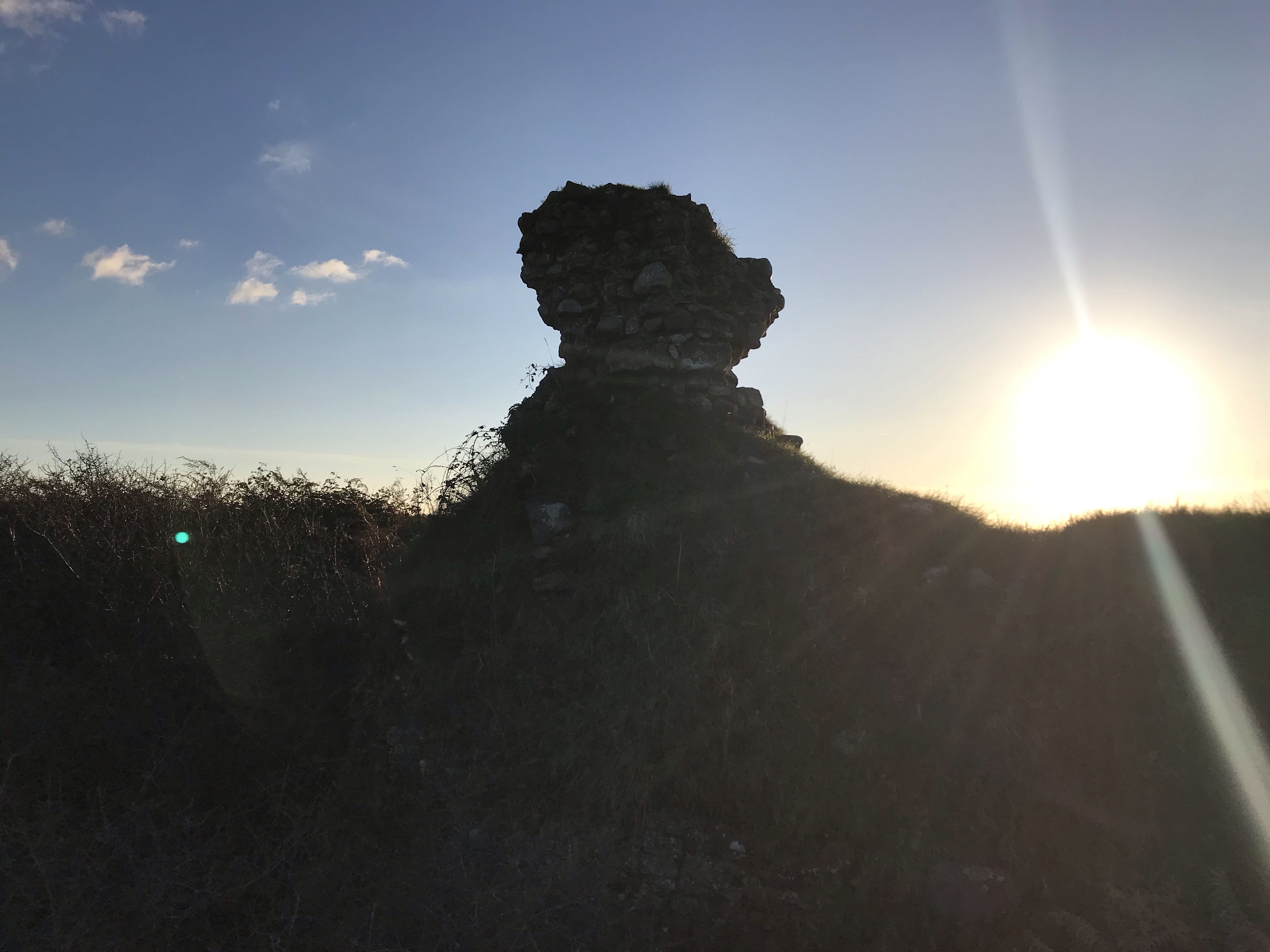
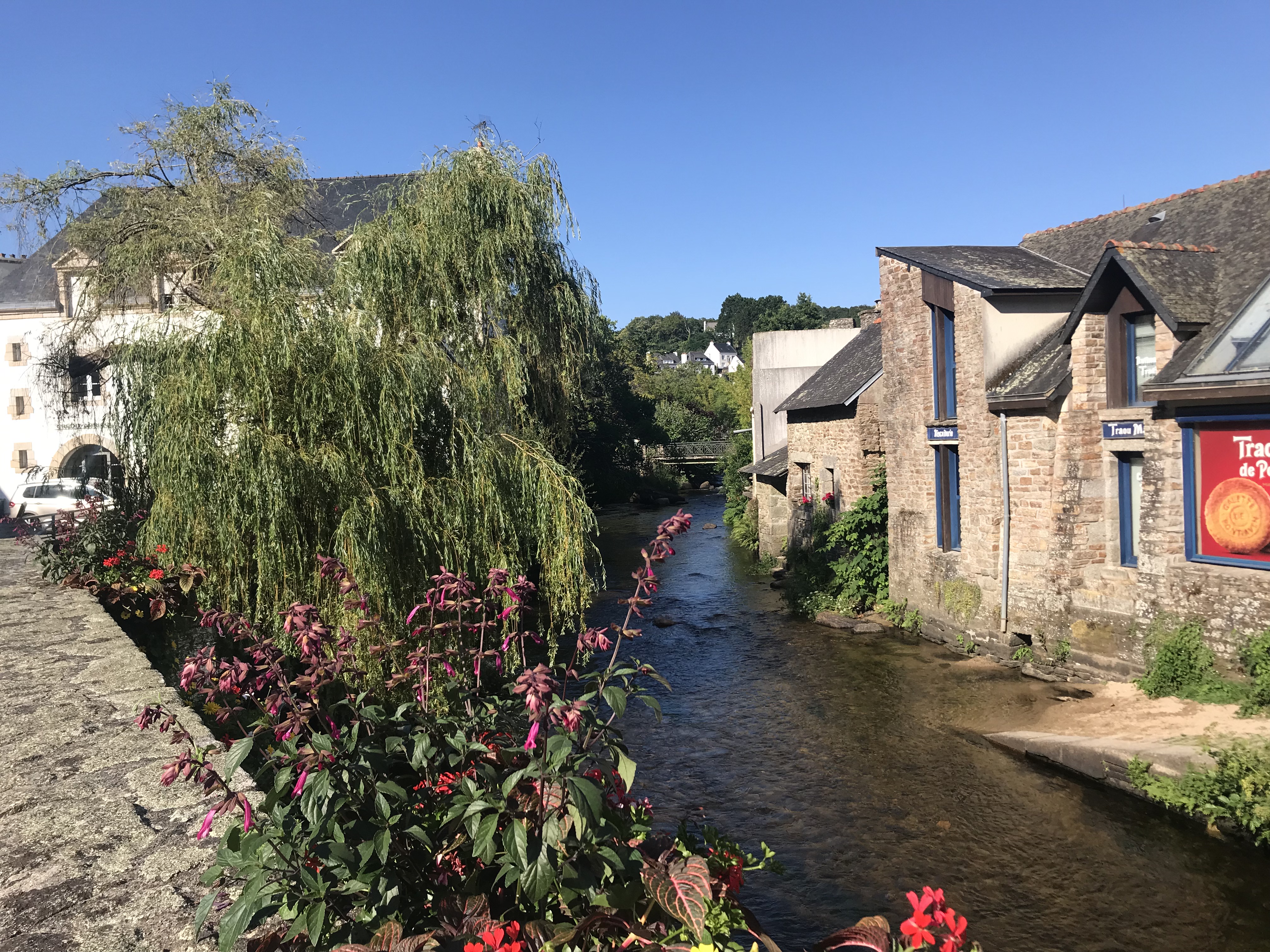
The Glamorgan History Walks was a walking festival of immersive history and storytelling that took ramblers around places of historic interest throughout South Wales. Bringing the stories of those places to life.
Between May and July in the Summer of 2024, over 350 people joined us on 15 walks to over 50 sites of historic interest in various locations across the counties of Bridgend, Vale of Glamorgan and Rhondda Cynon Taff.
We took in many castles, hill forts, barracks, burial chambers and tombs, great houses, churches, the site of lost settlements, smugglers’ coves and pirates’ hideaways. Even the odd battlefield, Prisoner of War camp, windmill and lighthouse. And of course, some great old pubs.
The festival was a great success. But it is not without its legacy.
All of the walks we did are now available to download for free, so you can be guided around them using the GPS on your mobile phone. You can also read notes on the routes and places you visit, and see which periods of history are relevant to those places. You can even watch videos to bring their stories to life.
Start your journey by visiting the Glamorgan History Walks web page. Choose a walk from the list and click through to the relevant page. To use the maps you will need to download the OS Maps App (which is also free).
The places we went to included:
Dunraven and Ogmore Castles
Llantwit Major
Monknash and St Donats
Barry and Porthkerry
Llantrisant
St Athan and Gileston
Llangynwyd
Coity
Merthyr Mawr and Island Farm POW camp
Kenfig Pool and Castle and Sker House
Mynydd Y Gaer and Peterston Super Montum
Cefn Cribwr, Bedford Iron Works and Sturmi Castle
Newton and Candleston
Dinas Powys
Cowbridge and St Hilary
Get out into the great and beautiful scenery of South Wales and enjoy everything these walks have to offer.
It has been raining so hard for so long here in Wales lately that I’m beginning to forget that it ever wasn’t raining. A depressing prospect for someone who loves nothing more than taking a walk around some local, historic monuments or sites of historic or legendary interest. Without having to wipe raindrops off my glasses to be able to appreciate them.
But of course we had a glorious Summer last year. So, the time has come to start looking forward and thinking about what we are going to do when weekends start to get warmer and dryer. When it stays light well into the evening.
To that effect I am planning a programme of history walks and talks this summer which I am inviting you to join me on. The plan is that they will all incorporate the following magical ingredients:
Walks of between 4 & 6 miles for various abilities
Start times around 9:00am
Beautiful Welsh countryside
Places of historical interest
The setting of some of Wales’ most wonderful legends and folklore
An author and broadcaster of Welsh history and other experts to tell the stories, sing the songs and bring them to life
Some weather (not necessarily sunshine, but definitely something!)
Some fun and laughs along the way
Always ending up at a pub for lunch and refreshments.
Jasper the history hound guarding my seat
This is roughly how the progamme is likely to look, but at this early stage it is subject to change:
History Walks and Talks in the Vale | May 2024
Saturday 4th May: Southerndown – Dunraven – St Brides – Ogmore Castle – Ogmore Estuary – The Three Golden Cups.
Saturday 11th May: Llantwit Major Square – The Castle Ditches – Collhugh Beach – Tresilian Bay – The Olde Swan Inn
Saturday 18th May: Monknash – Wick Beach – Nash Point – St Donats – The Plough & Harrow
Saturday 25th May: Dinas Powys Square – St George Woods – The Iron age Fort – Salmon leaps – The Star Inn
Bank Holiday Monday 27th May: St Athan – Berkerolles Tombs – East Orchard Castle – Boys Village – Gileston Manor – The Roost
History Walks and Talks in Bridgend | June 2024
Saturday 1st June: Ogmore Castle – Merthyr Mawr – Candleston Castle – Dipping Bridge – The Pelican in her Piety
Saturday 8th June: Coity Castle – Coity Common – Hendre – The Five Bells
Saturday 15th June: Llangynwyd Village – Llangynywd Castle & Woods – Gelli Lenor Fawr – The Old House Inn
Saturday 22nd June: Blackmill – Primaevel Woods – Mynydd Y Gaer – Peterston Super Montum – The Fox and Hounds
Saturday 29th June: Kenfig Pool – Sker House – Kenfig Castle – Mawdlam Church – The Prince of Wales
If there is enough demand, I may well add further walks in the other counties of Glamorgan. Namely Cardiff, RCT, Merthyr Tydfil and Caerphilly through July and August. As well as a pilgrimage walk I am planning from Llancarfan to the shrine of St Baruc on Barry Island on his feast day of Friday 27th September 2024. So watch this space.
In a nutshell, if you love history, and you love walks, pubs, South Wales and chirpy banter – then you’ll probably enjoy these walks.
If you would like to come along, tickets with be on sale soon for £10 per walker per walk, and will be available from this site and Eventbrite.
Over the coming weeks I will be doing risk assessments on each of the walks to make sure the routes are suitable but if you do fancy joining me, there are a couple of things you need to take into consideration.
We will be walking across country on public footpaths rather than just on roads and pavements. There will be mud, puddles, rocks and uneven surfaces. So stout footwear is required.
Many of these public footpaths require you to be able to climb over gates and styles. Dogs (on leads) and push chairs are welcome on these walks but you need to be prepared to lift them over such obstacles.
Like any outdoor activity you will need to be prepared for the predicted weather conditions of the day. Waterproofs for rain, sun hats and sunscreen for sunny days and so on.
Water bottles are essential to keep hydrated on these walks. You may also want energy boosting snacks.
When I publish the individual walk details they will feature important information to help you decide if the walk matches your abilities. These include distances in miles, the type of terrain we will cross, if the going is easy or tough, and if any climbing is involved. I will also flag any potential hazards such as stepping stones or cliffs. Please read these details carefully before committing to a walk. 🚶
If you would like to be notified when the itinerary is completed and tickets are available, or even if you just want to ask a question, please use the form below:-
In the last month, several significant archaeological finds here in the Vale of Glamorgan have made headline news. The BBC TV programme ‘Digging for Britain’ has helped publicise these amazing discoveries to a global audience. They centre around an incredible burial site dating to the 5th and 6th century in the grounds of Fonmon Castle. To put that into some wider historical context, this is the point in history when King Arthur would have been around, and when the people of Wales would have just started to turn from pagans to Christians. And the Vale of Glamorgan played a very important role at that time, in that transformation.
When this burial site would have been in use, nearby Llancarfan Abbey (founded by the early Christian missionary; St Cadoc – who Cadoxton is named after) would have been at its height of influence. It is believed that there is a link between the ancient abbey and this burial site and this also tallies with other archaeological finds in the general area of the parish boundaries of Llancarfan. Much of the material which has been uncovered in Fonmon however is absolutely unique and tells us a story never before told. And that is why these finds have been headline news.
I interviewed the project leader; Dr Andy Seaman of Cardiff University and asked him what it was he had found that was so significant.
“Organic and fragile archaeology such as human remains and animal bones don’t tend to survive that well in Wales as the soil is acidic in most places. But here in the Vale of Glamorgan we have this wonderful limestone geology which has kept these burials and the other materials associated with this site in remarkably good condition. That combined with recent advances in technology have given us a unique opportunity to tell the story of who these people were, where they might have come from and how they lived.”
The recent advances in technology Dr Seaman has at his disposal are mind blowing. Not only can these remains be accurately dated and aged, but DNA can now be captured and used to detect sibling groups and ethnicity. All of which is ground-breaking. Had these remains been found just 5 years ago, this technology would not have existed.
Other material found on the site indicate that the people who were using the site were part of a very sophisticated society. These were people of high status. The sort of evidence we have to support this, include glass fragments that date to the 6th C. This glass itself would have been fabricated in Egypt and then fashioned into a banqueting goblet in southern France. Before being shipped to these people in Wales.
This will come as a surprise to many people as the period of history these materials date from is an episode of British history known as the Dark Ages. For centuries we have all been taught in history lessons at school that during this period the ancient Britons effectively rewound the clock and abandoned civilisation. Like some post-apocalyptic scene from Mad Max.
The revered historian Sir Frank Stenton wrote “between the end of Roman government in Britain and the emergence of the earlier English kingdoms, there stretches a long period of which history cannot be written”. Well, that history is finally getting written. These finds and the work of Dr Seaman’s team back at the labs in Cardiff University to interpret what they tell us are finally filling in the gaps. A picture is emerging that the Dark Ages were nothing like as dark as we had been led to believe. Here in the Vale of Glamorgan at the very least. And the really exciting thing is that so far only 2 points of interest on the site have been excavated. There are still another 5 which will be explored later this year. So, watch this space. There are plenty more chapters to this story to be written.
If you want to hear my interview the Dr Andy Seaman in full, just click to watch this video below.
The topics we discussed include:
Why did they choose to explore Fonmon Castle in the first place?
What exactly did they find?
What did they find besides skeletons?
Why are these discoveries headline news?
What sorts of testing are you doing with your discoveries?
What more is there to be done on this site?
This interview was first broadcasted on my radio show; History On Your Doorstep on Bro Radio on Monday 28th January 2024. For more information about my media work please click here to see my website.
Kenfig; on the Glamorgan coast line is a bank of sand dunes and an inky black lake. But history tells us this was the site of a major town and port. The seat of a Royal household. And a place fiercely contested by Welsh warriors, raiding Vikings and Norman invaders. It was possibly the most significant settlement for miles around. But now, just a handful of cottages.
What happened here? How did this important place just disappear? Is the old legend that it still lies at the bottom of the lake true? What was it like in its prime?
All these questioned are answered from the places where they happened.
This video is an episode in the Ghost towns of Britain series.
Click to watch the video in full
In this series of short videos, I uncover the hidden truth of towns, villages and cities that have been lost to the sands of time. Nothing but a few remains and historical documents to give you any clue that they ever existed. I hope you enjoy them. And if you do, please subscribe to this channel and share them on social media.
And if you want to read more about the legends of Kenfig and surrounding area, this is the book for you.
Do you pay attention the opinion polls? The ones that tell us of the ebb and flow of popularity of our political leaders? If you do you may frequently find yourself scratching your head. Wondering why one politician can be a hero on a Monday and a villain by Tuesday. While another leaps from obscurity to zeitgeist in the same timeframe. With no clear logic behind either.
Well here in Wales we have a folly which is a monument to exactly that phenomenon.
Paxton’s Tower stands isolated on Bryn-Y-Bigwrn between Llandeilo and Carmarthen. If you have ever travelled east out of Carmarthen on the A48 and glanced up to your left, you cannot help but notice it. It is vast. A gothic tower elevated high above the landscape. It is a monument to how fickle the world of politics is.
It was the brain child of a man called William Paxton. He was a very ambitious man. Born in Edinburgh he joined the Navy and travelled to India. He saw the opportunity this land could offer a man like him and made his fortune as a banker. He returned home intent on elevating himself to be one of the cream of society. So, he bought a country estate (Middleton Hall near Carmarthen) entered politics and got himself elected as Mayor of Carmarthen.
This achievement may have overshadowed a stark truth. He was at the time universally hated.
The upper classes, to which he craved acceptance looked down their nose at him due to his vulgar ‘new money’ status. The ordinary people of Carmarthenshire were starving at the time. There had been a run of failed harvests and they were suffering from the effects of grinding rural poverty. They just hated how he splashed his cash around.
In 1802 he ran for parliament. He promised the people of Carmarthen that he would build a new bridge over the Tywi. Something that was badly needed if the town were to prosper in the modern world. He also spent a fortune on bribing voters.
But he still lost.
So, he decided to wallow in his unpopularity and stick two fingers up to them all. He spent the £15,000 the new bridge would have cost on building this vast 500-foot-high tower. He used it for entertaining the handful of people who liked him. There was a dining room at the top which had spectacular views.
He also decided to dedicate it to the victories of Nelson. He had once met and entertained the the Admiral in his capacity as Mayor and had been very impressed by him.
Not long after the building was finished, complete with stained glass windows depicting some of Nelson’s naval victories, Nelson died. At his funeral in 1805 he was elevated to the status of national hero. So this shrine shifted from being a source of ridicule and contempt to being a local landmark and national monument to the great hero overnight.
So much so that when Paxton stood for election a second time in 1806, he won. And he didn’t even promise a bridge. That’s politics!
These days the tower is Grade II listed and is managed by The National Trust.
If you enjoyed this blog, you may also enjoy the one I wrote about Colonel Philip Jones and how he navigated his way the through the political turmoil of both the English Civil War and the Restoration. Despite being very closely associated with the Cromwells.
As we are in the shadow of Halloween, it seems only right that we should look at some famous witch stories from Glamorgan. Especially as we have some real belters. Arguably our most famous local Witch is the Mallt-y-Nos. She is described in some texts as a witch in others as a ghostly apparition but she is quite unique to the counties of South Wales. She filled the hearts of all who saw her with fear. Another witchlike creature in Glamorgan folklore is the Gwrach- Y-Rhibin. Her phenomenon has been described by many sources across the centuries. My favourite, a book entitled British Goblins, published in 1880. It has this to say:
“A monstrous Welsh spirit in the shape of a hideously ugly woman whose appearance is typically with unkempt hair and wizened, withered arms with leathery wings, long black teeth, and pale corpse-like features. She approaches the window of a person about to die by night and calls their name or travels invisibly beside them and utters her cry when they approach a stream or crossroads. She is sometimes depicted as washing her hands there”.
An altogether more conventional witch story though, concerns a lady who used to live at a cottage which once stood in Cliff Wood on the edge what is today, Porthkerry Park. Its ruins are still there to be seen. There is a fabulous old legend inspired by her. It involved a lovesick aristocrat and his manipulative servant.
The young man was naive in the ways of love. He wrote poems and letters to the object of his desires, but she just rebuffed him. Sensing an opportunity, his servant told him of the famous witch who lived in the woods in Porthkerry. And how she could make the young man a love potion to win his girl over for a Guinea. Worth about £1.05 now but a lot of money back then. He agreed and followed him into the woods.
They met the witch of Porthkerry, and she made the potion and gave it to the gentleman. As gentlemen of this era would never carry money, it was always left to the servant to pay for things from his master’s coffers. But seeing how old and frail the witch was, this unscrupulous man thought he’d pocket the money for himself and refused to pay her.
Angered by the deception she cast a spell over the two of them uttering ‘May these men never leave these woods. The two men only got as far as the edge of the woods before turning into two trees. The master tall and elegant turned into a yew tree. The servant became a twisted and gnarled hornbeam tree. Both trees are still there and the path they took from the cottage to the edge of the woods has ever since been known as Lovers Lane.
Now, as much as this story is more than likely absolute bunkum – Here’s the thing. There really was a lady who lived at this cottage who was widely believed to be a witch. Her name was Ann Jenkins. Also known as Ann Ddu and she was a provider of potions and remedies. There is written account that she was inspected for witch marks by the Cowbridge magistrates. There is no record of the outcome. Were they able to prove that she was in league with the devil? Probably not. Official records register Ann Jenkins as being buried in the yard at the church of St Nicholas in Barry. If she had been proven to be in league with the devil she would never have been allowed to be buried in the yard of a Christian church.
If you want to know more about these stories, they are the subject of my latest YouTube video. Also, they are discussed in more detail in my books about Glamorgan folklore available to buy on this link.
You can also ‘listen again’ to my radio show on Bro Radio where I also interviewed a modern day witch for her take on them.
Watch my latest video about the Witches of Glamorgan
A new book called Monica was launched on Saturday 7th October at Cowbridge Town Hall in South Wales. It tells the story of a family who fled grinding poverty and endless wars in 1920s Poland to start a new life in France. France had suffered heavy losses in World War I and needed immigrant labour to work in the mines. This family were part of that solution but shortly after moving found themselves living under German occupation in World War II.
The story is told from the perspective of the youngest member of the family. A little girl known as Monia at home, but Monique to her French school friends. She finally becomes known as Monica when the family settled in the South Wales coal field after the war. She recounts day to day life under occupation and beyond. She also embodies some recurring themes throughout the story. The mass movement of people across war torn Europe and the breakneck pace of change in the 20th century. One of her uncles glibly comments over dinner that he was born before the Wright brothers had achieved flight but had lived to see a man land on the moon. A remark which so aptly sums that up.
At the launch, the author Graham Loveluck-Edwards talked about the very real people the book is based on. A little-known history which is part of our story of diversity in Wales.
At the end of the second World War, it was Britain which had lost so many men that additional workers were needed to fill jobs in the mines. Soldiers of the Polish Free Army had fought alongside the British. After the war they were given a choice: Return to their country of residence or stay in the UK to work in the mines here. And that was the story of this family. So, the book also deals with first impressions of South Wales in 1948, and the uniquely Welsh things which made it feel like home.
Graham also revealed at the launch that he is a lot closer to the story than people might realise. “The principal character; Monica is based on my own mother. And this is all based on the history of her family”. He went on “people who knew her from the days when she ran Sacha Boutique in Bridgend in the 1970s and the Elle Dress Agency in Cowbridge in the 1990s may remember her as a rather glamorous and flamboyant lady. They might be surprised at her humble origins in a family of Polish peasants whose existence was so precarious, they measured a good winter by the fact that everyone in the household had survived”.
Even without any personal connections, readers will find the book absorbing and the story it tells fascinating and at times, amusing. Graham who is better known for writing about ancient Welsh legends and stories about pirates and highwaymen said “you will find the stories in this book every bit as entertaining as anything I’ve ever written about pirates or mythical beasts. The difference is, there are plenty of people dotted around the UK who share this history and will see their own family history reflected in what I have written”.
‘Monica’ is now available to buy from this website as well as on Amazon and all good book shops.
You often hear people (of a certain age) reminiscing about lost institutions they used to know and love. Maybe it’s the chapel their nana used to go to that’s flats now. Or the local cinema that they used to queue up outside every Saturday that today is just a car park. However, it’s not very often that you find people waxing nostalgically about a scrap yard. But if you ask people who grew up in Barry in the 60s or 70s, very few will have nothing to say about Dai Woodham’s scrap yard. It used to occupy the old railway sidings next to the abandoned docks. It was a place that dominated the townscape. Even if you had no interest in it or what could be found there. It was difficult to ignore.
What made the place magical to so many and made it famous throughout the world was the mile after mile of decommissioned steam locomotives in various states of decay parked up there. As far as the eye could see. And even more magical if you were a curious little boy like I was the first time I visited Barry, you were allowed to climb up and play on them. What would the Health & Safety bods make of that today?
A good friend of mine suggested that I should make a programme about the yard and volunteered his expert knowledge. Great idea I thought, so I casually posted about the notion on social media, to see if I could flush out some personal recollections. I wasn’t really expecting much in the way of engagement.
How wrong could I have been. It seems that everyone has a story about Dai Woodham’s locomotive scrap yard.
I heard how children used to climb up the front of the first locomotive in a line, down the chimney into the boiler then through the cab and out the back, onto the front of the next one and so on, to see if they could clear the whole line without touching the ground. I heard how amateur film makers used to light fires next to the cabs and fan the flames so billows of smoke would swirl past them, so it looked on the film like they were driving a steam engine. Even if the one they were in didn’t even have any wheels.
Lots of people had stories about how pragmatic Dai was when it came to pricing. One person told me that he found a small green engine on the yard. He fell in love with it. But it was boxed in on all sides by far bigger locomotives, some of which were missing wheels. He asked Dai ‘how much?’ Dai looked at the engine, looked at the others around it and with an air of ambivalence said ‘£60 – if you can get it out”.
I also heard from the relatives of the great man himself and a lady who worked at the yard for most of her life. They told me about all the preservation societies who would come to the yard in their droves. Their mission? To buy locomotives to restore. Even the BBC TV’s kids programme Blue Peter came to buy one. And of course, the back story of the most famous locomotive of all – the Hogwarts Express. How the old GWR Haul Class 460 engine made its way from Barry Sidings to the silver screen.
When you think about it, nostalgia has always been the currency of Dai Woodham’s. People harking back to the golden age of steam are what kept the business viable for over 30 years. And now the yard is gone the institution itself is the stuff of relived memories.
Incidentally, I did make the programme. It will be broadcasted on Bro Radio FM on Monday 25th September 2023 after the 7pm news. But if the date and transmitter range are a barrier to you enjoying it, it is also available to watch on my YouTube channel at https://youtu.be/NScezzobFAI. #like and subscribe.
Moving a 100 ton locomotive is a delicate operation – which did not always go smoothly.
If you want to know more about Dai Woodham’s scrap yard there is a fantastic article from the Western Mail archives you might be interested in. Just follow this link.
Over the past few weeks I have been researching the many historic and cultural links between Wales and Brittany. Its shown me that we have a shared history going back to the Stone Age. I find is staggering how little people seem to know about it.
So I have made a film which pulls the lid off all this shared history, culture and language and explores the following in more depth:
Neolithic standing stones
The arrival of the Celts and the tribes who settled in both places
The language we share and why
The place names you find in both countries
The co operation between both nations in the wars against the Saxons in Briton and the Franks in France
The Welsh saints who established the Breton church
King Arthur’s place in both nation’s history
What we have to show for it all today
Across 30 minutes we visit the places where all the action happened and the sources of all this information.
I also should pre-warn you that there are some beautiful beaches and pretty towns filled with mediaeval architecture in this video which might promote a need to go on holiday – I can only apologise.
Feel free to share on social media, please please please subscribe to my YouTube channel if you haven’t already and if you want to find out more about any of the places or stories featured in this video, then please scroll dwon past the video it self to where I have shared all you need to know.
Click above to watch the video about Wales and Brittany and their connections in history from King Arthur to Geoffrey of Monmouth.
Further Information on the places in this video
Hopefully you have enjoyed the content of this video, but I can understand if you are curious to know more about where it was filmed and the places mentioned.
Carnac
Carnac appears several times in this video. The opening beach sequences were filmed on La Grande Plage De Carnac but I also feature shots of the Kerlescan Standing Stones and Dolmen. The stones at Carnac have made the area a UNESCO World Heritage site. There is a bigger concentration of neolithic monuments in the area than anywhere else in Europe. If you visit, you will need to go the the visitor centre called ‘Maison de Megalithes’ where guided tours around the different sites can be organised. These days all the sites are fenced off so wandering about isn’t an option.
In the item about standing stones I also featured standing stones in Trellech in Monmouthshire and at Pentre Ifan. Click on the hyperlinks to see more information on those places.
Vannes
Vannes (or Gwened in Breton) is a beautiful, fortified medieval town and port in southern Brittany.
It was named after the Venetti tribe who the Romans described as being the inhabitants of the area before the Roman invasion.
From a vistors perspective the town is very picturesque with loads of nice bars and restaurants. The old town walls are something special. For more information visit the toursim website by clicking here.
Places associated with Welsh Saints
Iles de St Cado is near the town of Belz in southern Brittany. It is where St Cadoc is remembered for his part in establishing the church in Brittany. You can get more information by clicking here.
I also featured the story of St Teilo and of St Gildas and included footage of the churches which now stand on the site of the medieval monastery at Llantwit Major and the Abbey and Llancarfan. Click on the links in blue in this paragraph for more information on each.
The British road network in the Seventeenth Century was a disgrace. When a gentleman of South Wales was asked in parliament on the state of the local roads he replied ‘we ride around in ditches’.
In Glamorgan, the principal arterial road running from east to west was the Via Julia Maritima; the Roman road, built in the Antonine period to link up the forts at Gloucester, Caerleon, Cardiff and Neath. To an extent it still is as its course is now loosely followed by the A48. In the Eighteenth Century it was clear to observe that there had not been much in the way of maintenance done since the Romans had left. It was in a terrible state.
One of the more famous casualties of the state of this road (in folklore at least) was Richard Cromwell. The son of Oliver Cromwell; Lord Protector. Richard Cromwell was known to be very close to Colonel Philip Jones of Fonmon Castle in the Vale of Glamorgan and the story goes that after a very boozy lunch at Fonmon, he was heading home to London along the Roman Road. His coach struck a pothole with such a jolt that the impact threw him from his seat and out onto the road. Hence the nickname “Tumble-Down-Dick” and the stretch of road ever since known as ‘The Tumble’. A steep hill west of Culverhouse Cross near Cardiff.
With copies of the old Carmarthen to Cardiff Stage Coach timetables and a bit of simple arithmetic we can calculate that the average pace of traffic along this road was just 4 mph. Although to be fair, that sort of speed might seem aspirational if you have ever approached the Brynglas Tunnels on the modern day M4 .
So the solution came from an act of parliament. The first one being passed in 1663 to permit the formation of a ‘turnpike’ called ‘the Great North Road’ which ran between Wadesmill in Hertfordshire and Stilton in Huntingdonshire. Clearly the people of Wadesmill could not get cheese fast enough before 1663! Soon the model was replicated all over the country. Turnpike trusts were established which were non profit making organisations who co-ordinated the collection of tolls and the distribution of funds to engineers and contractors for the building, maintenance and repair of the roads. They did this on behalf of land owners, community councils and the church who owned the land the roads ran across.
The name ‘turnpike’ is derived from the name given to the gates which were erected across the roads at toll houses. People had to stop at these gates, pay for passage to the next one, and then ‘the pike would be turned and the gate opened’. These gates have now all gone, but many of the old toll houses still remain. Here is a selection from across the old county of Glamorgan.
Glamorgan Toll Houses
West Gate toll house Cowbridge
Penarth Road toll house Cardiff
Old town toll house Llantrisant
Llandaff toll house
Bridge keepers lodge Tongwynlais
Talbot Road toll house Llantrisant
Cimla Road toll house, Neath
Newcastle Hill toll house, Bridgend
The Castle Hotel Toll Hose, Derwen Road, Bridgend
There are many people who equate the scale and success of the industrial revolution in Britain to the improvements made to our road system through these schemes. It undoubtedly led to big improvements in productivity as people, materials and goods became able to move around the country quicker and easier. By the time the last act of parliament was passed in 1836, there had been 942 Acts for new turnpike trusts in England and Wales. By then, turnpikes covered around 22,000 miles of road, about a fifth of the entire road network.
Where were the Glamorgan Turnpikes?
The Via Julia Maritima became the template for The Glamorgan Turnpike in 1764 but work on rebuilding and re-routing continued for the best part of the next 100 years. For example the old 15th Century bridge in Bridgend was totally inadequate for 18th century traffic but it was not until 1821 that the trust laid the foundations of the ‘new’ bridge crossing the Ogmore at Bridgend. The improvements also involved the introduction of milestones many of which are still around like the example here which stands in Bridgend town centre. As you can see from the date stamp. These were introduced in 1836.
I’ve always loved this particular one. I love the regency style arches and flourishes. The information is also useful. It tells travelers that they are in Bridgend Town & District, that this section (at the bottom of Caroline Street) was part of the parish of Coity, also the distance to Pyle to the west and Cowbridge to the east, as well as London for those making the two day trip to the capital.
This of course was not the only turnpike. The roads were graded by importance. The old Roman Road was the principal road. The one used by post and stage coaches and the one used for longer distance travel. However there were other turnpike roads to carry local traffic north into the industrialised valleys. You will note from this map, that except for Dinas Powys (where the street name for the road concerned is still called Old Turnpike Road) there is nothing else in the Vale of Glamorgan south of the Roman Road.
Tolls
The tolls charged would fluctuate dramatically and this was part of the reason why they became such a subject for hatred. Especially here in Wales.
In the industrialised areas, ordinary people were being squeezed from all sides. Low wages, high rents, taxes and church tythes took their own toll. In rural areas these same issues were confounded with a run of poor harvests in the early 19th Century which drove crippling rural poverty. Having to pay to travel by road was the last straw. Especially as costs would rack up if you were transporting livestock as the example here from the Cefnglas Gate north of Bridgend demonstrates.
These were the seeds of dissent which blew up in the form of the Rebecca Riots in 1839, although most of that action took place in rural Carmarthenshire, Pembrokeshire, Ceredigion and Powys.
The Rebecca Riots
It all started with the tollgate at Efailwen between Whitland and St Clears on the Pembrokeshire/Carmarthenshire border. An attack was led by a man with a blackened face, wearing a wig and women’s clothes, astride a white horse and waving a sword. The stirring figure of ‘Rebecca’. There was a great deal of irony intended in the protestor’s getup: women traveling alone were exempt from paying a toll. The name Rebecca, meanwhile an allusion to the most beautiful woman in the Old Testament (her name becoming the Hebrew word for ‘alluring’) had its own barbed significance when applied to a big burly bloke in a dress. If such figurative subtleties registered with the turnpike trustees, we will never know. But they couldn’t have missed the protestors destroying the toll gate and attacking the toll collector.
Shortly after this first attack, a new tollgate was placed near the Mermaid Tavern in St Clears, on November 18th 1842. This new imposition upon the locals became the site of a four-month battle between the rioters and the authorities. The mob’s modus operandi remained consistent throughout: they would descend without warning, led by the figure of Rebecca, before just as quickly disappearing into the night. There are claims that their numbers reached as many as 100 men, armed with scythes and billhooks.
Police and troops were called in to help protect the gates, but Rebecca and her daughters were consistently one step ahead of the law. Here in Glamorgan, we had a Police force, which they didn’t have in Carmarthenshire at the time. It was Glamorgan police who were sent west to deal with the uprising. But pretty soon, the unrest started to head east towards them. On 6th September 1843 a crowd of over 100 descended onto Pontarddulais near Swansea. Chief Constable Charles Napier of the Glamorgan Constabulary however had been tipped off to expect trouble and lay in wait with his own men and a battalion of infantrymen. Shots were fired, 7 people were arrested and they were tried at the Cardiff Assizes.
Two ring leaders were identified, both Glamorgan men. Their names were John Jones and David Davies both inhabitants of Pontyberem. They were sentenced to seven years transportation. At their trial it was established beyond a reasonable doubt that the two had been present at the riot at Hendy Toll Gate where the toll collector, Sarah Davies an elderly lady of 75 years was killed.
The more I find out about these two men the more incredulous I am that they were friends as they were very different people with very different backgrounds.
The nature of John Jones meant his involvement in an act of riot and insurrection would not have come as much of a surprise to anyone. He was originally from Merthyr Tydfil where he was known to be “a heavy drinker”. He had laboured for many years in the copper works at Pontyberem, then he became a soldier. After leaving the army, for a brief period he made a living as a prize fighter.
David Davies also lived in Pontyberem and was a coal miner but he like Jones was not born locally. He was born in Llancarfan in the Vale of Glamorgan where he had been a farm labourer. Unlike Jones, he was not a drunkard nor a fighter. In fact he was quite an artistic person who wrote poetry. He was also a lay preacher in the Weslyan chapel. So what on earth these two men had sufficiently in common to form a friendship is beyond me? It just goes to show what a uniting influence 19th century insurrection was in Wales. Because, let’s face it, we had the Merthyr Rising, The Rebecca Riots and the Chartists Revolt all in the space of a decade.
Funnily enough if you want to hear more about that, I am broadcasting a radio show about Welsh 19th Century insurrection on Monday 19th June 2023 at 7pm on Bro Radio. But if you can’t wait till then (or if you’re reading this after 19th and you missed it) it is available now on my YouTube channel at https://youtu.be/fZRrPJ3eDKEhttps://youtu.be/fZRrPJ3eDKE. And why not subscribe while you’re there?
The protests came to an end in 1844, partly because a Commission of Inquiry was set up to reform the Turnpike Trusts, but mainly because the introduction of railways meant that the turnpikes had lost their monopoly on the movement of people and goods around the country.
If you want to read more on what it was like traveling around Wales by road in the 18th century, I dedicated quite a lot to the subject in my book Historic Pubs of Wales (which is available from all good book shops in paperback and as a Kindle download)
We use cookies on our website to give you the most relevant experience by remembering your preferences and repeat visits. By clicking “Accept All”, you consent to the use of ALL the cookies. However, you may visit "Cookie Settings" to provide a controlled consent.
This website uses cookies to improve your experience while you navigate through the website. Out of these, the cookies that are categorized as necessary are stored on your browser as they are essential for the working of basic functionalities of the website. We also use third-party cookies that help us analyze and understand how you use this website. These cookies will be stored in your browser only with your consent. You also have the option to opt-out of these cookies. But opting out of some of these cookies may affect your browsing experience.
Necessary cookies are absolutely essential for the website to function properly. These cookies ensure basic functionalities and security features of the website, anonymously.
Cookie
Duration
Description
cookielawinfo-checkbox-analytics
11 months
This cookie is set by GDPR Cookie Consent plugin. The cookie is used to store the user consent for the cookies in the category "Analytics".
cookielawinfo-checkbox-functional
11 months
The cookie is set by GDPR cookie consent to record the user consent for the cookies in the category "Functional".
cookielawinfo-checkbox-necessary
11 months
This cookie is set by GDPR Cookie Consent plugin. The cookies is used to store the user consent for the cookies in the category "Necessary".
cookielawinfo-checkbox-others
11 months
This cookie is set by GDPR Cookie Consent plugin. The cookie is used to store the user consent for the cookies in the category "Other.
cookielawinfo-checkbox-performance
11 months
This cookie is set by GDPR Cookie Consent plugin. The cookie is used to store the user consent for the cookies in the category "Performance".
viewed_cookie_policy
11 months
The cookie is set by the GDPR Cookie Consent plugin and is used to store whether or not user has consented to the use of cookies. It does not store any personal data.
Functional cookies help to perform certain functionalities like sharing the content of the website on social media platforms, collect feedbacks, and other third-party features.
Performance cookies are used to understand and analyze the key performance indexes of the website which helps in delivering a better user experience for the visitors.
Analytical cookies are used to understand how visitors interact with the website. These cookies help provide information on metrics the number of visitors, bounce rate, traffic source, etc.
Advertisement cookies are used to provide visitors with relevant ads and marketing campaigns. These cookies track visitors across websites and collect information to provide customized ads.