Over the past few weeks I have been researching the many historic and cultural links between Wales and Brittany. Its shown me that we have a shared history going back to the Stone Age. I find is staggering how little people seem to know about it.
So I have made a film which pulls the lid off all this shared history, culture and language and explores the following in more depth:
Neolithic standing stones
The arrival of the Celts and the tribes who settled in both places
The language we share and why
The place names you find in both countries
The co operation between both nations in the wars against the Saxons in Briton and the Franks in France
The Welsh saints who established the Breton church
King Arthur’s place in both nation’s history
What we have to show for it all today
Across 30 minutes we visit the places where all the action happened and the sources of all this information.
I also should pre-warn you that there are some beautiful beaches and pretty towns filled with mediaeval architecture in this video which might promote a need to go on holiday – I can only apologise.
Feel free to share on social media, please please please subscribe to my YouTube channel if you haven’t already and if you want to find out more about any of the places or stories featured in this video, then please scroll dwon past the video it self to where I have shared all you need to know.
Click above to watch the video about Wales and Brittany and their connections in history from King Arthur to Geoffrey of Monmouth.
Further Information on the places in this video
Hopefully you have enjoyed the content of this video, but I can understand if you are curious to know more about where it was filmed and the places mentioned.
Carnac
Carnac appears several times in this video. The opening beach sequences were filmed on La Grande Plage De Carnac but I also feature shots of the Kerlescan Standing Stones and Dolmen. The stones at Carnac have made the area a UNESCO World Heritage site. There is a bigger concentration of neolithic monuments in the area than anywhere else in Europe. If you visit, you will need to go the the visitor centre called ‘Maison de Megalithes’ where guided tours around the different sites can be organised. These days all the sites are fenced off so wandering about isn’t an option.
In the item about standing stones I also featured standing stones in Trellech in Monmouthshire and at Pentre Ifan. Click on the hyperlinks to see more information on those places.
Vannes
Vannes (or Gwened in Breton) is a beautiful, fortified medieval town and port in southern Brittany.
It was named after the Venetti tribe who the Romans described as being the inhabitants of the area before the Roman invasion.
From a vistors perspective the town is very picturesque with loads of nice bars and restaurants. The old town walls are something special. For more information visit the toursim website by clicking here.
Places associated with Welsh Saints
Iles de St Cado is near the town of Belz in southern Brittany. It is where St Cadoc is remembered for his part in establishing the church in Brittany. You can get more information by clicking here.
I also featured the story of St Teilo and of St Gildas and included footage of the churches which now stand on the site of the medieval monastery at Llantwit Major and the Abbey and Llancarfan. Click on the links in blue in this paragraph for more information on each.
The British road network in the Seventeenth Century was a disgrace. When a gentleman of South Wales was asked in parliament on the state of the local roads he replied ‘we ride around in ditches’.
In Glamorgan, the principal arterial road running from east to west was the Via Julia Maritima; the Roman road, built in the Antonine period to link up the forts at Gloucester, Caerleon, Cardiff and Neath. To an extent it still is as its course is now loosely followed by the A48. In the Eighteenth Century it was clear to observe that there had not been much in the way of maintenance done since the Romans had left. It was in a terrible state.
One of the more famous casualties of the state of this road (in folklore at least) was Richard Cromwell. The son of Oliver Cromwell; Lord Protector. Richard Cromwell was known to be very close to Colonel Philip Jones of Fonmon Castle in the Vale of Glamorgan and the story goes that after a very boozy lunch at Fonmon, he was heading home to London along the Roman Road. His coach struck a pothole with such a jolt that the impact threw him from his seat and out onto the road. Hence the nickname “Tumble-Down-Dick” and the stretch of road ever since known as ‘The Tumble’. A steep hill west of Culverhouse Cross near Cardiff.
With copies of the old Carmarthen to Cardiff Stage Coach timetables and a bit of simple arithmetic we can calculate that the average pace of traffic along this road was just 4 mph. Although to be fair, that sort of speed might seem aspirational if you have ever approached the Brynglas Tunnels on the modern day M4 .
So the solution came from an act of parliament. The first one being passed in 1663 to permit the formation of a ‘turnpike’ called ‘the Great North Road’ which ran between Wadesmill in Hertfordshire and Stilton in Huntingdonshire. Clearly the people of Wadesmill could not get cheese fast enough before 1663! Soon the model was replicated all over the country. Turnpike trusts were established which were non profit making organisations who co-ordinated the collection of tolls and the distribution of funds to engineers and contractors for the building, maintenance and repair of the roads. They did this on behalf of land owners, community councils and the church who owned the land the roads ran across.
The name ‘turnpike’ is derived from the name given to the gates which were erected across the roads at toll houses. People had to stop at these gates, pay for passage to the next one, and then ‘the pike would be turned and the gate opened’. These gates have now all gone, but many of the old toll houses still remain. Here is a selection from across the old county of Glamorgan.
Glamorgan Toll Houses
West Gate toll house Cowbridge
Penarth Road toll house Cardiff
Old town toll house Llantrisant
Llandaff toll house
Bridge keepers lodge Tongwynlais
Talbot Road toll house Llantrisant
Cimla Road toll house, Neath
Newcastle Hill toll house, Bridgend
The Castle Hotel Toll Hose, Derwen Road, Bridgend
There are many people who equate the scale and success of the industrial revolution in Britain to the improvements made to our road system through these schemes. It undoubtedly led to big improvements in productivity as people, materials and goods became able to move around the country quicker and easier. By the time the last act of parliament was passed in 1836, there had been 942 Acts for new turnpike trusts in England and Wales. By then, turnpikes covered around 22,000 miles of road, about a fifth of the entire road network.
Where were the Glamorgan Turnpikes?
The Via Julia Maritima became the template for The Glamorgan Turnpike in 1764 but work on rebuilding and re-routing continued for the best part of the next 100 years. For example the old 15th Century bridge in Bridgend was totally inadequate for 18th century traffic but it was not until 1821 that the trust laid the foundations of the ‘new’ bridge crossing the Ogmore at Bridgend. The improvements also involved the introduction of milestones many of which are still around like the example here which stands in Bridgend town centre. As you can see from the date stamp. These were introduced in 1836.
I’ve always loved this particular one. I love the regency style arches and flourishes. The information is also useful. It tells travelers that they are in Bridgend Town & District, that this section (at the bottom of Caroline Street) was part of the parish of Coity, also the distance to Pyle to the west and Cowbridge to the east, as well as London for those making the two day trip to the capital.
This of course was not the only turnpike. The roads were graded by importance. The old Roman Road was the principal road. The one used by post and stage coaches and the one used for longer distance travel. However there were other turnpike roads to carry local traffic north into the industrialised valleys. You will note from this map, that except for Dinas Powys (where the street name for the road concerned is still called Old Turnpike Road) there is nothing else in the Vale of Glamorgan south of the Roman Road.
Tolls
The tolls charged would fluctuate dramatically and this was part of the reason why they became such a subject for hatred. Especially here in Wales.
In the industrialised areas, ordinary people were being squeezed from all sides. Low wages, high rents, taxes and church tythes took their own toll. In rural areas these same issues were confounded with a run of poor harvests in the early 19th Century which drove crippling rural poverty. Having to pay to travel by road was the last straw. Especially as costs would rack up if you were transporting livestock as the example here from the Cefnglas Gate north of Bridgend demonstrates.
These were the seeds of dissent which blew up in the form of the Rebecca Riots in 1839, although most of that action took place in rural Carmarthenshire, Pembrokeshire, Ceredigion and Powys.
The Rebecca Riots
It all started with the tollgate at Efailwen between Whitland and St Clears on the Pembrokeshire/Carmarthenshire border. An attack was led by a man with a blackened face, wearing a wig and women’s clothes, astride a white horse and waving a sword. The stirring figure of ‘Rebecca’. There was a great deal of irony intended in the protestor’s getup: women traveling alone were exempt from paying a toll. The name Rebecca, meanwhile an allusion to the most beautiful woman in the Old Testament (her name becoming the Hebrew word for ‘alluring’) had its own barbed significance when applied to a big burly bloke in a dress. If such figurative subtleties registered with the turnpike trustees, we will never know. But they couldn’t have missed the protestors destroying the toll gate and attacking the toll collector.
Shortly after this first attack, a new tollgate was placed near the Mermaid Tavern in St Clears, on November 18th 1842. This new imposition upon the locals became the site of a four-month battle between the rioters and the authorities. The mob’s modus operandi remained consistent throughout: they would descend without warning, led by the figure of Rebecca, before just as quickly disappearing into the night. There are claims that their numbers reached as many as 100 men, armed with scythes and billhooks.
Police and troops were called in to help protect the gates, but Rebecca and her daughters were consistently one step ahead of the law. Here in Glamorgan, we had a Police force, which they didn’t have in Carmarthenshire at the time. It was Glamorgan police who were sent west to deal with the uprising. But pretty soon, the unrest started to head east towards them. On 6th September 1843 a crowd of over 100 descended onto Pontarddulais near Swansea. Chief Constable Charles Napier of the Glamorgan Constabulary however had been tipped off to expect trouble and lay in wait with his own men and a battalion of infantrymen. Shots were fired, 7 people were arrested and they were tried at the Cardiff Assizes.
Two ring leaders were identified, both Glamorgan men. Their names were John Jones and David Davies both inhabitants of Pontyberem. They were sentenced to seven years transportation. At their trial it was established beyond a reasonable doubt that the two had been present at the riot at Hendy Toll Gate where the toll collector, Sarah Davies an elderly lady of 75 years was killed.
The more I find out about these two men the more incredulous I am that they were friends as they were very different people with very different backgrounds.
The nature of John Jones meant his involvement in an act of riot and insurrection would not have come as much of a surprise to anyone. He was originally from Merthyr Tydfil where he was known to be “a heavy drinker”. He had laboured for many years in the copper works at Pontyberem, then he became a soldier. After leaving the army, for a brief period he made a living as a prize fighter.
David Davies also lived in Pontyberem and was a coal miner but he like Jones was not born locally. He was born in Llancarfan in the Vale of Glamorgan where he had been a farm labourer. Unlike Jones, he was not a drunkard nor a fighter. In fact he was quite an artistic person who wrote poetry. He was also a lay preacher in the Weslyan chapel. So what on earth these two men had sufficiently in common to form a friendship is beyond me? It just goes to show what a uniting influence 19th century insurrection was in Wales. Because, let’s face it, we had the Merthyr Rising, The Rebecca Riots and the Chartists Revolt all in the space of a decade.
Funnily enough if you want to hear more about that, I am broadcasting a radio show about Welsh 19th Century insurrection on Monday 19th June 2023 at 7pm on Bro Radio. But if you can’t wait till then (or if you’re reading this after 19th and you missed it) it is available now on my YouTube channel at https://youtu.be/fZRrPJ3eDKEhttps://youtu.be/fZRrPJ3eDKE. And why not subscribe while you’re there?
The protests came to an end in 1844, partly because a Commission of Inquiry was set up to reform the Turnpike Trusts, but mainly because the introduction of railways meant that the turnpikes had lost their monopoly on the movement of people and goods around the country.
If you want to read more on what it was like traveling around Wales by road in the 18th century, I dedicated quite a lot to the subject in my book Historic Pubs of Wales (which is available from all good book shops in paperback and as a Kindle download)
It is May 1404. Pretty much the whole of Wales is now involved in the Owain Glyndwr revolt as he fights his war of independence. Cardiff is in flames, and just north of Bridgend in Glamorgan, Coity Castle, the home of Sir Lawrence Berkerolles is under siege. A siege which lasts for nearly 2 years – the longest of the entire conflict.
But what do we know of this battle? Why was Coity so important it warranted a two year siege? Who was fighting on behalf of the King of England at Coity and who was fighting for Glyndwr? What was the role of Ogmore Castle and Ewenny Priory and why were those places left in ruins? And the local families at the heart of the action; the Flemings, Berkerolles and Turbervilles, as well as Prince Hal (the future Henry V), Parliament and Owain Glyndwr himself.
In this video I discuss these events with Claire Miles (the history blogger – Hisdoryan). We talk about the origins and causes of Glyndwr’s revolt, his vision for Wales and England, the Triparteid Indenture with Mortimer and Percy, the role played by Henry IV and of course the sieges and battles of Glamorgan. We also look at the tell tale scars in the local landcsape and local buildings that show the evidence of the siege.
And we look at Glyndwr himself. Who he was, his modern legacy, how his revolt got off the ground, how it succeeded for so many years and then ultimately failed. And what was it about him that made him such a charismatic figure, a man William Shakespear described as extraordinary. In his play Henry IV (Part one) Shakespear’s characterisation of Glyndwr says this about himself:
“At my birth the front of heaven was full of fiery shapes…
This is a really tragic, old legend from St Athan in the Vale of Glamorgan. The back story of an oft reported aparation of a white lady ghost in a field near West Orchard Castle. With a lot of historical context.
We hear about the second crusades, the De Clare family, the Berkerolles family, the Umphraville family, and of course the local castles at the heart of the drama.
The general gist of the story is Jasper Berkerolles of West Orchard Castle marries very well, but always harbours doubts that he is punching above his weight. And when he has to go to war he becomes consumed with jealously that she is having infidelities with his neighbour. When he returns home he is so tormented he condemns her to a gruesome death.
If you, like me, love a bit of Glamorgan history, folklore and legend, you may be interested in joining me at any number of talks I am giving in the coming months. As I am a guest speaker at most of these I have given details of the organisers so where tickets are required you know how to get them. Hopefully something for everyone here.
May Walks In The Vale Of Glamorgan 2023
with Chris Jones & Guests
7th , 13th, 20th and 27th May
After the incredible success of the 10 Days in May walking festival in 2022, Chris Jones is back with another walking festival through some of the Vale of Glamorgan’s most beautiful and historic locations. The theme is very much the same as last year with guided walks, talks about points of historical interest along the way (provided by yours truly) and some surprise appearances as character actors bring to life the stories associated with the area. It is tremendous fun.
These are the walks in this years event.
Sunday 7th May – The Iolo Morganwg Heritage Walk – Starting and finishing in Cowbridge. Meet for breakfast at The Maple and Bean (opposite Waitrose) at 10am.
Saturday 13th May – Llantwit Major and the Heritage Coast – Starting and finishing in Llantwit Major – Meet for breakfast 9.30am at the Piccolo Blu Cafe.
Saturday 20th May – St Athan and Gileston Walk – Start and finish at Gileston Manor where we will meet for breakfast at 9.30am.
Saturday 27th May – Dunraven Coastal Path Walk – Meet for breakfast at 9.30am at The Three Golden Cups in Southerndown.
If you would like to register for any of these walks then please click on the link go to the Visit The Vale website for information.
If that all looks a bit too energetic, then here are some other talks you might be interested in where the audience is altogether more static:
17th May – Social Sisters Barry (The Lounge, Tadcross) 8pm
10th June (2.00pm) – “The Cult, the Captain and the Baron” – the fascinating history of St Curig’s Church, Porthkerry
📍St Curigs Church, Porthkerry CF62 3BZ
🕰 2pm Saturday 10th June
💰 Free
13th June – WI Penarth
15th June – Cowbridge U3A
1st July – Ogmore Walk and Talk
I will provide information closer to the time for The Ogmore Walk and Talk and the St Curigs Porthkerry talks.
For the other talks above I am a guest of an organisation so you will need to contact them direct for more information. Contact details are available for all on Google.
If are interested in having me come along to one of your events to speak on any of my specialist areas, please click here for more information on what I can offer.
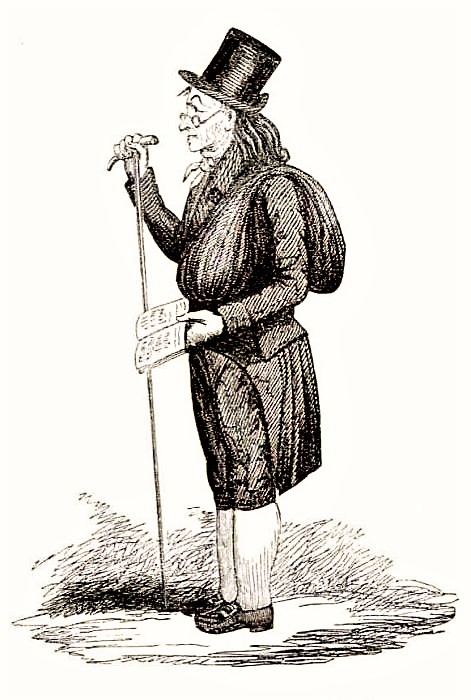
We know his real name was Edward Williams and that he was undoubtedly one of the most charismatic, influential, and controversial sons of Glamorgan. But what about beyond that?
In this video, author and broadcaster Graham Loveluck-Edwards interviews Gareth Thomas, author of Iolo Morganwg’s biography entitled: “I Iolo”. We talk about the man, the controversy, and his extraordinary legacy.
We look at his early life in a small cottage near Llancarfan and his family background. How his father was a skilled stonemason – a trade he handed onto him. And how his mother was of noble birth but through circumstances she could not control, was forced to marry below her expected social standing and how that family cocktail of social influences played a part in Iolo’s world view.
His most famous legacy is the Gorsedd of the Bards and the modern Eisteddfod, but what is that all about? How did it come about? And how true is it that this is some ancient ceremony?
To some people he is regarded a fraudster and forger. To other’s he is the father of Welsh national identity and a cultural trail blazer.
But who was the real Iolo Morganwg? What were his influences? What was his output? What was it that means we are still debating who and what he was nearly 200 years after his death?
In this video we answer these and many other questions about one of Glamorgan’s most famous sons. This programme is part of the ‘History on your doorstep’ series which is all about the history of Glamorgan. Made and broadcast by Bro Radio FM in April 2023. Written and presented by Graham Loveluck-Edwards.
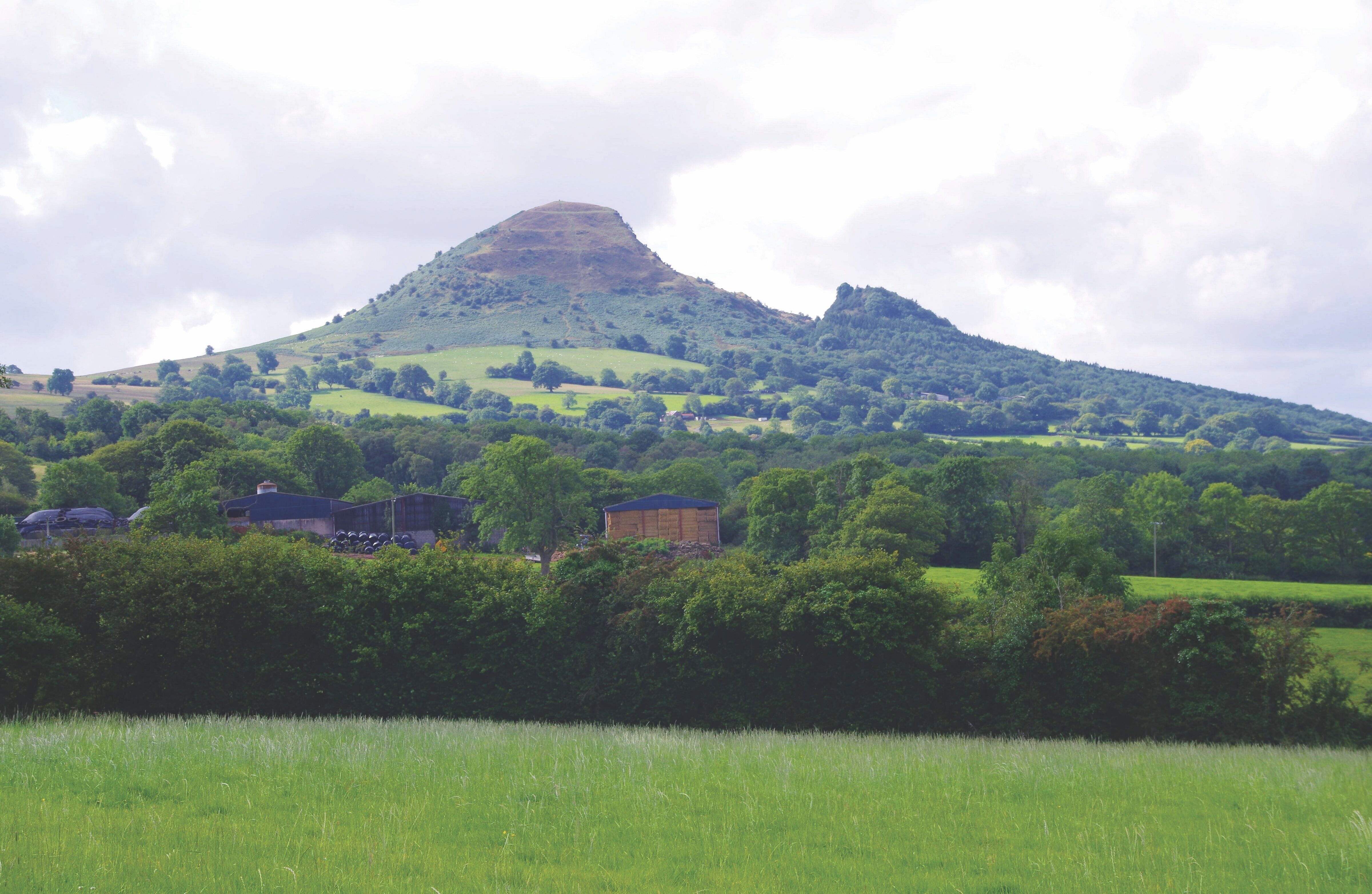
This is Mynydd Ysgyryd Fawr (or in English; The Skirrid). It lies north of Abergavenny in Monmouthshire. It is also known as ‘The Holy Mountain’.
Technically it is a hill not a mountain but the Welsh word ‘mynydd’ doesn’t have such a strict definition criteria as its English equivalent. It just means big hill.
It has a famous legend attached to it. It was said that at the exact moment of the crucifixion the whole mountain shook until the central section collapsed giving it the distinctive outline we see today.
The name ‘ysgyryd’ is derived from the Welsh word for earth quake.
In the medieval period it was a popular place of pilgrimage and at certain points of the path you can take if you are climbing it, there are old stone steps to help the pilgrims with their ascent. It is well worth the trip as the view from the top is amazing. You can see across 4 counties.
There is also a large flat stone, possibly a Neolithic monument, known as the Devil’s Stone half way up it. This time referencing another legend that the collapsed part of the mountain was used as a seat by Satan himself.
Dunraven Castle used to stand on the Glamorgan coast of the Bristol Channel. Not far from Bridgend on the Heritage Coast by Southerndown beach. It has a fascinating history dating back to the Iron Age but nothing is more spectacular about this place than this legend. It is the story of the wreckers of Dunraven. The Lord of the Manor; Walter Vaughan saw his life fall apart when two of his children and his wife died prematurely. He turned to drink and gambling and squandered his fortune away. Then, when at his lowest ebb he turned for help to a henchman, a local pirate, smuggler and wrecker called Matt of the Iron-Hand who had a score to settle with his new partner in crime.
Together, they terrorised sea farers in the Bristol Channel in the sixteenth century.
They would tie lanterns to the sheep grazing on the cliff tops to mimic the lights of Newton, to lure ships onto the jagged teeth of Tuskar Rock. It kept the scavenging, coastal-living folk of the Vale of Glamorgan in a plentiful supply of plunder, washed up on their beaches from the wreckage of numerous merchant ships.
In this video I tell the best-known version of the legend. It deals with grief, greed, avarice and the final tragic outcome when all these things are allowed to come together.
I also answer the obvious question; is this a true story? What sources do we have for it? And where does Iolo Morgannwg fit into all this?
This was all filmed on location at Dunraven Castle on a cold but clear day.
We make many journeys in our life which just take us from A to B. In today’s blog however, I would like to share one with you which is reserved for special occasions. For those times when I have been a very good boy. And it is one which I believe many others will enjoy. What’s more, it is a must for lovers of traditional ales and ‘olde worlde’ pubs.
I am talking about those time warp establishments with undulating stone walls, flagstone floors, black timber beams, thatched roofs and crackling log fires. They are usually hidden away in windy lanes so only people ‘in the know’ are ever able to find them. The perfect places to kick back with a pint and a pie in pursuit of some of life’s simpler pleasures. Reminders of life in an earlier age.
But as with so many traditional, simple pleasures in life, the modern world has conspired to confound.
Most of us don’t live in little country villages where we can simply walk to such places and for very good reasons, driving is not an option. And if you’ve ever tried to get a taxi to drive out to pretty well anywhere I am about to talk about you will know it’s like pulling teeth. If you tap your Uber app it will tell you that your nearest driver is in a different century. So whether by design or accident, it is great to see that Adventure Buses have stepped up and provided us with a solution to this problem. And it only costs £6.90! Or if you have a bus pass – absolutely nothing! Which is my favourite price.
It is something I wrote about a few years ago in my book; Historic Pubs of Wales (published by Candy Jar Books). A bus route that passes through some of the most beautiful and dramatic countryside Wales has to offer. But more importantly, one which trundles past most of the best old pubs in Glamorgan. Today, it has been split across two bus routes, (when I first wrote about it, it was a single route) but none the less, it is a brilliant way of enjoying some of these unique and characterful old pubs, in out of the way places.
So, how do you take advantage of this? First off, if you either visit the Adventure Buss website, or download their App (or even get on a bus and talk to a driver) you will find a ticket available called a “Glamorgan Coaster Day” Ticket. This gives you unlimited travel on the 303 and 304 bus routes for a single day. The 303 runs between Bridgend and Llantwit Major, and the 304 runs between Llantwit Major and Cardiff. And for the middle part of most days, there is an hourly service.
My recommended itinery would be as follows. I would suggest beginning your travels from Bridgend and work your way east. If you do so, these are some of the glorious establishments and landmarks on your route:
The Coach, Cowbridge Road (winner of numerous good ale awards)
Bus stop at Ewenny Road, Bridgend (1 minute walk) Catch 303 eastbound to Llantwit Major
Pass historic Ewenny Pottery and the village of Ewenny with its medieval fortified priory
The Watermill (Converted water mill – pub/restaurant)
The Pelican (Pretty vernacular style cottage converted into a pub with nice views)
The historic remains of Ogmore Castle and the stepping stones over the river Ewenny opposite the pub
The estuary of the Ogmore, the beach at Ogmore-By-Sea and spectacular views across the Bristol Channel
The Three Golden Cups (pub with camp site and beer garden)
Southerndown Beach, Dunraven Castle, Dunraven Bay
The village of St Brides
The Farmers Arms
The village of Wick
The Star and the Lamb and Flag (Sixteenth century inn)
The Plough & Harrow (Smugglers inn)
Remains of a Fourteenth Century Monastic Grange, Monknash Beach
Nash point lighthouse
The Horseshoe in Marcross
St Donats Castle and spectacular views along the Heritage Coast towards the Quantocks
Llantwit Major church, old town, town square and beach
The White Hart(sixteenth century inn)
The Old Swan(Sixteenth century inn)
The Tudor Tavern(sixteenth century inn)
The Kings Head
The White Lion
Change for the 304 Llantwit Major to Cardiff bus at the station or catch a train from Llantwit Major to either Cardiff or Bridgend.
The Boverton Castle
On the 304, between Boverton and St Athan you pass through the middle of the old RAF base in and can see all the planes now at the site awaiting dismantling. Also, Aston Martin and the South Wales Aviation Museum (well worth a visit)
The Three Horse Shoes (traditional old inn)
The village of Aberthaw and its nature reserve and remains of old lime works
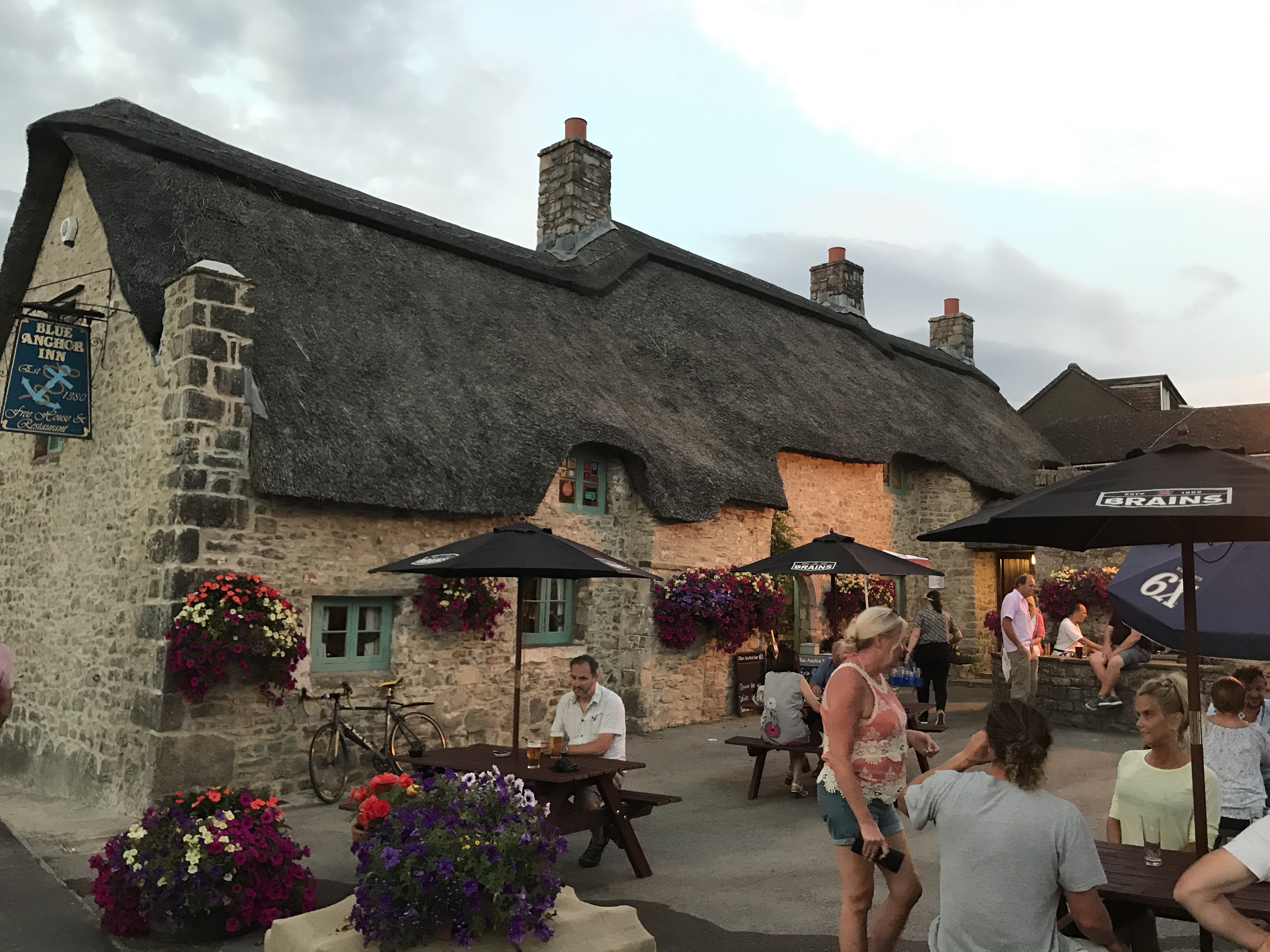
The Blue Anchor (established in 1381 – one of our oldest pubs)
Fontygary beach and camp site
The Fontygary Inn (where John and Charles Wesley were frequent guests – before it was a pub!)
If it was me, I would call it a day at Rhoose where there is a railway station. But if you are feeling intrepid, there are numerous more places the 304 passes before it gets to Cardiff. Worthy of note that the last bus from Rhoose to Barry/Cardiff passes the Fontygary Inn at exactly 11.30 (chucking out time). It’s as if it was meant to be.
Now, I am fully aware that I have just listed 17 pubs above. Please do not think that I am advocating drinking in all of them in one day. Some might consider that irresponsible. But rest assured if you were to spread them out across a brace of summer weekends I think it’s fair to say that a good time might be had by all.
Ever wondered why we make pancakes on Shrove Tuesday? Because the practice might all originate from a tradition started at an old pub in North Wales. The Groes Inn, in Ty’N-Y-Groes near Conwy. This lovely old pub on the pilgrimage route to the shrine at St Winifred’s Well has many claims. Not least of which is a copy of its first licence to trade dated 1537. This means it can prove that it has been trading as an inn for longer than any other pub in Wales.
It is also (possibly) the birthplace of the tradition of making pancakes on Shrove Tuesday.
Before we get carried away, let’s just examine the alternative theory too.
I am sure at some point or another we have all been guilted into making pancakes for our children because that’s what their friends’ parents are doing. It’s only fitting really: guilt is a big part of Shrove Tuesday. The word ‘shrove’ comes from an old Saxon word ‘shriven’, which means ‘absolved of sins’. Early Saxon Christians would make sure that they had confessed to all their sins on Shrove Tuesday so they could enter the holy fast of Lent free from the burden of guilt.
There is a theory that the flat bell chimed to draw people to confession on Shrove Tuesday was nicknamed ‘the pancake bell’, and many think this is the origin of the pancake day tradition.
But this being Wales, we obviously have an alternative theory that suggests it was all our idea first. And it begins near Conwy with an amateur historian called Stan Wicklen.
Shrove Tuesday is known in Welsh as ‘Dydd Mawrth Ynyd’, which means ‘the day of the martyr Ynyd’, a sixth-century Welsh saint. The name this pub goes by, the ‘Groes’, is actually an abbreviation of its proper name ‘Groesynyd’, which translates as ‘Ynyd’s cross’. In other words, the inn had the patronage of the saint whose festival day was Shrove Tuesday. This meant that the inn had a special tradition and celebration of their own, to mark their namesake’s day. It involved playing tricks and practical jokes on visitors and passers-by, as well as the eating of Welsh cakes and other ‘pan cakes’ and pastries. And that, in Stan Wicklen’s opinion, is where the tradition of eating pancakes on Shrove Tuesday started.
As you know, I love an old story with an ancient pub at its heart. Regardless of how true it is likely to be. Maybe we should substitute the bottle of maple syrup on the pancake day table with a bottle of ‘cwrw da’ (Welsh for good beer).
This information is taken from ‘Historic Pubs of Wales’ by Graham Loveluck-Edwards. A book full of the quirky back stories of Wales’ oldest and most interesting pubs. For more information visit our online bookshop.
We use cookies on our website to give you the most relevant experience by remembering your preferences and repeat visits. By clicking “Accept All”, you consent to the use of ALL the cookies. However, you may visit "Cookie Settings" to provide a controlled consent.
This website uses cookies to improve your experience while you navigate through the website. Out of these, the cookies that are categorized as necessary are stored on your browser as they are essential for the working of basic functionalities of the website. We also use third-party cookies that help us analyze and understand how you use this website. These cookies will be stored in your browser only with your consent. You also have the option to opt-out of these cookies. But opting out of some of these cookies may affect your browsing experience.
Necessary cookies are absolutely essential for the website to function properly. These cookies ensure basic functionalities and security features of the website, anonymously.
Cookie
Duration
Description
cookielawinfo-checkbox-analytics
11 months
This cookie is set by GDPR Cookie Consent plugin. The cookie is used to store the user consent for the cookies in the category "Analytics".
cookielawinfo-checkbox-functional
11 months
The cookie is set by GDPR cookie consent to record the user consent for the cookies in the category "Functional".
cookielawinfo-checkbox-necessary
11 months
This cookie is set by GDPR Cookie Consent plugin. The cookies is used to store the user consent for the cookies in the category "Necessary".
cookielawinfo-checkbox-others
11 months
This cookie is set by GDPR Cookie Consent plugin. The cookie is used to store the user consent for the cookies in the category "Other.
cookielawinfo-checkbox-performance
11 months
This cookie is set by GDPR Cookie Consent plugin. The cookie is used to store the user consent for the cookies in the category "Performance".
viewed_cookie_policy
11 months
The cookie is set by the GDPR Cookie Consent plugin and is used to store whether or not user has consented to the use of cookies. It does not store any personal data.
Functional cookies help to perform certain functionalities like sharing the content of the website on social media platforms, collect feedbacks, and other third-party features.
Performance cookies are used to understand and analyze the key performance indexes of the website which helps in delivering a better user experience for the visitors.
Analytical cookies are used to understand how visitors interact with the website. These cookies help provide information on metrics the number of visitors, bounce rate, traffic source, etc.
Advertisement cookies are used to provide visitors with relevant ads and marketing campaigns. These cookies track visitors across websites and collect information to provide customized ads.