Between 1830 and 1844 unrest amongst the industrial workers and farmers in Wales tipped over into riot and uprising. Nineteenth Century South Wales was a tinderbox of revolt. Industrialists were making fortunes in coal and steel but their workers were treated terribly. Living conditions were inhospitable and a breeding ground for cholera and other killer diseases.
High rents and low pay (not in cash but issued in tokens which could only be spent in the shops owned by their employers) made these people little more than slaves. And the introduction of credit and debt bound the working people still further to their employers and land owners.
Outside the industrialised areas things were no better. Welsh farmers and people living in rural areas were being bled by taxes and tythes and on the back of several poor harvests they found themselves on the brink of starvation. Something had to give. And the birth of new political ideas fuelled a number of uprisings.
The Merthyr Rising in 1831, the Rebecca Riots and the Newport Chartist Rising both starting in 1839. But what caused the rebellions? How did they start? Who was behind them? How did the establishment react? What has been their legacy?
In conversation, Graham Loveluck-Edwards and Mark Lawson-Jones pull back the layers of these events and their consequences. And as ever, especially for viewers in the Vale of Glamorgan, there is a tenuous local link. Watch below to find out what it is.
If you, like me, love a bit of Glamorgan history, folklore and legend, you may be interested in joining me at any number of talks I am giving in the coming months. As I am a guest speaker at most of these I have given details of the organisers so where tickets are required you know how to get them. Hopefully something for everyone here.
May Walks In The Vale Of Glamorgan 2023
with Chris Jones & Guests
7th , 13th, 20th and 27th May
After the incredible success of the 10 Days in May walking festival in 2022, Chris Jones is back with another walking festival through some of the Vale of Glamorgan’s most beautiful and historic locations. The theme is very much the same as last year with guided walks, talks about points of historical interest along the way (provided by yours truly) and some surprise appearances as character actors bring to life the stories associated with the area. It is tremendous fun.
These are the walks in this years event.
Sunday 7th May – The Iolo Morganwg Heritage Walk – Starting and finishing in Cowbridge. Meet for breakfast at The Maple and Bean (opposite Waitrose) at 10am.
Saturday 13th May – Llantwit Major and the Heritage Coast – Starting and finishing in Llantwit Major – Meet for breakfast 9.30am at the Piccolo Blu Cafe.
Saturday 20th May – St Athan and Gileston Walk – Start and finish at Gileston Manor where we will meet for breakfast at 9.30am.
Saturday 27th May – Dunraven Coastal Path Walk – Meet for breakfast at 9.30am at The Three Golden Cups in Southerndown.
If you would like to register for any of these walks then please click on the link go to the Visit The Vale website for information.
If that all looks a bit too energetic, then here are some other talks you might be interested in where the audience is altogether more static:
17th May – Social Sisters Barry (The Lounge, Tadcross) 8pm
10th June (2.00pm) – “The Cult, the Captain and the Baron” – the fascinating history of St Curig’s Church, Porthkerry
📍St Curigs Church, Porthkerry CF62 3BZ
🕰 2pm Saturday 10th June
💰 Free
13th June – WI Penarth
15th June – Cowbridge U3A
1st July – Ogmore Walk and Talk
I will provide information closer to the time for The Ogmore Walk and Talk and the St Curigs Porthkerry talks.
For the other talks above I am a guest of an organisation so you will need to contact them direct for more information. Contact details are available for all on Google.
If are interested in having me come along to one of your events to speak on any of my specialist areas, please click here for more information on what I can offer.
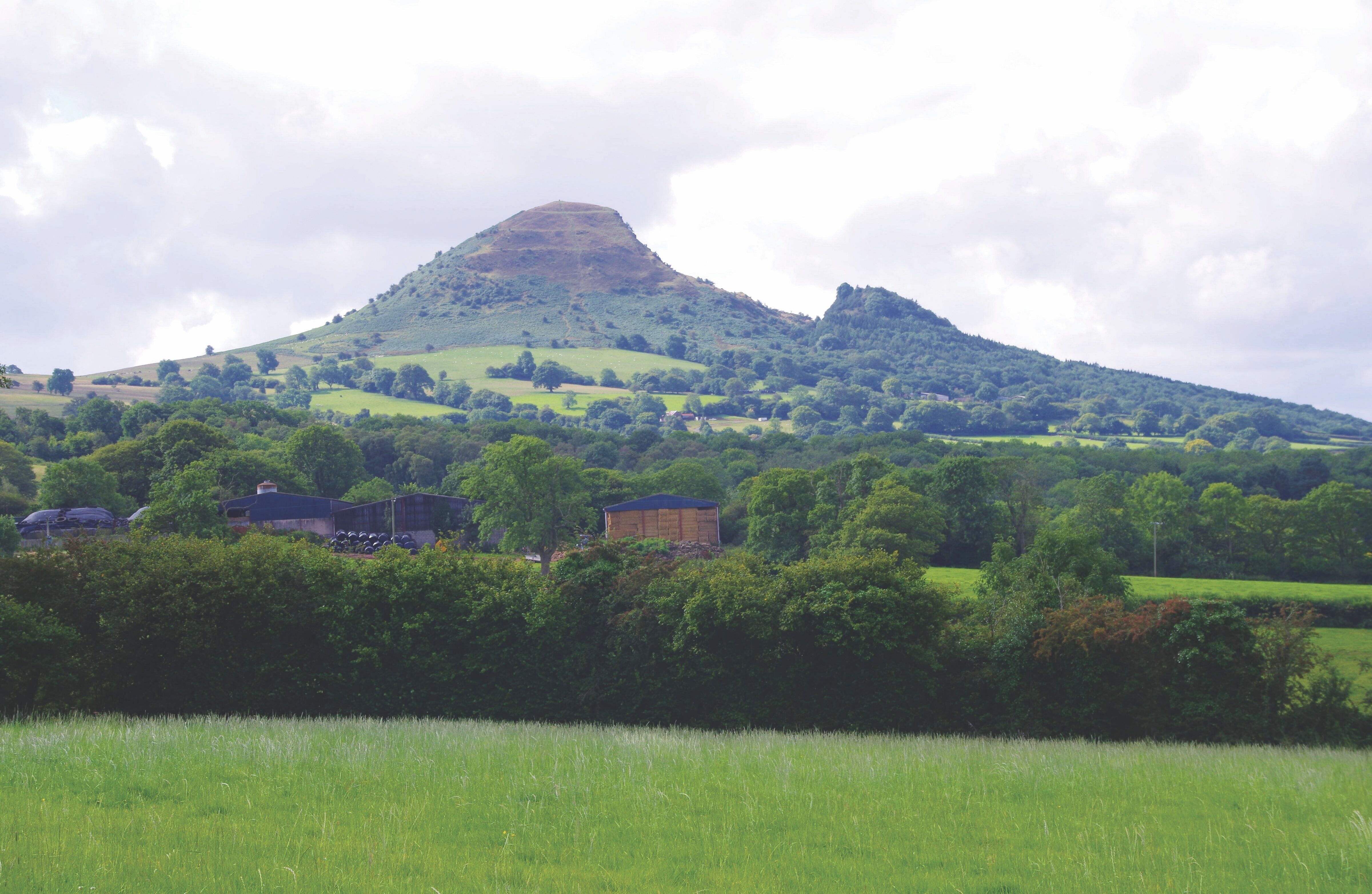
This is Mynydd Ysgyryd Fawr (or in English; The Skirrid). It lies north of Abergavenny in Monmouthshire. It is also known as ‘The Holy Mountain’.
Technically it is a hill not a mountain but the Welsh word ‘mynydd’ doesn’t have such a strict definition criteria as its English equivalent. It just means big hill.
It has a famous legend attached to it. It was said that at the exact moment of the crucifixion the whole mountain shook until the central section collapsed giving it the distinctive outline we see today.
The name ‘ysgyryd’ is derived from the Welsh word for earth quake.
In the medieval period it was a popular place of pilgrimage and at certain points of the path you can take if you are climbing it, there are old stone steps to help the pilgrims with their ascent. It is well worth the trip as the view from the top is amazing. You can see across 4 counties.
There is also a large flat stone, possibly a Neolithic monument, known as the Devil’s Stone half way up it. This time referencing another legend that the collapsed part of the mountain was used as a seat by Satan himself.
We make many journeys in our life which just take us from A to B. In today’s blog however, I would like to share one with you which is reserved for special occasions. For those times when I have been a very good boy. And it is one which I believe many others will enjoy. What’s more, it is a must for lovers of traditional ales and ‘olde worlde’ pubs.
I am talking about those time warp establishments with undulating stone walls, flagstone floors, black timber beams, thatched roofs and crackling log fires. They are usually hidden away in windy lanes so only people ‘in the know’ are ever able to find them. The perfect places to kick back with a pint and a pie in pursuit of some of life’s simpler pleasures. Reminders of life in an earlier age.
But as with so many traditional, simple pleasures in life, the modern world has conspired to confound.
Most of us don’t live in little country villages where we can simply walk to such places and for very good reasons, driving is not an option. And if you’ve ever tried to get a taxi to drive out to pretty well anywhere I am about to talk about you will know it’s like pulling teeth. If you tap your Uber app it will tell you that your nearest driver is in a different century. So whether by design or accident, it is great to see that Adventure Buses have stepped up and provided us with a solution to this problem. And it only costs £6.90! Or if you have a bus pass – absolutely nothing! Which is my favourite price.
It is something I wrote about a few years ago in my book; Historic Pubs of Wales (published by Candy Jar Books). A bus route that passes through some of the most beautiful and dramatic countryside Wales has to offer. But more importantly, one which trundles past most of the best old pubs in Glamorgan. Today, it has been split across two bus routes, (when I first wrote about it, it was a single route) but none the less, it is a brilliant way of enjoying some of these unique and characterful old pubs, in out of the way places.
So, how do you take advantage of this? First off, if you either visit the Adventure Buss website, or download their App (or even get on a bus and talk to a driver) you will find a ticket available called a “Glamorgan Coaster Day” Ticket. This gives you unlimited travel on the 303 and 304 bus routes for a single day. The 303 runs between Bridgend and Llantwit Major, and the 304 runs between Llantwit Major and Cardiff. And for the middle part of most days, there is an hourly service.
My recommended itinery would be as follows. I would suggest beginning your travels from Bridgend and work your way east. If you do so, these are some of the glorious establishments and landmarks on your route:
The Coach, Cowbridge Road (winner of numerous good ale awards)
Bus stop at Ewenny Road, Bridgend (1 minute walk) Catch 303 eastbound to Llantwit Major
Pass historic Ewenny Pottery and the village of Ewenny with its medieval fortified priory
The Watermill (Converted water mill – pub/restaurant)
The Pelican (Pretty vernacular style cottage converted into a pub with nice views)
The historic remains of Ogmore Castle and the stepping stones over the river Ewenny opposite the pub
The estuary of the Ogmore, the beach at Ogmore-By-Sea and spectacular views across the Bristol Channel
The Three Golden Cups (pub with camp site and beer garden)
Southerndown Beach, Dunraven Castle, Dunraven Bay
The village of St Brides
The Farmers Arms
The village of Wick
The Star and the Lamb and Flag (Sixteenth century inn)
The Plough & Harrow (Smugglers inn)
Remains of a Fourteenth Century Monastic Grange, Monknash Beach
Nash point lighthouse
The Horseshoe in Marcross
St Donats Castle and spectacular views along the Heritage Coast towards the Quantocks
Llantwit Major church, old town, town square and beach
The White Hart(sixteenth century inn)
The Old Swan(Sixteenth century inn)
The Tudor Tavern(sixteenth century inn)
The Kings Head
The White Lion
Change for the 304 Llantwit Major to Cardiff bus at the station or catch a train from Llantwit Major to either Cardiff or Bridgend.
The Boverton Castle
On the 304, between Boverton and St Athan you pass through the middle of the old RAF base in and can see all the planes now at the site awaiting dismantling. Also, Aston Martin and the South Wales Aviation Museum (well worth a visit)
The Three Horse Shoes (traditional old inn)
The village of Aberthaw and its nature reserve and remains of old lime works
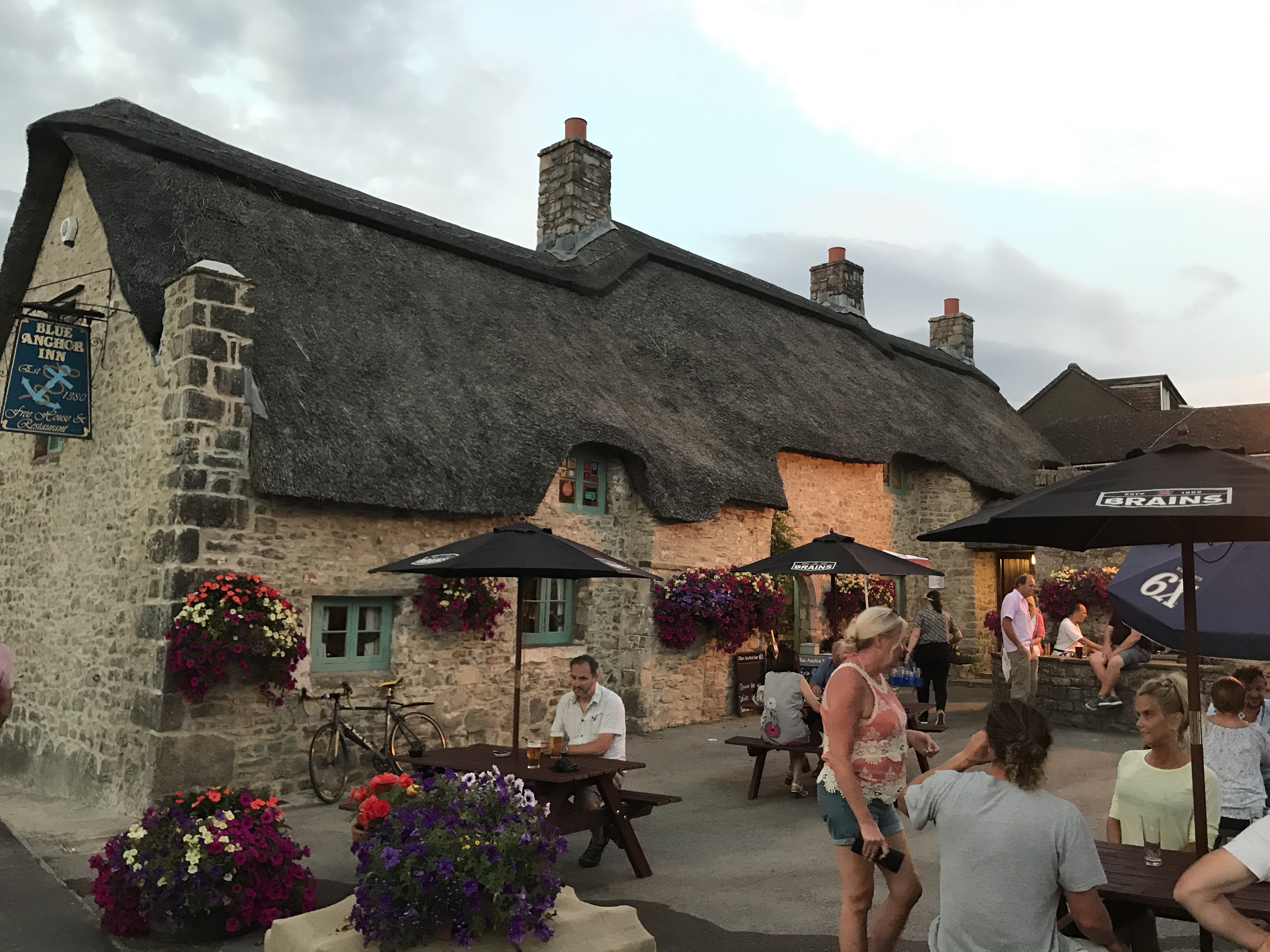
The Blue Anchor (established in 1381 – one of our oldest pubs)
Fontygary beach and camp site
The Fontygary Inn (where John and Charles Wesley were frequent guests – before it was a pub!)
If it was me, I would call it a day at Rhoose where there is a railway station. But if you are feeling intrepid, there are numerous more places the 304 passes before it gets to Cardiff. Worthy of note that the last bus from Rhoose to Barry/Cardiff passes the Fontygary Inn at exactly 11.30 (chucking out time). It’s as if it was meant to be.
Now, I am fully aware that I have just listed 17 pubs above. Please do not think that I am advocating drinking in all of them in one day. Some might consider that irresponsible. But rest assured if you were to spread them out across a brace of summer weekends I think it’s fair to say that a good time might be had by all.
I have always been fascinated by the various legends about that most unpopular of Kings of England; Edward II. Hated by the English for losing Scotland at the battle of Bannockburn, hated by the Welsh for being the first English man appointed to the office of Prince of Wales. Hated by the French for the treatment of his wife Isabella (the she wolf of France) and hated by the Barons for pretty much everything.
Recently the legend about him being murdered by having a red hot poker shoved up his bottom reached a whole new audience when the actor Danny Dyer (of Eastenders fame) appeared on BBC TV’s ‘Who Do You Think You Are’ and discovered he was descended from one of the King’s illegitimate children. But there are loads more legends about him and many of them are set in our little corner of Wales, here in Glamorgan as this is where he hid, with his lover/favourite Hugh Le Despenser (Earl of Glamorgan) from the army of his vengeful wife.
So I have made a film about them.
With the help of some experts in their field we unpick the truth from the stories to piece together Edwards final months of freedom in 1326 and his probable murder in 1327.
You can watch it here 👇
Despite the fact that the king himself kept a journal we have very little accurate, contemporary account of the events leading up to his capture in Llantrisant. But we do have a couple of spectacular legends that fill in some of the gaps.
The one we focus on was published in full in the South Wales Daily News on 29th August 1899 by a man from the hilltop village of Llangynwyd near Maesetg who called himself Ap Cadrawd. He claimed that he had uncovered a genuine historical account written by a bard called Morien which told the full story.
The narrative of the article was that Edward II and his lover Hugh Le Despenser had fled London and sought refuge in Neath Abbey. There they persuaded the Abbot of Neath to plea on their behalf but in doing so, he inadvertently gave away where they were hiding. So, they fled again and attempted to find their way to Despenser’s Castle in Caerphilly but knowing there were soldiers looking for them everywhere they had to stay away from busy roads and big towns where they could easily be spotted. Thus, they ended up in Llangynwyd as it lies on the Glamorgan Ridgeway (which you may remember me writing about previously). The ancient road that runs from Margam to Caerphilly through that very parish.
Ap Cadrawd writes “while in hiding from his enemies at Gaily Lenor Fawr… in order to keep up his character as a Welsh peasant, Edward accepted employment as a thresher of corn at the farm where he was afforded temporary shelter from the fury of Isabella and Mortimer, the farmer meanwhile keeping watch for suspicious characters in the locality- should any such characters appear the fugitive King hid himself in the branches of an oak tree near by, after- wards known as “Cadair Edward”, whence he saw on several occasions bauds of soldiers in search of him…”
The legend then concludes with something of a bombshell;
“in Bridgend a contemporary brought to light another interesting find. This find places beyond a shadow of doubt the truth of one at least of Morien’s statements. An inscribed stone is said to be the find which sets forth the fact that Edward II did really and actually come to the farm of Gelly Lenor Fawr. After centuries we are told that the stone has been revealed by the hand of Nature herself by the blowing down of the old tree”
Obviously, this story has a lot of over tones of the one about Charles I hiding in the Royal Oak. However, there is one inescapable fact in all of this. There genuinely is a stone. You need to work quite hard to find it these days, but here is a picture of it.
Does the presence of this stone actually prove anything? And what of the one at Pant-Y-Brad in Llantrisant which comes to us courtesy of the same legend?
We take a look at both of them in depth and talk about the likely truth in the film. I don’t want to spoil it for you, but don’t hold your breath…
If you are interested in the legends and folklore of Glamorgan then how can I not promote any of my many books on the subject. They are available from my website at discounted prices you won’t find in the bookshops or on Amazon. For more information pop along to my online bookshop on this link.
I am indebted to the various history societies who supported me with making of this film and especially the co-operation of The Berkeley Castle Estate.
The 25th January is the feast day of a 6th century Welsh saint called St Dwynwen. She is the patron saint of Welsh lovers and her own story is suitably romantic.
But who was St Dwynwen? Why is she the patron saint of lovers in Wales? What is her story? Where did that story originate? And more importantly how romantic are the Welsh?
In the video below from the History on your doorstep series we answer these and many other questions. We talk about her fascinating family tree being one of 36 children born of a family full of Kings and Queens and Saints. One of the saintly tribes of Wales. Her father King Brychan (also known as St Brychan) her sister St Gwladys, her nephew St Cadoc, founder of the Clas monastery in Llancarfan and the saint which Cadoxton in Barry is named after.
We also look at the bardic tradition in Wales and some wonderful romantic Welsh stories. Starting with the medieval romantic stories of the Mabinogion like Colhuwch and Olwen and Pwyll and Rhiannon in the first branch. We look at trends in tales of Welsh lovers and the techniques used by bards to bring them to life and look at them in the context of stories from Glamorgan. We also examine what makes them quite different from Romantic stories from ancient Greek folklore and other parts of Europe.
Specifically we look at the folklore behind the naming of the Captains Wife pub in Sully, and the better known romantic stories of the Maid of Cefn Ydfa and the Maid of Sker.
This video is a discussion between historian, author and broadcaster Graham Loveluck-Edwards and the history blogger Claire Miles (AKA Hisdoryan). First broadcast on Bro Radio on Monday 23rd January 2023. We explore the role of the bards in Wales, common themes in Welsh romantic folklore, the creative devices used by the bards to make their stories more credible and engaging.
For further reading on the themes and topics explored in this video I have written several books on local legends and folklore. More information available at https://grahamloveluckedwards.com/shop/
Christmas and New Year celebrations have changed a lot in Wales down the centuries. In this video history blogger Claire Miles (who writes the Hisdoryan blog) and history author & broadcaster Graham Loveluck-Edwards talk about the sort of Christmases our ancestors would have recognised.
We take a whistle stop tour of all things Christmassy from Welsh history. The customs and traditions people observed. Things like;
Toasting the Ox on Christmas Eve
Wassailing
The Aderyn Pig
The bird with the grey beak
The Plygain
A Tudor Christmas dinner
Calenig
The Mari Llwyd
First Footing
Hunting the wren
When Christmas was banned
The origins of Father Christmas
The very first Eisteddfod
The Abergavenny Christmas Massacre
We also look at some amazing Christmas stories like Mallt-y-Nos’, Megan’ the Gwrach-Y-Rhibyn of St Donats and the sitings of the Cwn Annwn in the Vale at this time of year.
We also cover a whole host of ancient Welsh superstitions based around the festive period. Things that would bring you good and bad luck, ways to find love, to be sure of a good harvest and those ever fearsome portents of doom. To be fair most of them are predictors of death, but Some of them will have you laughing hysterically.
We really hope you enjoy this video. And if you do, feel free to share it on social media. But remember to subscribe to my YouTube channel as well. This programme was originally recorded for broadcast on Bro Radio. Click to play the video. First broadcast on Bro Radio.
Read more about Welsh festivals and traditions in my books.
One of the most fascinating and oft overlooked characters in Welsh and British history is Colonel Phillip Jones. He rose to be one of the most powerful men in the entire kingdom and managed to thrive during one of the nations most turbulent periods in history – the English Civil War.
His influence and power was such that it led to questions being asked in parliament as to why it was that “England was being run from a small castle in Wales“.
So who was he? How did he become so powerful? and how was it that despite being a major player under Cromwell during the Commonwealth, that his status continued unhampered when Charles II came to the throne during the Restoration? And how did he manage to achieve that unthinkable goal of any power broker in this period of history; to die of old age in comfortable surroundings with his fortunes and reputation in tact?
And more to the point – how is it that hardly anyone has ever heard of him?
He was born in Swansea in 1618 to a middle ranking ‘county’ family who lived at the Great House (now long gone). They were Calvinist protestants and this influence gave him a natural affinity towards the parliamentarians. As the seeds of dissent were being sewn which led to the English Civil War in 1642 he joined the ‘New Model Army’ under the command of Lord Fairfax where he made quite a name for himself.
Many of the more senior aristocratic families and establishment figures of South Wales were fighting on the King’s side of this war, so when the parliamentarians made gains in the area it was a great opportunity for the likes of Phillip Jones and his more famous counterpart Bussey Mansel to earn fast promotion and patronage.
Jones was appointed Governor of Swansea in 1645, he was promoted to Colonel in the New Model Army in 1646, was made Governor of Cardiff in 1649, became MP for Breconshire in 1650 and then was simultaneously voted MP for both Monmouthshire and Glamorgan in 1654 (he chose Glamorgan) and again in 1656 he was simultaneously voted MP for Brecon and Glamorgan (again he chose Glamorgan). He was appointed Governor of Charterhouse in 1658 and Commander of the militia of Cardiff Castle in 1659.
He also became very close to Oliver Cromwell. Cromwell rather famously fell out with most of the people who were close to him prior to the Civil War once it was over. Even Fairfax turned against him and was instrumental in the second civil war that culminated in Wales at the battle of St Fagans. But Jones was close to Cromwell before, during and after the conflict. We know this because there are records of him visiting Jones at his home in Swansea in 1648 when his armies were moving west to Pembrokeshire (a major royalist stronghold). Then after the civil war in 1654 Cromwell appointed Jones ‘Comptroller’ of his household – which effectively put him in charge of the running of his personal estates. He also appointed him to the privy council and he made him Phillip Lord Jones on 10th December 1657 so he could sit in the upper house of Cromwell’s parliament. So they clearly remained ‘pally’ throughout. In fact Oliver Cromwell was Godfather to Phillip Jones’ son (also called Oliver!)
It was Phillip Jones who organised Oliver Cromwell’s funeral as superintendent on 23rd November 1658.
All of these promotions did wonders for Jones’ income. In 1640 he was estimated at earning £20 a year. By 1658 that had risen to £2,000 a year. Something which put him in a position to be able to upgrade his residence to something more in keeping with a man of his station. And so it was that he bought Fonmon Castle near Rhoose in the Vale of Glamorgan from the StJohn family who had fallen on hard times and were selling off quite a few of their estates at the time.
Being so close to Oliver Cromwell had served him well, but when you are close to a figure so powerful and divisive, it would be easy to find yourself vulnerable and exposed after their death. But Jones, if anything, wound up being even closer to Oliver Cromwell’s successor; his son Richard Cromwell. It was from this period that we get the quote about England being run from a small castle in Wales, and it was also said at the time that “Richard Cromwell will only take advice from Jones and Thurloe and would do nothing without them” – referring to John Thurloe who had been English Secretary of State under Oliver Cromwell.
It was not all plain sailing however. These were very volatile times and you cannot become so powerful a man in the seventeenth century without making some enemies along the way. When Richard Cromwell had his spectacular fall in 1659 (earning him the nickname ‘Tumble Down Dick’) Jones was very much exposed. History was about to overtake him in a twist of events which saw many of his counterparts destroyed but which he – rather miraculously it would seem – not only survived, but actually benefitted from.
The restoration.
The balance of power had moved dramatically against the commonwealth and Charles II was crowned king. Britain was once again a monarchy, and Charles II was a pretty vengeful king. He wasted no time rounding up those parliamentarians who had executed his father for treason 11 years earlier. It was not a good time to be known for having been close to the Cromwells.
At first things didn’t look too great. A group of his enemies brought a series of charges of embezzlement against him, accusing him of having stolen £139,000 in ‘Tythes’ owed to the church. He was also rather randomly accused of “having carried away the organ of St Mary’s Church, Swansea”. There doesn’t seem to be any evidence to support any of these charges but the justice system back then was not quite so reliant on such things as it is now. He came dangerously close to a very sticky end.
He was impeached but never stood trial.
Somehow, Jones found himself in the clear. The new king had intervened on his behalf, and went on to appoint him to be High Sheriff of Glamorgan in 1671. He was more than likely saved by the fact that he was not personally a signatory to Charles I’s death warrant, nor did he play any part in his trial. Also, throughout the period he was in governance he did not take the opportunity others had done, to plunder the king’s estates, nor to take lands from the defeated royalists. In fact he had treated them rather well.
Co-incidentally John Thurloe (who we mentioned earlier) also came out of this new order unexpectedly well. He was initially arrested for treason but never went to trial. He was ultimately given responsibility for foreign policy in Charles II government.
Phillip Jones saw out his days in the leafy and secluded splendour of Fonmon Castle where he died peacefully in his bed on 5th September 1674.
If you want to know more about this amazing character from the Vale of Glamorgan’s history, I will be interviewing one of his direct descendants; Sir Brooke Boothby (Bart) Vice-Lord Lieutenant of South Glamorgan as part of my next episode of ‘History On Your Doorstep’ for Bro Radio which will be all about Fonmon Castle. It is going out on Monday 27th June at 7pm.
If you want to hear that interview and learn what else he has to say about this most wiley of ancestors tune in, or listen again on line or on the app or on my YouTube channel which is packed with videos and podcasts about Welsh history. Please subscribe to it.
No matter how embarrassing your father may have appeared to be when you were growing up, compared to St Cadoc, you had it easy. ‘Who is St Cadoc?’ you may be asking. I am sure you have noticed the many references to ‘Cadoc’ or ’Cadog’ around South Wales. In the names of churches, streets, wells, houses, schools, community centres and hospitals. To say nothing of the village of Cadoxton.
Historically, he was one of the most revered saints in the early Christian church. It gives you an idea how significant a figure he was when you consider that he was born in the latter quarter of the fifth century. Over 1,500 years ago. And we are still naming things after him today.
The life of St Cadoc is recorded in the ancient works of the Cambro British Saints. His story is the first ever to reference the now legendary King Arthur ‘the Great’ of Camelot. Amongst his achievements are the founding of the ‘Clas’ monastery at Llancarfan near Cowbridge as well as many churches throughout Wales, Scotland, Ireland, and Brittany. He also managed to fit in time for the odd miracle. Even as a baby it is claimed that he made the water in the font he was baptised in turn into milk.
All these achievements, however, were in spite of a really dysfunctional upbringing. It was so weird, it wouldn’t look out of place in a Channel 5 documentary
First of all, he was not the only saint in the family. Pretty well his whole family were saints. Then you have his father. All I can say is, I think the bar for sainthood must have been set low back then.
He was a brute, a drunkard, and a pirate. And randomly; a king. He was called Gwynllyw although somehow that got Anglicised in later history to Woolos. He is credited with being the founding father of the city of Newport and the cathedral there is dedicated to him to this day. He fell head over heels in love with Gwladys, the daughter of King Brychan (later Anglicised to Brecon). He wanted to marry her, but Brychan refused him. So Gwynllyw took an army of 300 men to knock on his castle gates and kidnapped her.
His passion for her never seemed to faulter, even in old age. There is an account that in later life after being converted to Christianity by his son; Cadoc, he tried to seek a prayerful retreat on a desolate mountain. His endeavours however would perpetually fail as he could not overcome his carnal urges towards her and could not help himself from continually running back down the mountain to her bed.
If you thought he made a rotten husband, he was hardly parent of the month either. There is also a story that one day, he gave his infant son: St Cadoc away to a total stranger in exchange for a cow while out on a drinking spree. We’ve all done it. Oh no. Hold on, we haven’t, have we?
But against all the odds, Cadoc grew up to be a cornerstone of early Christian mission in northern Europe and became famous across the known world for his wisdom. In the modern Catholic church, he is still patron saint of burns and skin complaints, so he is the one to pray to if you are bothered by such things. His father is patron saint of Newport and pirates. No words needed.
Vulcan bomber and ground staff maintenance at RAF St Athan
Since 1931, military aviation has played an ever changing role in the county of the Vale of Glamorgan. At its height, tens of thousands of people were employed either as military or civilian contractors across four bases. Yes four! I always though it was three.
In this discussion, first aired on Bro Radio on 23rd May 2022, we examine the history of the RAF in the Vale and hear accounts of those who served. Both in the early days and more recently. To get a flavour of what life was like on our bases and also the role they played in the wider military context. In particular during WWII, the Cold War and the Falklands.
We also look at the work being done by the South Wales Aviation Museum to keep that legacy alive.
We use cookies on our website to give you the most relevant experience by remembering your preferences and repeat visits. By clicking “Accept All”, you consent to the use of ALL the cookies. However, you may visit "Cookie Settings" to provide a controlled consent.
This website uses cookies to improve your experience while you navigate through the website. Out of these, the cookies that are categorized as necessary are stored on your browser as they are essential for the working of basic functionalities of the website. We also use third-party cookies that help us analyze and understand how you use this website. These cookies will be stored in your browser only with your consent. You also have the option to opt-out of these cookies. But opting out of some of these cookies may affect your browsing experience.
Necessary cookies are absolutely essential for the website to function properly. These cookies ensure basic functionalities and security features of the website, anonymously.
Cookie
Duration
Description
cookielawinfo-checkbox-analytics
11 months
This cookie is set by GDPR Cookie Consent plugin. The cookie is used to store the user consent for the cookies in the category "Analytics".
cookielawinfo-checkbox-functional
11 months
The cookie is set by GDPR cookie consent to record the user consent for the cookies in the category "Functional".
cookielawinfo-checkbox-necessary
11 months
This cookie is set by GDPR Cookie Consent plugin. The cookies is used to store the user consent for the cookies in the category "Necessary".
cookielawinfo-checkbox-others
11 months
This cookie is set by GDPR Cookie Consent plugin. The cookie is used to store the user consent for the cookies in the category "Other.
cookielawinfo-checkbox-performance
11 months
This cookie is set by GDPR Cookie Consent plugin. The cookie is used to store the user consent for the cookies in the category "Performance".
viewed_cookie_policy
11 months
The cookie is set by the GDPR Cookie Consent plugin and is used to store whether or not user has consented to the use of cookies. It does not store any personal data.
Functional cookies help to perform certain functionalities like sharing the content of the website on social media platforms, collect feedbacks, and other third-party features.
Performance cookies are used to understand and analyze the key performance indexes of the website which helps in delivering a better user experience for the visitors.
Analytical cookies are used to understand how visitors interact with the website. These cookies help provide information on metrics the number of visitors, bounce rate, traffic source, etc.
Advertisement cookies are used to provide visitors with relevant ads and marketing campaigns. These cookies track visitors across websites and collect information to provide customized ads.