Posted on Leave a comment

You asked – We listened…

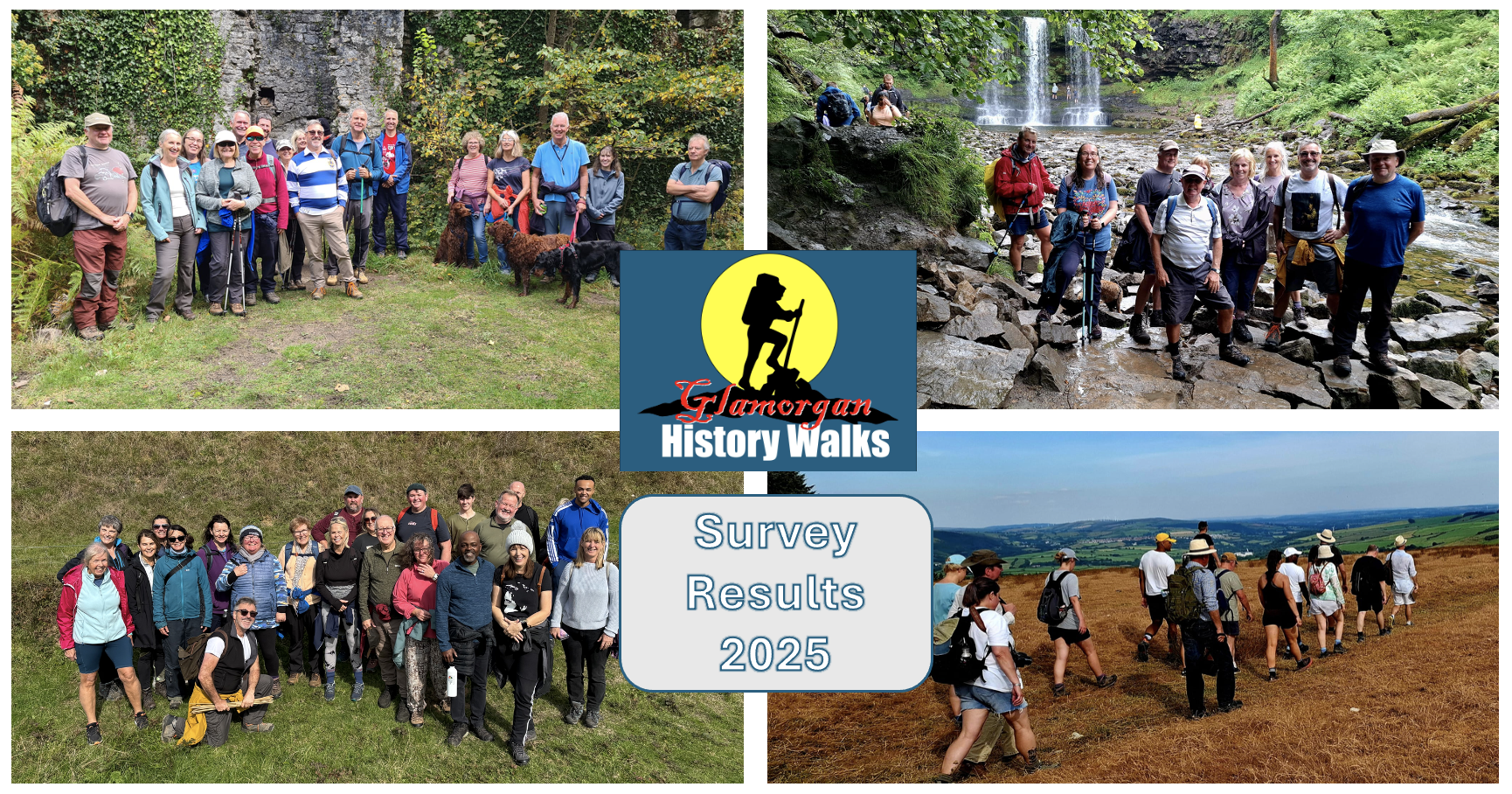
The Glamorgan History Walks survey results

Thank you to everyone who supported the Glamorgan History Walks through the summer, and thank you especially to everyone to took part in our survey. The idea was to find out what people who went on the walks enjoyed about them or what they thought we could do better. We also wanted to get some ideas on routes to consider for next year and new things we should try.

The success of any exercise like this hinges on people’s willingness to share their experiences. In that respect we can not thank you all enough as the uptake on the responses we got was brilliant. A link to the survey was posted on my Facebook page and I also sent out 135 emails, so to get 69 of you responding and taking part is a really good sample to work with, and in itself tells us that you are very much engaged with these events.

To gauge the basics, we asked you if these events were enjoyable, and if people who took part this year would want to take part in the future. Also, as the USP of these events is to focus on Welsh heritage, history and folklore (rather than a walk for a walk’s sake) we wanted to know if they were hitting the mark in that respect. I am very proud to be able to say these were our results.

Now I’m no expert, but that is a very encouraging and humbling response. Like I say. 69 of you took part in this survey so this is very encouraging that we are putting on an event that at its basic level is hitting the spot.

But we are not resting on our laurels.

We asked for more detailed feedback on specific areas and we have had a lot of suggestions that we could implement.

Future routes

The feedback we had on the various routes we did this year was positive. It was suggested that we make the event more than just “The Glamorgan” history walks and take in other counties too. This is something in the long term we can take on board but we are not well enough resourced to do so in 2026. Its only me doing all the planning and leading and history revisions so broadening the area may sound simple but while its just me, it would be too much to take on at this stage, But who knows. In the future we could may be entice some other historians to join the gang and plan and lead walks in other areas that follow our formula.

Suggestions which came up most frequently were that the shorter, Thursday evening walks we introduced this year were a good idea and that giving you more “shorter” walks to choose from would be a popular move. It was also suggested that we might want to introduce more “wheelchair friendly” routes or events.

Places people wanted aded to the routes we do currenlty included Cardiff Bay. It was also suggested by a couple of people that we should do more walks in and around Swansea and Neath.

A theme rather than a destination, was the suggestion that we do more walks that take in sites of our industrial heritage. Places linked to that suggestion were commonly Parc Slip and Measteg, the Rhondda and Cynon Valleys and Merthyr Tydfil. Another suggestion was Flat Holm which I would love to do but the only issue is getting a boat out there in the first place but this is something we are looking into.

Walk admin

A couple of suggestions came in around what else we could offer walkers to help them enjoy the experience of the day. There are practical reasons why we cannot do them all, however some we are looking into include:

  • Starting Saturday walks at 10am or 10.30am instead of 9am
  • Have more flexible ticketing options for people who book multiple walks
  • Introduce a “Group” ticket for walking groups to book as one
  • Produce a “summary” document for walkers to take away with them, to help them remember all the points covered
  • Branded Hi-Vis jacket/tabbard for the back markers with a name badge on the front (guess who came up with that?)
  • A book to accompany the walks (I am already on that and it should be available in time for next Summer’s events).
  • More guest speakers.

So there you have it. A lot for us to think about, and we are already looking for ways to implement as much of your feedback as possible. We will keep you posted about it all once we start putting next year’s programme together.

But until then, I would like to thank everyone who took part in the survey and especially to Oggie, David, Huw and Brian for meeting with me and going through it all to form some kind of plan.

Watch this space.
Posted on Leave a comment

Ancient history on the Glamorgan History Walks

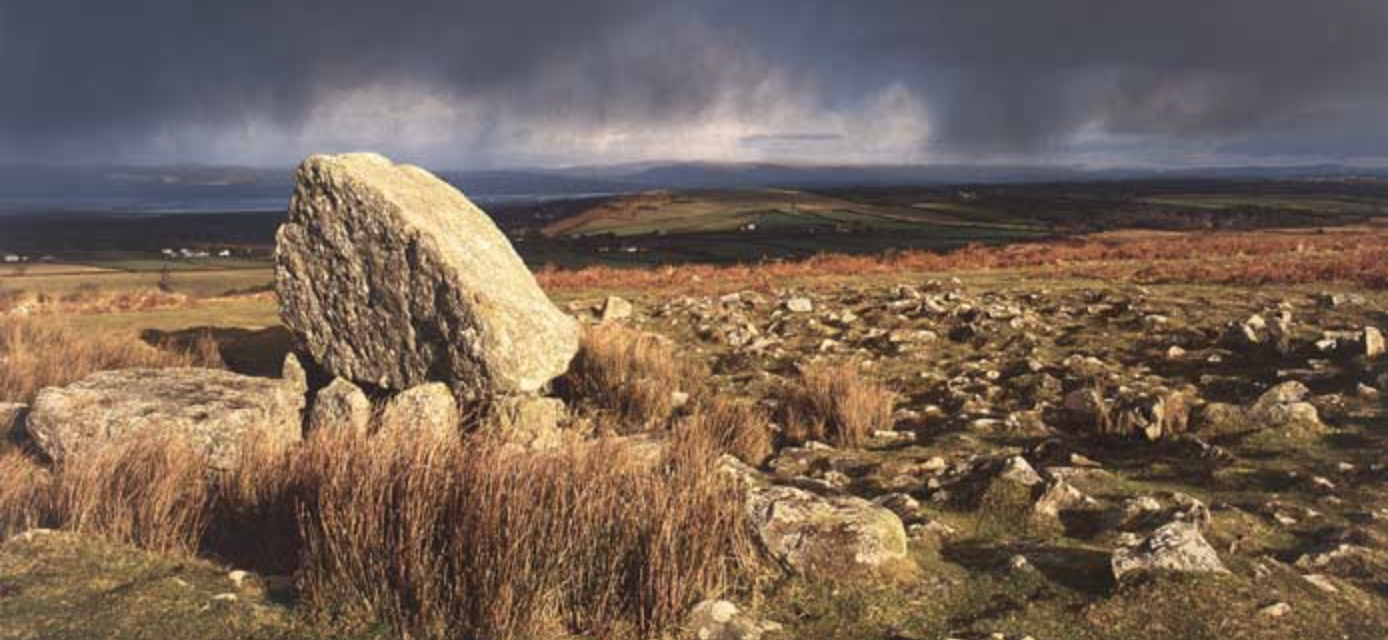
Aurthurs Stone

The Glamorgan History Walks try to cater for as many tastes as possible in the types of historic site we explore. These are the ones that will appeal to a very specific type of history buff.

If you are the kind of person who thinks Roman remains are a bit modern, then these are the walks for you. However, if you are from the bible belt in America and believe that the world is only 6,000 years old, I will be honest, you are going to struggle.

Glamorgan has some amazing BCE based history to be enjoyed. And it is incredibly varied.

Jurasic rock, fossils and dinosaur footprints

Dinosaur footprints found in Barry

There are sections of rock and cliff face in the Vale of Glamorgan which are made up of ancient layers of sand and mud. Over millions of years they have solidified preserving whatever was left in them. Everything from dinosaur footprints to fossils, all frozen in time. They also frequently yield some incredible specimens which get discovered by people like us. Just walking past.

You get to explore those areas of coast with us on the following walks. Who knows what you might find?

The Stone Age and the earliest human remains

The remains of the Red Lady of Paviland

We are blessed to have an extra ordinary site here in Glamorgan. Paviland cave on Gower. In the late 19th Century a burial was discovered here which was nick named “the Red Lady of Paviland”. It turned out to be a man but the nick name stuck all the same.

It also tuned out to the oldest burial ever discovered in Britain. Modern dating techniques have aged these remains to 31,000 BCE. A period of history known as the upper Palaeolithic. The earliest date to which we can attribute human life anywhere in the country. When the population of the UK would have been less than 50.

We do not go inside the cave as it can be dangerous, but we take you to where it is on our Port Eynon walk [28th June]

1,000 years older than Stone Henge

Long Cairn at Tinkinswood

This is not the only ancient burial we visit on our walks. In fact we visit 18 ancient burials and 6 Neolithic monuments. One of the more spectacular ones is Tinkinswood Long Cairn which is pictured above. Most people consider Stone Henge to be pretty old. This is roughly 1,000 years older. Just saying!

These are all our walks that take in Neolithic and Bronze Age burials:

Iron Age settlements and hill forts

Y Bwlwarcau Iron Age Hill Fort Llangynwyd on the Glamorgan History Walks and Talks
Y Bwlwarcau Iron Age Hill Fort Llangynwyd

There are 13 Iron Age sites on the various Glamorgan History walks. You can enjoy them on the following:

Come and join us on any of our walks. We’d love to see you.

A full list of walks in this year’s itinerary are available on this link. You can also read reviews of people who took part last year here.

So go ahead. Choose a walk. And I’ll see you there.

#glamwalks
Use the hashtag glamwalks to see Glamorgan History walks content on social media.
Posted on Leave a comment

King Arthur’s legacy on the Glamorgan History Walks

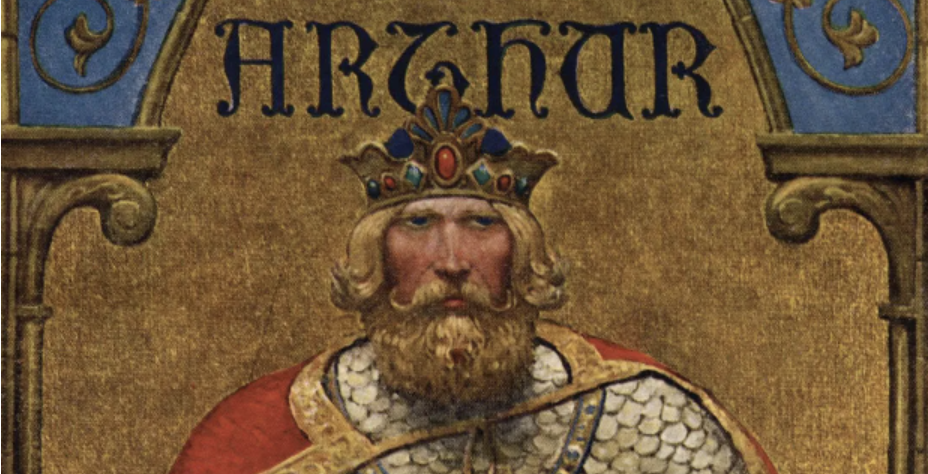
Arturos Rex (King Arthur) on his thrown

We could not possible organise a series of history walks in Glamorgan without taking in places associated with that most famous, local, kingly character; Arturos Rex. Better known as King Arthur. His enduring appeal is incredible.

The earliest written reference we have of him is a 6th Century Welsh poem called ‘Y Gododdin’. It’s not about him. He’s not even a character in it. It’s a poem about a disastrous military campaign where a gruff old warrior is described thus; “he was no Arthur”. No doubt illustrating how unsophisticated he was.

This reference, though fleeting, suggests that the name at least was already in the ether even then. And here we are, over 1,500 years later and if you do a search for him by name on any TV streaming service you are confronted with an endless parade of films, dramas and documentaries which attempt to pull together some real history from it all.

Contradictions and fake news

A lot of the stories we know about King Arthur come from a book called “The History of the Kings of Britain” written in the 12th Century. 600 years after Y Gododdin.

Despite the title of this book, there is very little in the way of genuine history in it. Before it gets on to Arthur it talks about how Britain was discovered by two Greek explorers who had to rid the island of giants before they could colonise it.

It also claims that a King of the Britons called ‘Morvidus’ was eaten by a sea monster around 336AD.

So not what you might describe as ‘reliable’.

The author, a monk called Geoffrey of Monmouth, sites a dark age predecessor called ‘Gildas the Wise’ as a source of his history about Arthur. Yet he contradicts Gildas on some really key events. Not least of which, the battle of Mons Badonicus, AKA the Battle of Baden Hill. According to Geoffrey of Monmouth this landmark battle which stoped the Saxon invasion of Britain in its tracks, was won by King Arthur. According to Gildas though (who was writing within 100 years of the battle) it was a man called Ambrosius Aurelianus. Arthur was not even mentioned as a footnote.

This is why I am instantly suspicious of anyone who claims to know deffinetavely who Arthur was. Every year, someone comes forward with yet another theory about where Camelot was or where Arthur’s tomb is. All of them interesting. But genuine history? Not so much.

Glamorgan’s Arthurian links

Having said that, we in Glamorgan are blessed with a treasure trove of places people have associated with the Legends of Arthur down the centuries. For some reason which I cannot fathom we do not seem to celebrate them in the same way as their English counterparts. If you have ever been to Glastonbury or Tintagel, you cannot move for references to their Arthurian connections. There is a gift shop on every street corner packed with roundtable mugs and Merlin figurines. There are signs up everywhere broadcasting their links and telling the stories. Even statues.

Arthurs stone Reynoldston

By contrast, you could visit Criag Y Ddinas or Llandaff Cathedral and be completely oblivious to their connections to the legendary king. We in Wales are very poor at promoting such things. And even worse at monetising them in the same way they do in England.

So we on the Glamorgan History Walks are determined to do our bit. To take you to the places in the county associated with Arthur, explain the links and tell you the stories to bring them to life. These are the ones you can visit with us and when we go there.

If you click on any of the dates in purple below, it will open a more detailed pages about the walk. It tells you how long the walk is in miles, what level of walker it is suited to, and the places we visit. You can also buy tickets.

Which Glamorgan history walks visit sites of Arthur’s stories

Come and join us on any of our walks. We’d love to see you.

A full list of walks in this year’s itinerary are available on this link. You can also read reviews of people who took part last year here.

So go ahead. Choose a walk. And I’ll see you there.

Glamorgan History Walkers
#glamwalks
Use the hashtag glamwalks to see Glamorgan History walks content on social media.

#kingarthur #arthurian #merlin #wizard

Posted on Leave a comment

Maritime history on the Glamorgan History walks

The Glamorgan Heritage Coast

It cannot have escaped your attention that Glamorgan has a spectacular coastline. And as you would expect, that comes with a wealth of maritime tradition and history.

Scott of the Antarctic

It was from these shores that Captain Scott set sail on the Terra Nova to explore the South Pole. In the 18th and 19th Century, millions of tons of coal and iron were exported from docks along this coast such as Cardiff, Barry and Swansea. And famous sea farers such as Thomas Matthews, Admiral of the Royal Navy fleet and the pirate Henry Morgan were both born here. Along with countless others.

In fact, several global sea faring traditions owe their origins to Glamorgan sea farers. Including the tale of Davy Jones’ locker which has inspired novels and Hollywood film plots by the ton. The name Davy is believed to be an anglicised corruption of Dewi. The Welsh equivalent of David.

If you are curious to discover more about this aspect of Glamorgan history, the Glamorgan History Walks are a great place to start. We have a series of walks that visit places which tell each part of the story of this county’s maritime history.

Here are the places we visit, the stories attached to them and the dates of the walks they are visited on. If you click on the date of the walk, it will open a page of information about that walk, and you will be able to buy tickets.

Ports, harbours and docks

Victorian Docks in Barry

We try and cover as many chapters of the region’s history as possible. Some of the places we visit were significant ports in the medieval period. They include Kenfig and Newton in Porthcawl. You can visit those places on these walks:

The site of Cardiff’s medieval port may come as surprise to many. But we visit that on our city centre walks – Cardiff Historic City Centre (using John Speed’s map of 1610) [8th June]…[10th July]

Aberthaw has been a port since the medieval period too. It became the busiest port in the county until Cardiff took its crown during the industrial revolution. We visit that and the remains of the old lime works. Aberthaw and Fonmon [22nd June]…[9th Aug]

Finally, Barry. Once the biggest coal exporting dock in the world. Also features on our walks. Barry Island [18th May]…[19th June]

Pirates, wreckers, smugglers and scoundrels

Smugglers and pirates

Not all of our connections with the sea are wholesome. In fact, the most interesting stories concern our colourful outlaws. Walk in their footsteps, see their hides and hear their stories. The walks where you hear the most about Pirates, wreckers and smugglers are the following:

Lighthouses, maritime architecture and landmarks

Nash Point lighthouse on the Monknash to St Donats walk on the Glamorgan History Walks and Talks
Nash Point lighthouse

We also visit some important buildings associated with our maritime history. Including:

Shipwrecks

The Bristol Channel is notorious. An incredibly dangerous waterway to navigate. On our walks we also visit the site of many shipwrecks. They include:

Come and join us on any of our walks. We’d love to see you.

A full list of walks in this year’s itinerary are available on this link. You can also read reviews of people who took part last year here.

So go ahead. Choose a walk. And I’ll see you there.

#glamwalks
Use the hashtag glamwalks to see Glamorgan History walks content on social media.

Posted on Leave a comment

Scars of World War II 80 years on

VE Day 80 years on

The 8th May 2025 marks 80 years since the end of the European leg of World War II. A series of official events are being planned all over the UK to mark the occasion. Everything from street parties to parades and marches. South Wales paid its own toll in the war. Not just through local people suffering as casualties on the front line, but also German bombing raids in 1941. Cardiff in January and Swansea in February.

VE day parade in Cardiff (May 1945)

You may be surprised at how many scars of the war are still available to see 80 years on, but if you know where to look they are all around us.

When we plan The Glamorgan History Walks festival, we try to ensure that there is a good mix of history topics to discuss. That means taking in a variety of sites which tell a story for each era.

So if the second World War is a subject you are interested in, especially in this important, commemorative year, here are the walks you can join and some of the sites you can see on them which are relevant to this important chapter in the history of the World.

There was a concern during the war, that the south Wales coast was a potential location for a German invasion. The Allies had already proven the viability of an amphibious landing at Sicily so it was not beyond the realms of possibility that the Germans might try the same here.

There were a couple of things that made south Wales viable. The sand on our beaches is very compact and forms a hard surface at low tide. Certainly hard enough to support the weight of armoured vehicles. Secondly, we are only a couple of hours drive from London. And Finally, the area, particularly when compared to the south coast of England, was poorly defended. Most of the military bases here were just training centres.

The result of this way of thinking was the re-enforcement of what few defences we had and the building of a chain of new defences. Concrete bollards nicknamed ‘dragons teeth’ sprung up along wide beach heads and routes out of the area. You can see examples on Gileston Beach which features as part of our St Athan walk on 3rd July. Bunkers and gun emplacements also sprung up along the coast.

If you come on the Glamorgan History Walks, you can visit them. They include various ‘pill boxes’ and bunkers on our walks at Llantwit Major on 12th June, St Athan on 3rd July and Monknash to St Donats on 19th July and 17th August. We also visit the site of WWI artillery gun emplacement which housed an ACAC Gun in WWII on our Barry Island walks on 18th May and 19th June. There is also a far more substantial gun battery on Lavernock Point which we visit on our Sully/Cosmeston walk on 16th August.

WWII Bunker near Llantwit Major
The bombed out shell of Llandaff Cathedral (Jan 1941)

There is also the opportunity on our walks to visit places that were changed for ever as a result of the Second World War.

In January 1941, Cardiff suffered its own blitz. The city was an obvious target as it housed one of Europe’s most significant coal exporting docks, and coal was still vital in the 1940s to Britain’s ability to wage war. It was what the Royal Navy needed to power its ships, what our trains used to move equipment, personnel and materials around the country and it was what powered our industry.

One of the casualties of these bombing raids was Llandaff Cathedral. It suffered a direct hit and had to be substantially rebuilt after the war. Here it is pictured in the aftermath.

We have walks that incorporate a visit to Llandaff Cathedral on 5th June and 21st August.

We also visit the cenotaph and garden of remembrance in Cathays Park on our Cardiff City Centre walks on 8th June and 10th July where we see more of the human cost of the war, albeit in a beautiful setting.

There were bases housing American GIs in the Porthcawl area and we also see evidence of that on a couple of our other walks. On our Kenfig and Sker walks on 24th May, also on 27th July and 14th September we see the old service road to the camp which is still there. Along with the remains of a sentry bunker. We can also see where the old air base was at nearby Stormy Down.

Meanwhile on our walks from Newton to Candleston on 7th June and also 21st September we pass through the old rifle range they trained on.

But by far the most exciting monument we have from the entire era is the wonderful Isalnd Farm POW Camp near Bridgend.

A lot of the camp has now been demolished but Hut Number 9 still stands and is a protected site. We visit it as part of our Merthyr Mawr walk on 10th May.

It is an incredible place and served several functions during the war. It started out as a dormitory for workers at the munitions factory in Bridgend. At the time, the biggest in Europe. It then became a base for US Service Personnel.

However, it is remembered in the history books for the period when it was a prisoner of war camp for high ranking German officers. Notoriety was guaranteed the night when 70 German POWs tunnelled out and escaped.

The single biggest break out of enemy soldiers in mainland Britain for the entirety of the war.

Oops!

Isalnd Farm POW Camp

What ever period of history you are interested in though, there is something for everyone on the Glamorgan History Walks. The full calendar of events is now published and tickets are on sale. Just click on this link to see them all. And if you need convincing how good these walks are, just read the feedback from people who came last year on Trip Advisor.

This video explains everything the festival of walks, history and storytelling has to offer:

#glamwalks
Use the hashtag glamwalks to see Glamorgan History walks content on social media.

Posted on Leave a comment

St David’s Day Celebrations at The Three Golden Cups, Southerndown.

St Davids Day poster 2025

Got any plans for Saturday 1st March 2025? It’s St David’s Day you know. And I am delighted to announce that myself and Chris Jones are hosting a day of events at the Three Golden Cups in Southerndown in Bridgend, and its going to be epic.

Guided walk with Chris

It all begins at 10.45am with my good friend Chris Jones guiding you on a walk across Southerndown, Dunraven, St Brides and Ogmore. With some guests and surprises along the way.

This walk is in Chris’ back yard.

It is approximately 8 miles in length and includes a couple of hills. But it is stunningly beautiful, has a great blend of coast and country and takes in two castles, two pubs and has plenty of toilet breaks.

Then its back to the Three Golden Cups where Janine has another surprise in store for you. A traditional Welsh Cawl, freshly prepared. Just what you need after a long walk to build your energy back. And it’s included in the price of your ticket. Although your drinks will be extra.

History talk with Graham.

After your cawl, sit back and enjoy an entertaining talk from yours truly. It will be a blend of real history as well as the ever popular legends and folklore. Unavoidable given the topic:

St David and the Welsh Dark Age Saints

So we will learn about that amazing period in history when Wales was producing some of the most famous intellectuals in Europe. And all the things they got up to.

Sound interesting? Well you can buy your ticket for the whole event for just £25 per person and tickets are now on sale. Numbers will be limited as there’s only so many people we can accommodate. So if you like the sound of it, click on this link to buy your tickets.

Posted on Leave a comment

St Baruc Pilgrimage Fundraiser

📅 27th September 2024

📍 Barry Island Railway Station 

⏰ 9.30am (Bus leaves for Llancarfan) 

10am walk sets off from Llancarfan church 

Distance: 6.2 miles

Finish 1.30-2.00pm (depending on pace) on Barry Island

☕️🍰 Drinks & refreshments at end of walk.

27th September is the feast day of St Baruc, a monk from Llancarfan who lived at the turning point of the sixth and seventh century. This year Vale Foodbank are marking his feast day with a special event. A pilgrimage and history walk that retraces his steps from Llancarfan to Barry Island. The reason we are celebrating him, is because he is the man that Barry is named after. His “miracles” also made Barry Island a place of pilgrimage for around 1,000 years.

When the father of British history; John Leland visited South Wales in the 1530s (around 1,000 years later) he described Barry Island as a place with no buildings other than the 13th Century chapel, the remains of which you can still see on Friars Walk. He said it was a very busy place, packed with pilgrims wanting to visit the chapel and holy well of St Baruc.

You can watch a more thorough account of his story on this video.

The story of St Baruc

Regardless of whether you believe in miracles, this was the town’s founding patron, and he deserves some recognition for that.

The event is being organised by a new kind of miracle worker. The Vale Foodbank. They badly need to raise much needed funds to help provide emergency food parcels for people in crisis in the Vale of Glamorgan. Year on year they have seen demand for food parcels rocket locally. They gave out 8,662 food parcels last year from their centres in Barry, Llantwit Major, Dinas Powys and Rhoose. An increase of 29% on the year before.

Meanwhile donations have reduced by 15% as people struggle with the increased cost of living. Walkers will be charged a small fee for taking part and all profits will go direct to the foodbank. So by taking part, you can help reverse this trend.

The walk itself will start at Llancarfan, in the church on the site of the 6th Century monastery where walkers will be shown the incredible mediaeval murals on the walls. Then onto Penmark and Porthkerry and all the way to Barry Island. History experts, authors, representatives of local churches and the odd celebrity will all add snippets of history and stories to add depth to the places we will pass through.


Buy your tickets via this sign up link.

Here’s some of the places and history you can expect along the way.

St Baruc Chapel Barry Island
sixteenth century murals at Llancarfan church

These amazing murals are in Llancarfan, where our walk begins. This was the monastery established by the amazing St Cadoc. Baruc was one of his disciples. If you want more information on him, follow this link.

Map showing route of St Baruc Pilgrimage for Vale Foodbank
Posted on 1 Comment

The success story of the Glamorgan History Walks

The Glamorgan History Walks was a walking festival of immersive history and storytelling that took ramblers around places of historic interest throughout South Wales. Bringing the stories of those places to life.

Between May and July in the Summer of 2024, over 350 people joined us on 15 walks to over 50 sites of historic interest in various locations across the counties of Bridgend, Vale of Glamorgan and Rhondda Cynon Taff.

We took in many castles, hill forts, barracks, burial chambers and tombs, great houses, churches, the site of lost settlements, smugglers’ coves and pirates’ hideaways. Even the odd battlefield, Prisoner of War camp, windmill and lighthouse. And of course, some great old pubs.

The festival was a great success. But it is not without its legacy.

All of the walks we did are now available to download for free, so you can be guided around them using the GPS on your mobile phone. You can also read notes on the routes and places you visit, and see which periods of history are relevant to those places. You can even watch videos to bring their stories to life.

Start your journey by visiting the Glamorgan History Walks web page. Choose a walk from the list and click through to the relevant page. To use the maps you will need to download the OS Maps App (which is also free).

The places we went to included:

  • Dunraven and Ogmore Castles
  • Llantwit Major
  • Monknash and St Donats
  • Barry and Porthkerry
  • Llantrisant
  • St Athan and Gileston
  • Llangynwyd
  • Coity
  • Merthyr Mawr and Island Farm POW camp
  • Kenfig Pool and Castle and Sker House
  • Mynydd Y Gaer and Peterston Super Montum
  • Cefn Cribwr, Bedford Iron Works and Sturmi Castle
  • Newton and Candleston
  • Dinas Powys
  • Cowbridge and St Hilary

Get out into the great and beautiful scenery of South Wales and enjoy everything these walks have to offer.

Walkers on their way to Kenfig CAstle on the Glamorgan History Walk
Posted on Leave a comment

History Walks and Talks in Glamorgan | Summer 2024

Glamorgan History Walks and Talks logo
Glamorgan history walks and talks

It has been raining so hard for so long here in Wales lately that I’m beginning to forget that it ever wasn’t raining. A depressing prospect for someone who loves nothing more than taking a walk around some local, historic monuments or sites of historic or legendary interest. Without having to wipe raindrops off my glasses to be able to appreciate them.

But of course we had a glorious Summer last year. So, the time has come to start looking forward and thinking about what we are going to do when weekends start to get warmer and dryer. When it stays light well into the evening.

To that effect I am planning a programme of history walks and talks this summer which I am inviting you to join me on. The plan is that they will all incorporate the following magical ingredients:

  • Walks of between 4 & 6 miles for various abilities
  • Start times around 9:00am
  • Beautiful Welsh countryside
  • Places of historical interest
  • The setting of some of Wales’ most wonderful legends and folklore
  • An author and broadcaster of Welsh history and other experts to tell the stories, sing the songs and bring them to life
  • Some weather (not necessarily sunshine, but definitely something!)
  • Some fun and laughs along the way
  • Always ending up at a pub for lunch and refreshments.
Jasper the history hound guarding my seat

This is roughly how the progamme is likely to look, but at this early stage it is subject to change:

History Walks and Talks in the Vale | May 2024

  • Saturday 4th May: Southerndown – Dunraven – St Brides – Ogmore Castle – Ogmore Estuary – The Three Golden Cups.
  • Saturday 11th May: Llantwit Major Square – The Castle Ditches – Collhugh Beach – Tresilian Bay – The Olde Swan Inn
  • Saturday 18th May: Monknash – Wick Beach – Nash Point – St Donats – The Plough & Harrow
  • Saturday 25th May: Dinas Powys Square – St George Woods – The Iron age Fort – Salmon leaps – The Star Inn
  • Bank Holiday Monday 27th May: St Athan – Berkerolles Tombs – East Orchard Castle – Boys Village – Gileston Manor – The Roost

History Walks and Talks in Bridgend | June 2024

  • Saturday 1st June: Ogmore Castle – Merthyr Mawr – Candleston Castle – Dipping Bridge – The Pelican in her Piety
  • Saturday 8th June: Coity Castle – Coity Common – Hendre – The Five Bells
  • Saturday 15th June: Llangynwyd Village – Llangynywd Castle & Woods – Gelli Lenor Fawr – The Old House Inn
  • Saturday 22nd June: Blackmill – Primaevel Woods – Mynydd Y Gaer – Peterston Super Montum – The Fox and Hounds
  • Saturday 29th June: Kenfig Pool – Sker House – Kenfig Castle – Mawdlam Church – The Prince of Wales

If there is enough demand, I may well add further walks in the other counties of Glamorgan. Namely Cardiff, RCT, Merthyr Tydfil and Caerphilly through July and August. As well as a pilgrimage walk I am planning from Llancarfan to the shrine of St Baruc on Barry Island on his feast day of Friday 27th September 2024. So watch this space.

In a nutshell, if you love history, and you love walks, pubs, South Wales and chirpy banter – then you’ll probably enjoy these walks.

If you would like to come along, tickets with be on sale soon for £10 per walker per walk, and will be available from this site and Eventbrite.

Over the coming weeks I will be doing risk assessments on each of the walks to make sure the routes are suitable but if you do fancy joining me, there are a couple of things you need to take into consideration.

  • We will be walking across country on public footpaths rather than just on roads and pavements. There will be mud, puddles, rocks and uneven surfaces. So stout footwear is required.
  • Many of these public footpaths require you to be able to climb over gates and styles. Dogs (on leads) and push chairs are welcome on these walks but you need to be prepared to lift them over such obstacles.
  • Like any outdoor activity you will need to be prepared for the predicted weather conditions of the day. Waterproofs for rain, sun hats and sunscreen for sunny days and so on.
  • Water bottles are essential to keep hydrated on these walks. You may also want energy boosting snacks.
  • When I publish the individual walk details they will feature important information to help you decide if the walk matches your abilities. These include distances in miles, the type of terrain we will cross, if the going is easy or tough, and if any climbing is involved. I will also flag any potential hazards such as stepping stones or cliffs. Please read these details carefully before committing to a walk. 🚶

If you would like to be notified when the itinerary is completed and tickets are available, or even if you just want to ask a question, please use the form below:-

Go back

Your message has been sent

Warning
Warning
Warning

Click the “Contact Us” button below to receive further information about the Glamorgan History Walks and Talks (when available).

Warning.