Posted on 2 Comments

Glamorgan Heritage: Unique T-Shirts Celebrating Local Legends

Legends T shirts montage

As you know, I am something of a nerd when it comes to Glamorgan legends and folklore. I make no apologise for that. Glamorgan can boast some absolutely incredible and fantastic stories and we have all come to love them over the years.

Here is a new way you can enjoy them and celebrate them. I have launched a new clothing brand called “Glamorgan Heritage”, and hot off the press comes this new range. A series of beautifully designed and quality made T shirts, commemorating those great stories and the people at the centre of them.

Some of them comic, some them artistic. All of them unique.

Local legends with a twist

As much as you may be familiar with the subjects and stories, you might like a couple of special new twists I have added.

First of all, each one has been designed in the style of a famous art movement. Everything from classic baroque masterpieces to pop art and comic strip. So there should be a style to appeal to everybody.

Secondly, they are also a little bit “tongue-in-cheek”. Not meant to be taken too seriously.

Here are the ones you can enjoy.
King Iestyn ap Gwrgant of Morgannwg

Iestyn ap Gwrgant was the Welsh king who lost his kingdom of Morgannwg to the invading Norman army of Robert Fitzhamon, Duke of Gloucester in 1090.

As much as he was a real person from history, there are many embellished stories and legends about him. Most from Sir Edward Stradlings “The taking of Glamorgans lands out of Welsh mens’ hands”.

On this T Shirt he has been drawn in the style of an action comic super hero. Based on his language we also catch him on a bit of an off day in his campaign against the Norman invaders.

I am sure King Iestyn would be very proud of the fact that he is available in a range of different colours, and of course, in the language of heaven. Although some poetic license is needed. Like I say, these T Shirts are just intended to be a bit of fun. I am fully aware that the words spoken by Iestyn are not what would have been used in the 11th Century.

The Coronation of King Arthur at Llandaff

Coronation of Arthur T shirt front

According to Geoffrey of Monmouth, author of “History of the Kings of Britain”, Arthur was crowned King of the Britions by St Dyfrig at Llandaff.

On this T shirt the moment has been captured in the style of a Baroque master such as Carrivagio.

Arthurian symbols such as the red dragon and the three crowns are on show. Along with the famous Epstein statue “Christ in his majesty” which was installed at Llandaff in 1954. Just in time then!

The Maid of Cefn Ydfa

One of the most enduring romantic tales ever recorded is that of Ann Maddox (nee. Thomas), the Maid of Cefn Ydfa in Llangynwyd.

In the story, when her romance with pennyless bard and thatcher Wil Hopkyn is discovered, she is imprisoned in her own bedroom with all writing materials confiscated. But so determined was she to communicate with her lover, she plucked leaves from the tree outside her bedroom window and wrote him love letters in her own blood.

Here she is captured writing the final verse of the love song “Bugeilio’r gwenith gwyn” on a leaf big enough to accomodate it. It is drawn in the style of Charles Robert Lesley’s portrait of Juliette contemplating.

Caradog tribal chief of the Silures

Caradog T shirt front

In the First Century, south Wales bravely fought off the invading Romans under the leadership of a charismatic warrior king. Caradog. Known in Latin as Caracticus.

Their defence of their lands was resolute. The most mighty empire on the face of the earth was held at bay for over a decade.

In the midst of the real history there are many legends and stories about Caradog and his brave defence of his country.

This T shirt shows Caradog in mid fight with some invading Romans. It is drawn in the style of one of my favourite comic strip characters. The cartoons of Asterix the Gaul. A fictional character with a similar CV.

The Highwayman Cap Coch

Cap Coch was a terrifying character from Glamorgan folklore.

He ran the New Inn near the Dipping Bridge in Merthyr Mawr. In the dead of night he would creep around the rooms of his guests, slitting their throats and robbing them. He would dispose of their bodies by throwing them into the river Ogmore next to the inn.

In this T shirt we have Cap Coch depicted in the Manga comic strip style. Chillingly offering someone a room facing the river.

We also have a representation of the Dipping Bridge in the background.

Cap Coch T-Shirt front

Kenfig is lost

Kenfig is lost t shirt front

The loss of a thriving community and town to nature is always the stuff of legends. And here in Glamorgan we have the incredible tale of how the once great city of Kenfig was devoured by a tidal wave and hidden forever in a watery grave beneath Kenfig Pool. All in recompense for the actions of a love sick boy who commits murder in order to make himself the suitor of the woman he loves.

The scene is captured here as the town is all but lost, in the style of the Romantic artistic movement associated with the likes of Turner and Constable.

Ifor Bach kidnaps the Earl of Gloucester from Cardiff Castle

In the 12th Century, Ifor Bach, the Welsh lord of Sengenydd was so furious with William Fitz Robert, the Earl of Gloucester for stealing his land, that one night, he and his soldiers rode up to Cardiff Castle, broke in and kidnapped the Earl.

Ifor Bach held him captive in the dungeons of Castell Coch until the Earl agreed to give back all the land he had taken plus a bit more for good measure.

Here we see the daring raid captured in the ‘Pop Art’ style made famous by the likes of Andy Warhol and David Hockney.

Ifor Bach T shirt Front

The Wreckers of Dunraven

Wreckers of Dunraven T shirt front

Walter Vaughan of Dunraven Castle, Southerndown lost his fortune at the gaming tables.

To refill the coffers he joined forces with a local pirate and cut throat called Matt o’ the Iron Hand. Together they reeked havoc on shipping trying to navigate the Bristol Channel.

Through a combination of burning a bright beacon at the castle and tying lanterns to the tails of sheep grazing on the cliff tops, they lured countless ships on to the rocks. Then they plundered what they could from the spoils that washed up on the beach.

This one done in the style of an impressionist painting.

Good aren’t they?

All of these garments are designed and distributed by the “Glamorgan Heritage” brand.

We will also be shortly announcing a range of heritage Glamorgan sporting memorabilia. Celebrating great names and teams of the past and their incredible achievements. Again, there will be a twist so watch this space.

All of these T Shirts are custom made so please read the full descriptions for an idea of turn around time. It is normally 5-7 days.

So get your orders in early for Father’s Day on 15th June 2025! Just saying!

More information on the entire range available at www.glamorganheritage.co.uk.

Glamorgan Heritage Clothing
Legends T shirts montage

Posted on Leave a comment

Ancient history on the Glamorgan History Walks

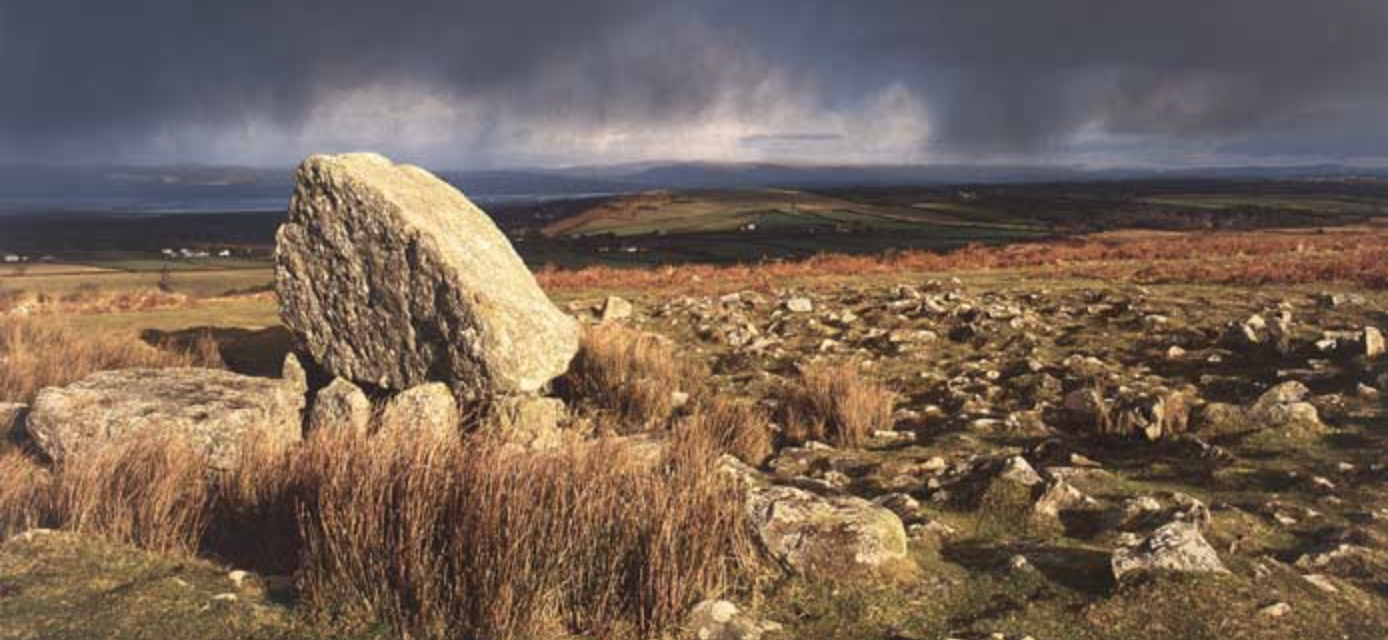
Aurthurs Stone

The Glamorgan History Walks try to cater for as many tastes as possible in the types of historic site we explore. These are the ones that will appeal to a very specific type of history buff.

If you are the kind of person who thinks Roman remains are a bit modern, then these are the walks for you. However, if you are from the bible belt in America and believe that the world is only 6,000 years old, I will be honest, you are going to struggle.

Glamorgan has some amazing BCE based history to be enjoyed. And it is incredibly varied.

Jurasic rock, fossils and dinosaur footprints

Dinosaur footprints found in Barry

There are sections of rock and cliff face in the Vale of Glamorgan which are made up of ancient layers of sand and mud. Over millions of years they have solidified preserving whatever was left in them. Everything from dinosaur footprints to fossils, all frozen in time. They also frequently yield some incredible specimens which get discovered by people like us. Just walking past.

You get to explore those areas of coast with us on the following walks. Who knows what you might find?

The Stone Age and the earliest human remains

The remains of the Red Lady of Paviland

We are blessed to have an extra ordinary site here in Glamorgan. Paviland cave on Gower. In the late 19th Century a burial was discovered here which was nick named “the Red Lady of Paviland”. It turned out to be a man but the nick name stuck all the same.

It also tuned out to the oldest burial ever discovered in Britain. Modern dating techniques have aged these remains to 31,000 BCE. A period of history known as the upper Palaeolithic. The earliest date to which we can attribute human life anywhere in the country. When the population of the UK would have been less than 50.

We do not go inside the cave as it can be dangerous, but we take you to where it is on our Port Eynon walk [28th June]

1,000 years older than Stone Henge

Long Cairn at Tinkinswood

This is not the only ancient burial we visit on our walks. In fact we visit 18 ancient burials and 6 Neolithic monuments. One of the more spectacular ones is Tinkinswood Long Cairn which is pictured above. Most people consider Stone Henge to be pretty old. This is roughly 1,000 years older. Just saying!

These are all our walks that take in Neolithic and Bronze Age burials:

Iron Age settlements and hill forts

Y Bwlwarcau Iron Age Hill Fort Llangynwyd on the Glamorgan History Walks and Talks
Y Bwlwarcau Iron Age Hill Fort Llangynwyd

There are 13 Iron Age sites on the various Glamorgan History walks. You can enjoy them on the following:

Come and join us on any of our walks. We’d love to see you.

A full list of walks in this year’s itinerary are available on this link. You can also read reviews of people who took part last year here.

So go ahead. Choose a walk. And I’ll see you there.

#glamwalks
Use the hashtag glamwalks to see Glamorgan History walks content on social media.
Posted on Leave a comment

King Arthur’s legacy on the Glamorgan History Walks

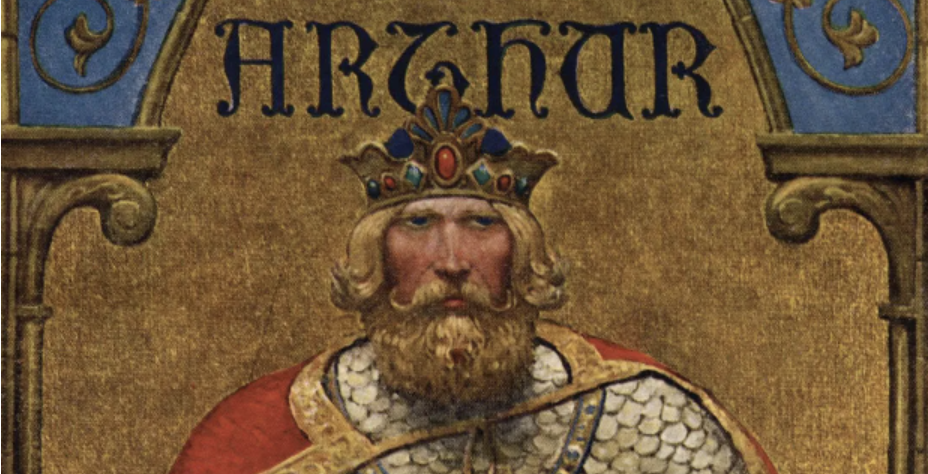
Arturos Rex (King Arthur) on his thrown

We could not possible organise a series of history walks in Glamorgan without taking in places associated with that most famous, local, kingly character; Arturos Rex. Better known as King Arthur. His enduring appeal is incredible.

The earliest written reference we have of him is a 6th Century Welsh poem called ‘Y Gododdin’. It’s not about him. He’s not even a character in it. It’s a poem about a disastrous military campaign where a gruff old warrior is described thus; “he was no Arthur”. No doubt illustrating how unsophisticated he was.

This reference, though fleeting, suggests that the name at least was already in the ether even then. And here we are, over 1,500 years later and if you do a search for him by name on any TV streaming service you are confronted with an endless parade of films, dramas and documentaries which attempt to pull together some real history from it all.

Contradictions and fake news

A lot of the stories we know about King Arthur come from a book called “The History of the Kings of Britain” written in the 12th Century. 600 years after Y Gododdin.

Despite the title of this book, there is very little in the way of genuine history in it. Before it gets on to Arthur it talks about how Britain was discovered by two Greek explorers who had to rid the island of giants before they could colonise it.

It also claims that a King of the Britons called ‘Morvidus’ was eaten by a sea monster around 336AD.

So not what you might describe as ‘reliable’.

The author, a monk called Geoffrey of Monmouth, sites a dark age predecessor called ‘Gildas the Wise’ as a source of his history about Arthur. Yet he contradicts Gildas on some really key events. Not least of which, the battle of Mons Badonicus, AKA the Battle of Baden Hill. According to Geoffrey of Monmouth this landmark battle which stoped the Saxon invasion of Britain in its tracks, was won by King Arthur. According to Gildas though (who was writing within 100 years of the battle) it was a man called Ambrosius Aurelianus. Arthur was not even mentioned as a footnote.

This is why I am instantly suspicious of anyone who claims to know deffinetavely who Arthur was. Every year, someone comes forward with yet another theory about where Camelot was or where Arthur’s tomb is. All of them interesting. But genuine history? Not so much.

Glamorgan’s Arthurian links

Having said that, we in Glamorgan are blessed with a treasure trove of places people have associated with the Legends of Arthur down the centuries. For some reason which I cannot fathom we do not seem to celebrate them in the same way as their English counterparts. If you have ever been to Glastonbury or Tintagel, you cannot move for references to their Arthurian connections. There is a gift shop on every street corner packed with roundtable mugs and Merlin figurines. There are signs up everywhere broadcasting their links and telling the stories. Even statues.

Arthurs stone Reynoldston

By contrast, you could visit Criag Y Ddinas or Llandaff Cathedral and be completely oblivious to their connections to the legendary king. We in Wales are very poor at promoting such things. And even worse at monetising them in the same way they do in England.

So we on the Glamorgan History Walks are determined to do our bit. To take you to the places in the county associated with Arthur, explain the links and tell you the stories to bring them to life. These are the ones you can visit with us and when we go there.

If you click on any of the dates in purple below, it will open a more detailed pages about the walk. It tells you how long the walk is in miles, what level of walker it is suited to, and the places we visit. You can also buy tickets.

Which Glamorgan history walks visit sites of Arthur’s stories

Come and join us on any of our walks. We’d love to see you.

A full list of walks in this year’s itinerary are available on this link. You can also read reviews of people who took part last year here.

So go ahead. Choose a walk. And I’ll see you there.

Glamorgan History Walkers
#glamwalks
Use the hashtag glamwalks to see Glamorgan History walks content on social media.

#kingarthur #arthurian #merlin #wizard

Posted on Leave a comment

Industrial Heritage on the Glamorgan History Walks

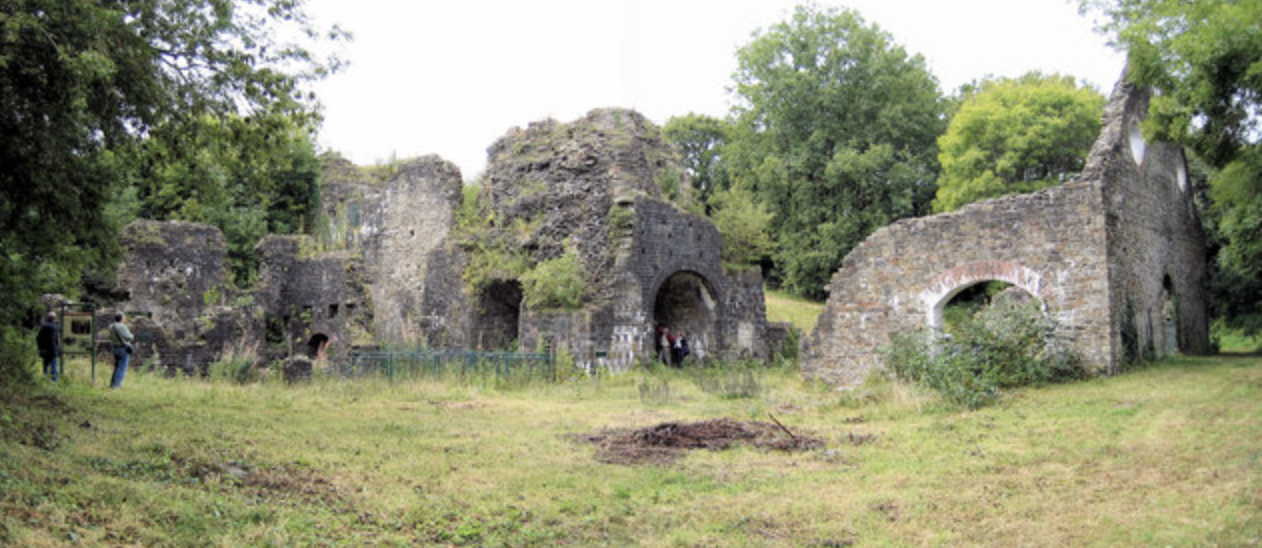
Bedford Iron Works Cefn Cribwr on the Glamorgan History Walks and Talks

One chapter of Glamorgan history better known than most is our industrial past.

We were behind so much. Lord Nelson insisted that the canon used by the Royal Navy were made from Merthyr Tydfil Iron. The anchor chains of choice were made in Pontypridd and when steam power took over from wind power, the furnaces on Naval ships would only burn coal from Welsh mines. And thats just one customer.

But the days of endless miles of pit winding towers and iron works are long gone. Today if you want to find clues to our industrial past you need to go on something of a voyage of discovery. And that is where the Glamorgan History Walks festival can come in handy. Because we uncover quite a few, and go to places where you can get a flavour of what it used to be like here.

The hang overs from a time a when coal was king are all around the county and are varied.

Our walks pass through many places which were once bustling mining communities and we uncover what is left to see as we visit them.

For example, at one time, a string of mines ran along the valleys of the Kenfig, Llynfi and Dyffryn Valleys north of Bridgend.

Cefn signal box has some fascinating momentoes of that time. With drams and exhibits and photographs to bring it all back to life for you.

We visit this amazing place as part of our Cefn Cribwr walk on [31st May]. Information on how to join this and any of our walks are available if you click the link (on the date).

Getting the coal from the valleys where it was mined to the end users all over the world was a gargantuant task. It resulted in the building of a maze of canals and railways.

We walk along the bank of the Glamorgan canal as part of our Llandaff walk  [5th June]…[21st Aug]. And we see one of these amazing old railways still being used by steam locomotives on the Brecon Mountain Railway which we pass on our Pant and Pontiscill walk [5th July]. We also get a great view of the Pontiscill viaduct on this walk.

All of those railways and canals wound their way south from the valleys to any one of the areas coal exporting docks.

Cardiff, Swansea, Newport to name but a few.

But on our walks, we visit the biggest of them all.

Barry Dock. In its day it was the biggest coal exporting dock in the world. We walk above it, taking in the modern version of the view you can see in this picture on our two Barry Island walks [18th May]…[19th June].

Victorian Docks in Barry

Then of course, there was the iron. Merthyr Tydfil was the iron capital of the world in its heyday, and we get to see the scars it made on the landscape on our Pant and Pontiscill walk [5th July]. We also visit the remains of the Bedford Iron Works as part of our Cefn Cribwr walk [31st May] which is pictured at the top of this item.

We also talk about the social impacts of this time and on the people who worked in these places. This poem being a great example of what life was like for the workers of this era.

A full list of walks in this year’s itinerary are available on this link. You can also read reviews of people who took part last year here.

So go ahead. Choose a walk. And I’ll see you there.

#glamwalks
Use the hashtag glamwalks to see Glamorgan History walks content on social media.

Posted on Leave a comment

Castles and Great Houses – Glamorgan History Walks

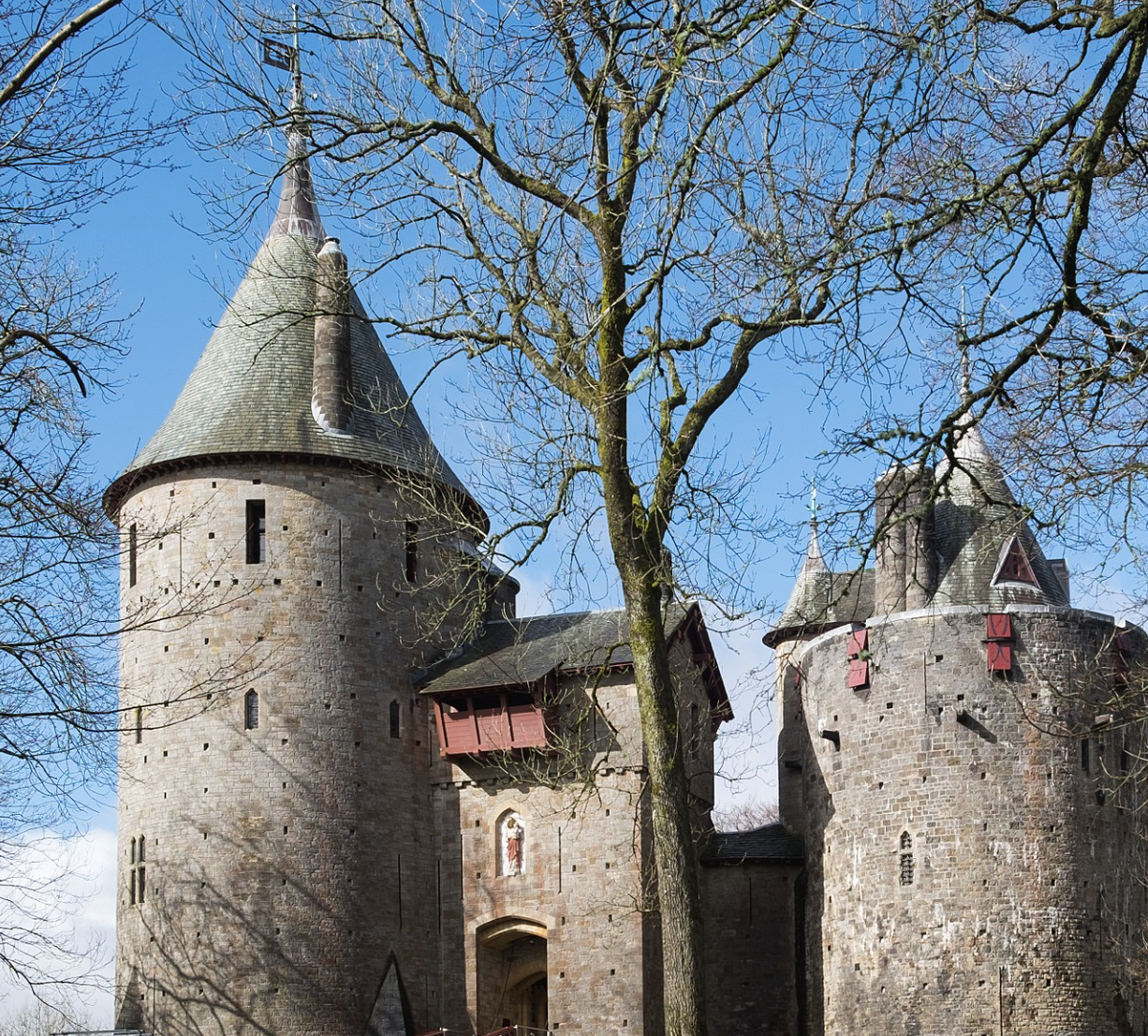
Castell Coch

Wales is famous for its castles. More per square mile than anywhere else in the world apparently. Over 600 in total and that doesn’t include those which are little more than bumps in the ground. Here in Glamorgan, it is safe to say “we’ve got loads”, but you may be surprised to hear that it’s difficult to put an exact number on it. For a variety of reasons.

For example Cyfartha Castle in Merthyr Tydfil. Pictured here. It may have the word ‘castle’ in its name. It may also have crenelations. But in reality it is a 19th Century mansion built by the Crawshay family to look like a castle. So, should we count that one?

We run into similar problems with the enigmatic Castell Coch pictured at the top of this item. The site this castle is built on has been a castle since the early medieval period. In fact we have a fabulous story about its inhabitant from the early 12th Century. The Welsh Lord of Senghenydd called Ifor Bach.

He took issue with William Fitz Robert, the Norman Earl of Glamorgan for taking his land. So he rode down to Cardiff Castle and kidnapped William, his wife, their son and the daughter of the Earl of Leicester, and held them all hostage until he received due compensation.

That sounds all together more ‘castley’ doesn’t it. (Probably not a real word) But then you have to take into account that the building where all this happened all those centuries ago is not the one you are looking at today. The building there now is more of a Victorian ‘folly’ than a medieval castle.

The reason; William Crichton Stuart, the Marquis of Bute, who owned this land was obsessed with gothic, medieval architecture. But not the genuine stuff we have loads of around here. But a fairy tale version of it. So he commission an architect called Burgess to build him a castle based on ‘his idea’ of what a medieval castle should be. Ironically Burgess had to pull down what remained of the real medieval castle to do it!

This structure owes its appearance to a visit to Carcassonne in southern France rather than to the original medieval castle it replaced.

Having said all that, there are a lot of very genuine medieval castles here too. Cardiff Castle for example. It may have started out as a Roman fort, but in the late 11th Century it was taken over and rebuilt by Robert Fitzhamon, Duke of Gloucester and became the Norman stronghold of the region. The keep and black tower in particular are fantastic examples of Norman/ Mid Medieval castle architecture.

Then of course you have the nearby Caerphill Castle. Occupying 30 acres, it is the largest castle in Wales. Built by Gilbert de Claire to protect his northern lands from raiding Welsh lords between 1268-71. As genuine and unique an example of medieval military architecture as you could hope to find any where.

Cardiff Castle Norman Keep
Aerial view of Caerphilly Castle

So, its not the number of castles we’ve got here that’s the important thing. It is the variety and breadth of architecture we have in Glamorgan. It is quite breath taking .

On the Glamorgan History Walks you get to visit some of the most interesting. To see them for your self, and to hear the stories of what happened there.

Beyond the castles of course, there are also plenty of significant manor house and great houses that we visit on our walks too. Just as impressive, just as much history and in many cases achingly beautiful.

So if you want to come along and explore them with us, here’s the list. It also tells you which walks you can see them on, and what dates they take place. Click on the dates to see more information on any of the walks and to buy tickets.

Please note that on our walks we will show you, or take you to these castles and houses, but in most cases we will not be going inside them.

Castles and related walks

Great Houses and related walks

For a full list of all the walks, click here. To read reviews of people who joined us on these walks last year, click here.

#glamwalks
Use the hashtag glamwalks to see Glamorgan History walks content on social media.
Posted on Leave a comment

Identify the landmarks and win Free tickets & T Shirts for the Glamorgan History Walks 2025.

Competition time

COMPETITION NOW CLOSED.

We are now just a few weeks away from the start of this year’s Glamorgan History Walks Festival. Here’s your chance to get some free tickets and free merch. And yes, it’s all absolutely FREE!

The Glamorgan History Walks festival is an award winning series of walks taking in sites of historic interest across South Wales. Each walk is led by an expert in the history of the places you will be visiting. This year the event includes over 50 walks, of varying lengths and accessibility from Gower to the border with Gwent. So there is something for everyone.

They include:

  • 18 castles
  • 13 Iron Age hill forts
  • 2 medieval pilgrimage routes
  • A Roman fort
  • 18 ancient burials
  • 6 Neolithic monuments
  • 11 great houses
  • 15 medieval churches and a cathedral
  • 3 battlefields
  • Sites of execution, lost settlements, and industrial landmarks
  • Even the earliest burial ever found in the UK!

Last year, this festival received a special award from Visit Wales. Read the reviews of people who took part here.

Visit Wales award
Visit Wales award
St Peters Church

Our lucky winner will receive

Two FREE tickets to take part in a walk of their choice

And

Two FREE & exclusive ‘Iolo Morganwg’ T-Shirts (As pictured below).

Saving you £40 if you were to buy these items.

The full list of walks is available on this link.

Glamorgan History walks Iolo Morganwg T ShirtGlamorgan History walks Iolo Morganwg T Shirt [BACK]

Below are a series of photographs of well known landmarks. They all feature in one or more of the Glamorgan History Walks. What you need to do is fill out the form at the bottom of the page. On it you must write:

  • The name the land mark is known by.
  • The name of any walk this landmark features in.
  • Complete your name, postal address (so you can receive your T shirts), preferred T shirt size and email address on the form and hit ‘send’.
  • The winner will be drawn at random from all the correct submission received before the closing date.

Closing date for submissions is midnight on Easter Sunday (20th April 2025). Entries after that will be ignored.

T-shirt prize is only available to postal addresses in mainland UK.

Only one entry per person.

1.

Dinas Rock Glyneath

2.

Fonmon Castle

3.

4.

Cardiff Castle western appartments

5.

6.

Pontsticill Reservoir

7.

Medieval murals in Llancarfan Church

8.

Ogmore castle

← Back

Your entry has been sent. Good Luck!

Just fill out the form and hit the SEND button.

#glamwalks
Use the hashtag glamwalks to see Glamorgan History walks content on social media.

Posted on Leave a comment

Scars of World War II 80 years on

VE Day 80 years on

The 8th May 2025 marks 80 years since the end of the European leg of World War II. A series of official events are being planned all over the UK to mark the occasion. Everything from street parties to parades and marches. South Wales paid its own toll in the war. Not just through local people suffering as casualties on the front line, but also German bombing raids in 1941. Cardiff in January and Swansea in February.

VE day parade in Cardiff (May 1945)

You may be surprised at how many scars of the war are still available to see 80 years on, but if you know where to look they are all around us.

When we plan The Glamorgan History Walks festival, we try to ensure that there is a good mix of history topics to discuss. That means taking in a variety of sites which tell a story for each era.

So if the second World War is a subject you are interested in, especially in this important, commemorative year, here are the walks you can join and some of the sites you can see on them which are relevant to this important chapter in the history of the World.

There was a concern during the war, that the south Wales coast was a potential location for a German invasion. The Allies had already proven the viability of an amphibious landing at Sicily so it was not beyond the realms of possibility that the Germans might try the same here.

There were a couple of things that made south Wales viable. The sand on our beaches is very compact and forms a hard surface at low tide. Certainly hard enough to support the weight of armoured vehicles. Secondly, we are only a couple of hours drive from London. And Finally, the area, particularly when compared to the south coast of England, was poorly defended. Most of the military bases here were just training centres.

The result of this way of thinking was the re-enforcement of what few defences we had and the building of a chain of new defences. Concrete bollards nicknamed ‘dragons teeth’ sprung up along wide beach heads and routes out of the area. You can see examples on Gileston Beach which features as part of our St Athan walk on 3rd July. Bunkers and gun emplacements also sprung up along the coast.

If you come on the Glamorgan History Walks, you can visit them. They include various ‘pill boxes’ and bunkers on our walks at Llantwit Major on 12th June, St Athan on 3rd July and Monknash to St Donats on 19th July and 17th August. We also visit the site of WWI artillery gun emplacement which housed an ACAC Gun in WWII on our Barry Island walks on 18th May and 19th June. There is also a far more substantial gun battery on Lavernock Point which we visit on our Sully/Cosmeston walk on 16th August.

WWII Bunker near Llantwit Major
The bombed out shell of Llandaff Cathedral (Jan 1941)

There is also the opportunity on our walks to visit places that were changed for ever as a result of the Second World War.

In January 1941, Cardiff suffered its own blitz. The city was an obvious target as it housed one of Europe’s most significant coal exporting docks, and coal was still vital in the 1940s to Britain’s ability to wage war. It was what the Royal Navy needed to power its ships, what our trains used to move equipment, personnel and materials around the country and it was what powered our industry.

One of the casualties of these bombing raids was Llandaff Cathedral. It suffered a direct hit and had to be substantially rebuilt after the war. Here it is pictured in the aftermath.

We have walks that incorporate a visit to Llandaff Cathedral on 5th June and 21st August.

We also visit the cenotaph and garden of remembrance in Cathays Park on our Cardiff City Centre walks on 8th June and 10th July where we see more of the human cost of the war, albeit in a beautiful setting.

There were bases housing American GIs in the Porthcawl area and we also see evidence of that on a couple of our other walks. On our Kenfig and Sker walks on 24th May, also on 27th July and 14th September we see the old service road to the camp which is still there. Along with the remains of a sentry bunker. We can also see where the old air base was at nearby Stormy Down.

Meanwhile on our walks from Newton to Candleston on 7th June and also 21st September we pass through the old rifle range they trained on.

But by far the most exciting monument we have from the entire era is the wonderful Isalnd Farm POW Camp near Bridgend.

A lot of the camp has now been demolished but Hut Number 9 still stands and is a protected site. We visit it as part of our Merthyr Mawr walk on 10th May.

It is an incredible place and served several functions during the war. It started out as a dormitory for workers at the munitions factory in Bridgend. At the time, the biggest in Europe. It then became a base for US Service Personnel.

However, it is remembered in the history books for the period when it was a prisoner of war camp for high ranking German officers. Notoriety was guaranteed the night when 70 German POWs tunnelled out and escaped.

The single biggest break out of enemy soldiers in mainland Britain for the entirety of the war.

Oops!

Isalnd Farm POW Camp

What ever period of history you are interested in though, there is something for everyone on the Glamorgan History Walks. The full calendar of events is now published and tickets are on sale. Just click on this link to see them all. And if you need convincing how good these walks are, just read the feedback from people who came last year on Trip Advisor.

This video explains everything the festival of walks, history and storytelling has to offer:

#glamwalks
Use the hashtag glamwalks to see Glamorgan History walks content on social media.

Posted on Leave a comment

Step Into History: Glamorgan History Walks Festival Returns For 2025.

Glamorgan History walks 2025

This summer, history lovers and outdoor enthusiasts have an exciting reason to lace up their walking boots. The award-winning Glamorgan History Walks Festival is back, running from May to September, with over 50 fascinating guided walks just announced.

What Is the ‘Glamorgan History Walks’ Festival?

It’s a walking festival like no other—a series of expert-led guided walks that explore the rich history of Glamorgan. Instead of reading about history, participants will walk where it actually happened, with each route ending at a charming old pub—because history is best enjoyed with a tidy pint!

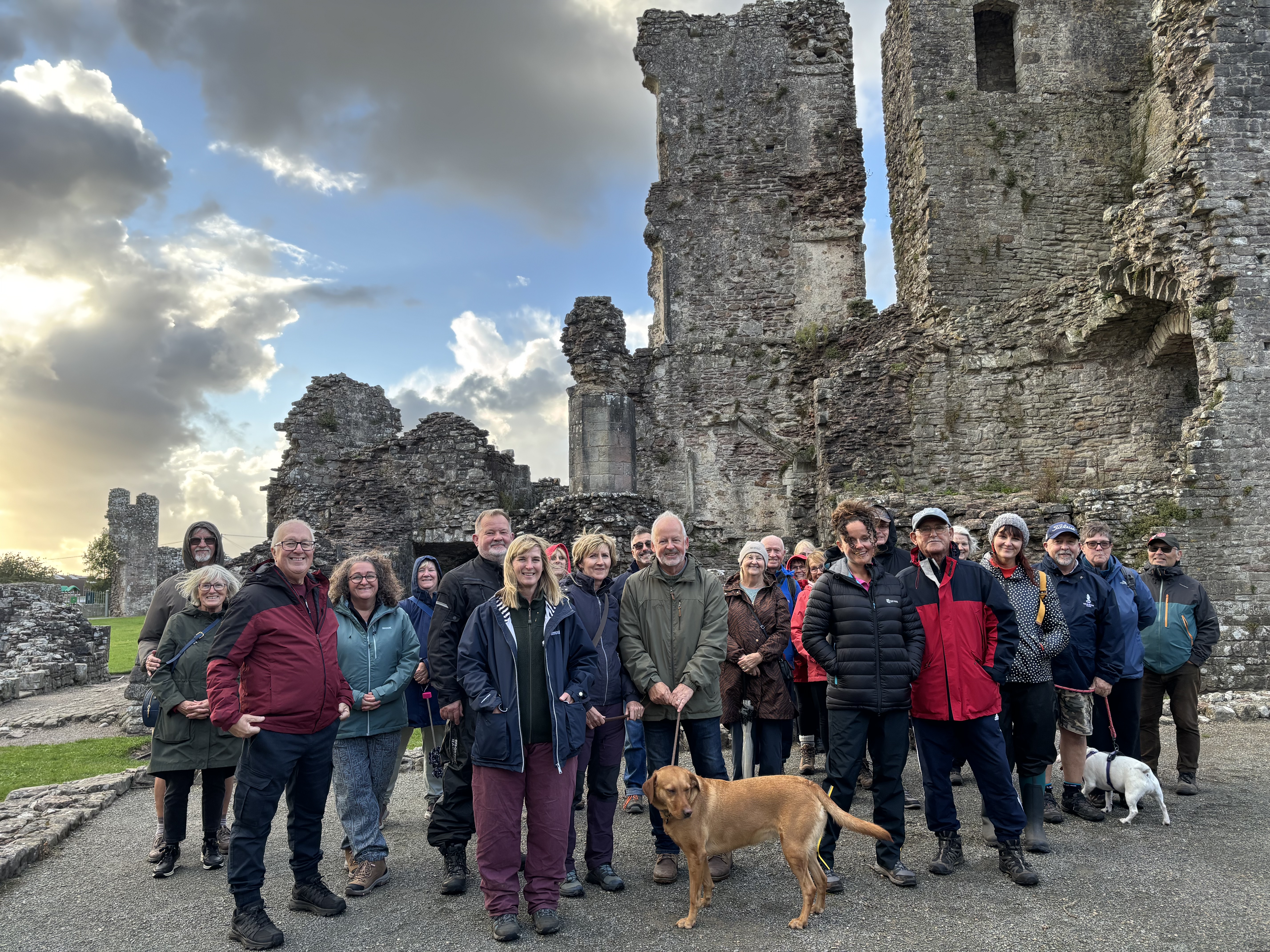
Glamorgan History walkers exploring Ogmore Castle

All walks are hosted by renowned historian, author, and broadcaster Graham Loveluck-Edwards. Last year’s festival was a huge hit, earning a special award from Visit Wales. It turns out that discovering the history behind places you’ve passed a hundred times before—while strolling through stunning landscapes—is a winning formula.

What’s New for 2025?

The festival has expanded to meet demand! Last year, tickets sold out fast, so more dates have been added for the most popular walks. There are also brand-new routes.

Many walks last year were over six miles long, which wasn’t ideal for everyone. This time, there are 33 routes, including 9 walks under four miles. Six of these are even wheelchair and pushchair-friendly. So, whether you’re a keen hiker or a casual stroller, there’s a walk for you.

What Will You Discover?

Glamorgan is packed with hidden history, and these walks reveal incredible sites, including:

  • 18 castles
  • 13 Iron Age hill forts
  • 2 medieval pilgrimage routes
  • A Roman fort
  • 18 ancient burials
  • 6 Neolithic monuments
  • 11 great houses
  • 15 medieval churches and a cathedral
  • 3 battlefields
  • Sites of execution, lost settlements, and industrial landmarks
  • Even the earliest burial ever found in the UK!

Last year these walks were hugely popular as these great reviews on TRIP ADVISOR will confirm.

Glamorgan History Walks and Talks logo

How to Join a Walk

All walks must be prebooked online. The festival’s website offers easy search options by date or location. Each walk listing provides details on distance, difficulty level, places visited, and historical topics covered—plus the best places to park.

Opening Walk: 3rd May in Llangynwyd

The festival begins on Saturday, 3rd May, with a spectacular walk in Llangynwyd, north of Bridgend. This route features:

  • A church established in the 6th-century
  • The remains of a Norman castle
  • A breathtaking Iron Age hill fort
  • A possible site for the Arthurian Battle of Badon Hill
  • Ancient burials, standing stones, and legends—including the famous Maid of Cefn Ydfa

Tickets for this and all other walks are on sale now.

Book Your Spot Today!

Don’t miss the chance to step into history. Explore, learn, and enjoy a great pub at the finish line!

For more details and to book tickets, on this link.

Here is a video to explain more…

#glamwalks
Use the hashtag glamwalks to see Glamorgan History walks content on social media.

Posted on Leave a comment

The Grand Welsh Historic Pub Tour.

If you have a love for history and old pubs (or if you are looking for a Christmas present for someone else who does!) then here’s a series of events you should not miss.

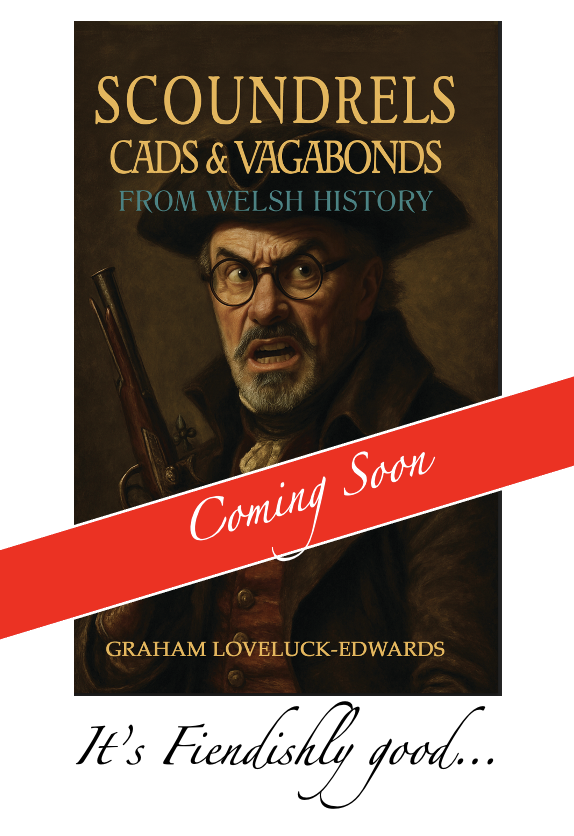
Historian, author and broadcaster; Graham Loveluck-Edwards (off the telly!) is hitting the road in January 2025. Touring some of the oldest and most interesting pubs in Wales. He will be delivering talks based on his best selling book “Historic Pubs of Wales“. The tour is called “Historic Pubs, and all the madness that ensued therein”.

As the name suggests, as much as these talks are based on history, the content is light and the delivery, humorous and ‘tongue-in-cheek’.

Every old pub has a mad back story and in these talks you will get to hear the best of them, told by one of Britain’s finest story tellers.

The dates and venues are as follows:

The grand Welsh historic pubs tour logo

You will hear about all the incredible folklore and history tied up in these wonderful old buildings. Whose thatched roofs, darkened beams and log fires are saturated with stories from the past.

Revealing secrets such the Cardiff pub which bears the scars of a Tsunami, the Vale pub whose landlord was the most notorious pirate on the Severn Sea, the pub on the edge of the dunes with more ghost stories than Hampton Court and many many more.

We’ll also be talking about the role of the inn and tavern in centuries gone by and what the future looks like for them too.

And answering the age old question; which is the oldest pub in Wales? All washed down with your favourite tipple of choice.

The tour, spread throughout January 2025, will take in venues across South Wales. So, you can see it in a fantastic old pub near you. Venues are all within easy reach if you happen to live in Cardiff, Barry, Cowbridge, Bridgend, Penarth, Port Talbot or Porthcawl.

Each talk will be tailored to pubs near by, so if you fancy seeing more than one talk, they will all be different.

All events start at 8pm to give you a chance to grab a pint and a bight to eat before we start. They will all be finished by 9.30pm, so no worries about getting home (or staying on for a few more drinks). Its up to you really!

Tickets are available from this website on the links below. Priced at £10 per person.

These events are e-ticketed so we will have a record of who has bought tickets. So, no need to print emails off or anything like that.

Historic Pubs and all the madness that ensued therein
Historic pubs talk by Graham Loveluck-Edwards
Posted on 1 Comment

Is this the maddest story in Cardiff folklore?

One of the more colourful creatures from Cardiff folklore is ‘the frog woman of Llandaff’. I know it sounds mad but I swear I’m not making her up. Her story was captured in 1909 by Marie Trevelyan who wrote:

“A frog-woman was known to frequent the road between Llandaff and Cardiff. Country people said she was only to be seen on moonlight nights. It was rumoured that she belonged to a ‘high family’ but had been sent ‘out of the way’ to live… This woman had the movements of a frog and her croak was unmistakable. Eventually she fell into the river Taff and for many years afterwards people believed that about midnight on moonlight nights the frog woman could be heard croaking and screaming for help”.

Sometimes you can look back on these old stories with modern eyes and make better sense of what is being described. People with hypertrichosis being described as ‘Werewolves’ for example. But I am flumaxed by what is actually being described here. 

Less Welsh rarebit, more Welsh ‘Ribbit’ 🐸😂 

There is a very long tradition in Welsh folklore of people who turn into creatures. Within a few miles of Llandaff, we have the tale of a werewolf living in the woods at Wenvoe and princess who was turned into a fox at Porthkerry, just the other side of Barry. Some of the earliest examples of transmogrification (as it is technically called) date back to medieval literature. In the “Book of Taliesin” the famous bard is quizzed about his abilities to change into animal form by Gwyddno Garanhir. He asked Taliesin what he was? Be he a man or a beast or a spirit? And Taliesin replied:

  • “First I have been formed a comely person.
  • In the Court of Ceridwen I have done penance
  • Though little I was seen, placidly received
  • I was great on the floor of the place I was led.
  • I have been a prized defence, the sweet muse the cause
  • And by law without speech I have been liberated.
  • By a smiling black hag, when irritated
  • Dreadful her claim when persued.
  • I have fled with vigour, I have fled as a frog
  • I have fled in the semblance of a crow scarcely finding rest
  • I have fled vehemently, I have fled as a chain
  • I have fled as a roe in an entangled thicket
  • I have fled as a wolf cub
  • I have fled as a wolf in the wilderness
  • I have fled as a thrush of portending language
  • I have fled as a fox, used to concurrent bounds of quirks
  • I have fled as a marten, which did not avail
  • I have fled as a squirrel, that vainly hides
  • I have fled as a stag’s antler of ruddy course
  • I have fled as iron in a glowing fire
  • I have fled as a spearhead, of woe to such as has a wish for it
  • I have fled as a fierce bull bitterly fighting
  • I have fled as a bristly bear seen in a ravine
  • I have fled as a white grain of pure wheat
  • On the skirt of a hempen sheet entangled
  • That seemed the size of a mare’s foal
  • That is filling like a ship on the waters
  • Into a dark leathern bag I was thrown
  • And on a boundless sea I was set adrift
  • Which was to me an omen of being tenderly nursed
  • And the lord God then set me at liberty.”

Not known for his straight answers; Taliesin.

If you are not familiar with Llandaff, it is a very genteel suburb of the city of Cardiff in Wales 🏴󠁧󠁢󠁷󠁬󠁳󠁿. It used to be far more important than Cardiff. This is where the ancient cathedral stands so some would say it is a city within a city. In 1610 when John Speed published his map of Glamorganshire, he gave Cardiff and Llandaff separte inserts.

If you like this kind of stuff I have written a couple of books on the madder side of Glamorgan folklore. Find out more on this link.

Or if reading isn’t your thing, you can watch numerous videos on the subject on my YouTube channel on this link.

Could this be the frog woman of Llandaff?