Posted on Leave a comment

You asked – We listened…

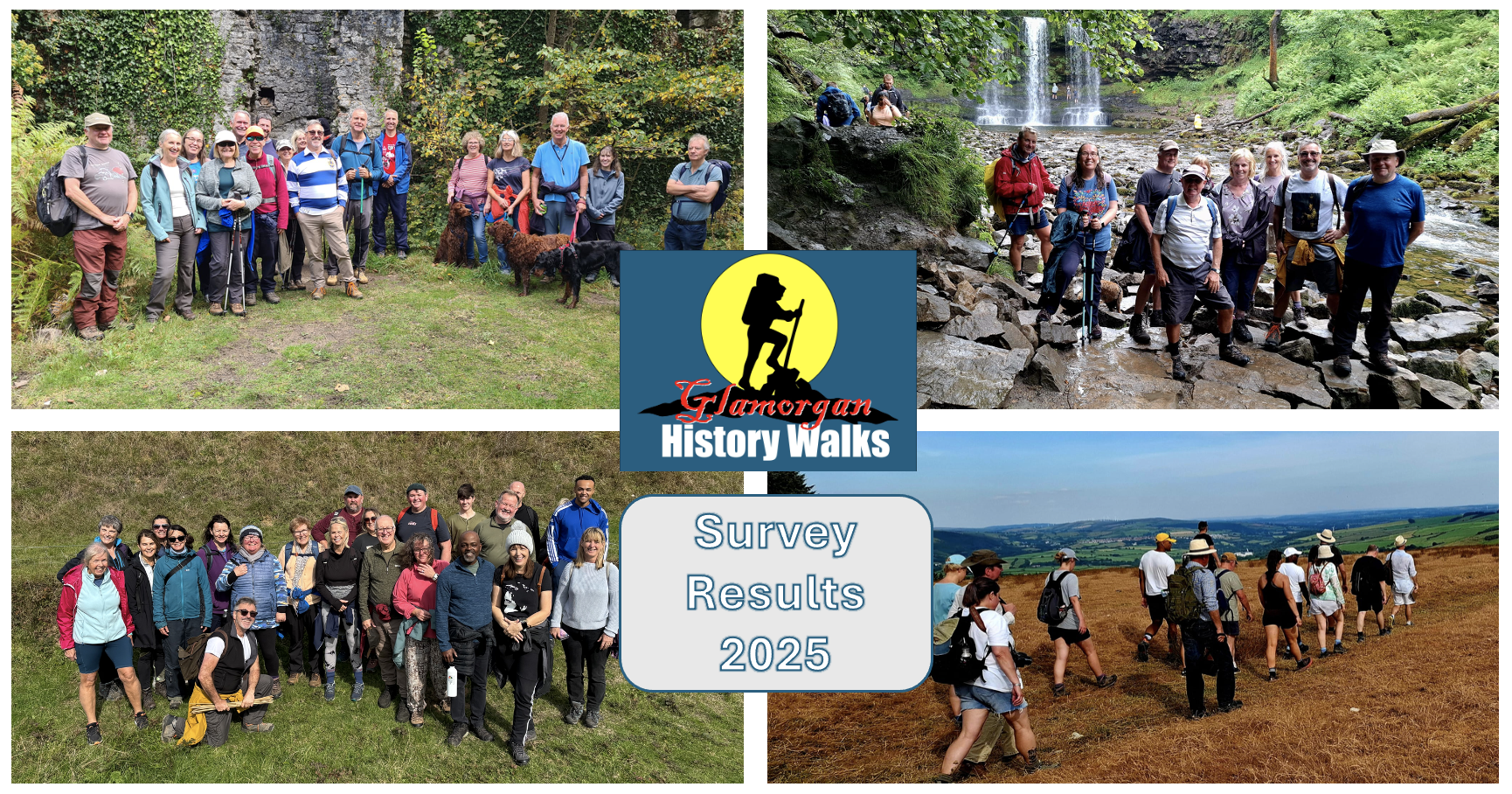
The Glamorgan History Walks survey results

Thank you to everyone who supported the Glamorgan History Walks through the summer, and thank you especially to everyone to took part in our survey. The idea was to find out what people who went on the walks enjoyed about them or what they thought we could do better. We also wanted to get some ideas on routes to consider for next year and new things we should try.

The success of any exercise like this hinges on people’s willingness to share their experiences. In that respect we can not thank you all enough as the uptake on the responses we got was brilliant. A link to the survey was posted on my Facebook page and I also sent out 135 emails, so to get 69 of you responding and taking part is a really good sample to work with, and in itself tells us that you are very much engaged with these events.

To gauge the basics, we asked you if these events were enjoyable, and if people who took part this year would want to take part in the future. Also, as the USP of these events is to focus on Welsh heritage, history and folklore (rather than a walk for a walk’s sake) we wanted to know if they were hitting the mark in that respect. I am very proud to be able to say these were our results.

Now I’m no expert, but that is a very encouraging and humbling response. Like I say. 69 of you took part in this survey so this is very encouraging that we are putting on an event that at its basic level is hitting the spot.

But we are not resting on our laurels.

We asked for more detailed feedback on specific areas and we have had a lot of suggestions that we could implement.

Future routes

The feedback we had on the various routes we did this year was positive. It was suggested that we make the event more than just “The Glamorgan” history walks and take in other counties too. This is something in the long term we can take on board but we are not well enough resourced to do so in 2026. Its only me doing all the planning and leading and history revisions so broadening the area may sound simple but while its just me, it would be too much to take on at this stage, But who knows. In the future we could may be entice some other historians to join the gang and plan and lead walks in other areas that follow our formula.

Suggestions which came up most frequently were that the shorter, Thursday evening walks we introduced this year were a good idea and that giving you more “shorter” walks to choose from would be a popular move. It was also suggested that we might want to introduce more “wheelchair friendly” routes or events.

Places people wanted aded to the routes we do currenlty included Cardiff Bay. It was also suggested by a couple of people that we should do more walks in and around Swansea and Neath.

A theme rather than a destination, was the suggestion that we do more walks that take in sites of our industrial heritage. Places linked to that suggestion were commonly Parc Slip and Measteg, the Rhondda and Cynon Valleys and Merthyr Tydfil. Another suggestion was Flat Holm which I would love to do but the only issue is getting a boat out there in the first place but this is something we are looking into.

Walk admin

A couple of suggestions came in around what else we could offer walkers to help them enjoy the experience of the day. There are practical reasons why we cannot do them all, however some we are looking into include:

  • Starting Saturday walks at 10am or 10.30am instead of 9am
  • Have more flexible ticketing options for people who book multiple walks
  • Introduce a “Group” ticket for walking groups to book as one
  • Produce a “summary” document for walkers to take away with them, to help them remember all the points covered
  • Branded Hi-Vis jacket/tabbard for the back markers with a name badge on the front (guess who came up with that?)
  • A book to accompany the walks (I am already on that and it should be available in time for next Summer’s events).
  • More guest speakers.

So there you have it. A lot for us to think about, and we are already looking for ways to implement as much of your feedback as possible. We will keep you posted about it all once we start putting next year’s programme together.

But until then, I would like to thank everyone who took part in the survey and especially to Oggie, David, Huw and Brian for meeting with me and going through it all to form some kind of plan.

Watch this space.
Posted on Leave a comment

King Arthur’s legacy on the Glamorgan History Walks

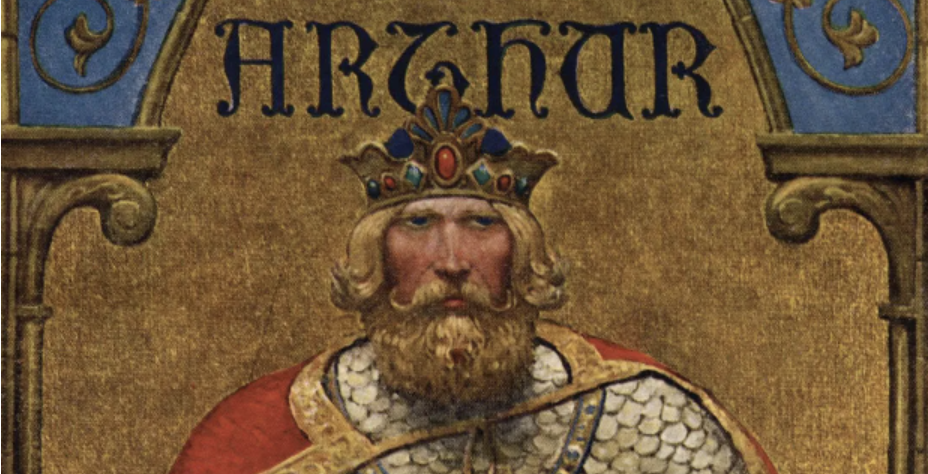
Arturos Rex (King Arthur) on his thrown

We could not possible organise a series of history walks in Glamorgan without taking in places associated with that most famous, local, kingly character; Arturos Rex. Better known as King Arthur. His enduring appeal is incredible.

The earliest written reference we have of him is a 6th Century Welsh poem called ‘Y Gododdin’. It’s not about him. He’s not even a character in it. It’s a poem about a disastrous military campaign where a gruff old warrior is described thus; “he was no Arthur”. No doubt illustrating how unsophisticated he was.

This reference, though fleeting, suggests that the name at least was already in the ether even then. And here we are, over 1,500 years later and if you do a search for him by name on any TV streaming service you are confronted with an endless parade of films, dramas and documentaries which attempt to pull together some real history from it all.

Contradictions and fake news

A lot of the stories we know about King Arthur come from a book called “The History of the Kings of Britain” written in the 12th Century. 600 years after Y Gododdin.

Despite the title of this book, there is very little in the way of genuine history in it. Before it gets on to Arthur it talks about how Britain was discovered by two Greek explorers who had to rid the island of giants before they could colonise it.

It also claims that a King of the Britons called ‘Morvidus’ was eaten by a sea monster around 336AD.

So not what you might describe as ‘reliable’.

The author, a monk called Geoffrey of Monmouth, sites a dark age predecessor called ‘Gildas the Wise’ as a source of his history about Arthur. Yet he contradicts Gildas on some really key events. Not least of which, the battle of Mons Badonicus, AKA the Battle of Baden Hill. According to Geoffrey of Monmouth this landmark battle which stoped the Saxon invasion of Britain in its tracks, was won by King Arthur. According to Gildas though (who was writing within 100 years of the battle) it was a man called Ambrosius Aurelianus. Arthur was not even mentioned as a footnote.

This is why I am instantly suspicious of anyone who claims to know deffinetavely who Arthur was. Every year, someone comes forward with yet another theory about where Camelot was or where Arthur’s tomb is. All of them interesting. But genuine history? Not so much.

Glamorgan’s Arthurian links

Having said that, we in Glamorgan are blessed with a treasure trove of places people have associated with the Legends of Arthur down the centuries. For some reason which I cannot fathom we do not seem to celebrate them in the same way as their English counterparts. If you have ever been to Glastonbury or Tintagel, you cannot move for references to their Arthurian connections. There is a gift shop on every street corner packed with roundtable mugs and Merlin figurines. There are signs up everywhere broadcasting their links and telling the stories. Even statues.

Arthurs stone Reynoldston

By contrast, you could visit Criag Y Ddinas or Llandaff Cathedral and be completely oblivious to their connections to the legendary king. We in Wales are very poor at promoting such things. And even worse at monetising them in the same way they do in England.

So we on the Glamorgan History Walks are determined to do our bit. To take you to the places in the county associated with Arthur, explain the links and tell you the stories to bring them to life. These are the ones you can visit with us and when we go there.

If you click on any of the dates in purple below, it will open a more detailed pages about the walk. It tells you how long the walk is in miles, what level of walker it is suited to, and the places we visit. You can also buy tickets.

Which Glamorgan history walks visit sites of Arthur’s stories

Come and join us on any of our walks. We’d love to see you.

A full list of walks in this year’s itinerary are available on this link. You can also read reviews of people who took part last year here.

So go ahead. Choose a walk. And I’ll see you there.

Glamorgan History Walkers
#glamwalks
Use the hashtag glamwalks to see Glamorgan History walks content on social media.

#kingarthur #arthurian #merlin #wizard

Posted on Leave a comment

Maritime history on the Glamorgan History walks

The Glamorgan Heritage Coast

It cannot have escaped your attention that Glamorgan has a spectacular coastline. And as you would expect, that comes with a wealth of maritime tradition and history.

Scott of the Antarctic

It was from these shores that Captain Scott set sail on the Terra Nova to explore the South Pole. In the 18th and 19th Century, millions of tons of coal and iron were exported from docks along this coast such as Cardiff, Barry and Swansea. And famous sea farers such as Thomas Matthews, Admiral of the Royal Navy fleet and the pirate Henry Morgan were both born here. Along with countless others.

In fact, several global sea faring traditions owe their origins to Glamorgan sea farers. Including the tale of Davy Jones’ locker which has inspired novels and Hollywood film plots by the ton. The name Davy is believed to be an anglicised corruption of Dewi. The Welsh equivalent of David.

If you are curious to discover more about this aspect of Glamorgan history, the Glamorgan History Walks are a great place to start. We have a series of walks that visit places which tell each part of the story of this county’s maritime history.

Here are the places we visit, the stories attached to them and the dates of the walks they are visited on. If you click on the date of the walk, it will open a page of information about that walk, and you will be able to buy tickets.

Ports, harbours and docks

Victorian Docks in Barry

We try and cover as many chapters of the region’s history as possible. Some of the places we visit were significant ports in the medieval period. They include Kenfig and Newton in Porthcawl. You can visit those places on these walks:

The site of Cardiff’s medieval port may come as surprise to many. But we visit that on our city centre walks – Cardiff Historic City Centre (using John Speed’s map of 1610) [8th June]…[10th July]

Aberthaw has been a port since the medieval period too. It became the busiest port in the county until Cardiff took its crown during the industrial revolution. We visit that and the remains of the old lime works. Aberthaw and Fonmon [22nd June]…[9th Aug]

Finally, Barry. Once the biggest coal exporting dock in the world. Also features on our walks. Barry Island [18th May]…[19th June]

Pirates, wreckers, smugglers and scoundrels

Smugglers and pirates

Not all of our connections with the sea are wholesome. In fact, the most interesting stories concern our colourful outlaws. Walk in their footsteps, see their hides and hear their stories. The walks where you hear the most about Pirates, wreckers and smugglers are the following:

Lighthouses, maritime architecture and landmarks

Nash Point lighthouse on the Monknash to St Donats walk on the Glamorgan History Walks and Talks
Nash Point lighthouse

We also visit some important buildings associated with our maritime history. Including:

Shipwrecks

The Bristol Channel is notorious. An incredibly dangerous waterway to navigate. On our walks we also visit the site of many shipwrecks. They include:

Come and join us on any of our walks. We’d love to see you.

A full list of walks in this year’s itinerary are available on this link. You can also read reviews of people who took part last year here.

So go ahead. Choose a walk. And I’ll see you there.

#glamwalks
Use the hashtag glamwalks to see Glamorgan History walks content on social media.

Posted on Leave a comment

Industrial Heritage on the Glamorgan History Walks

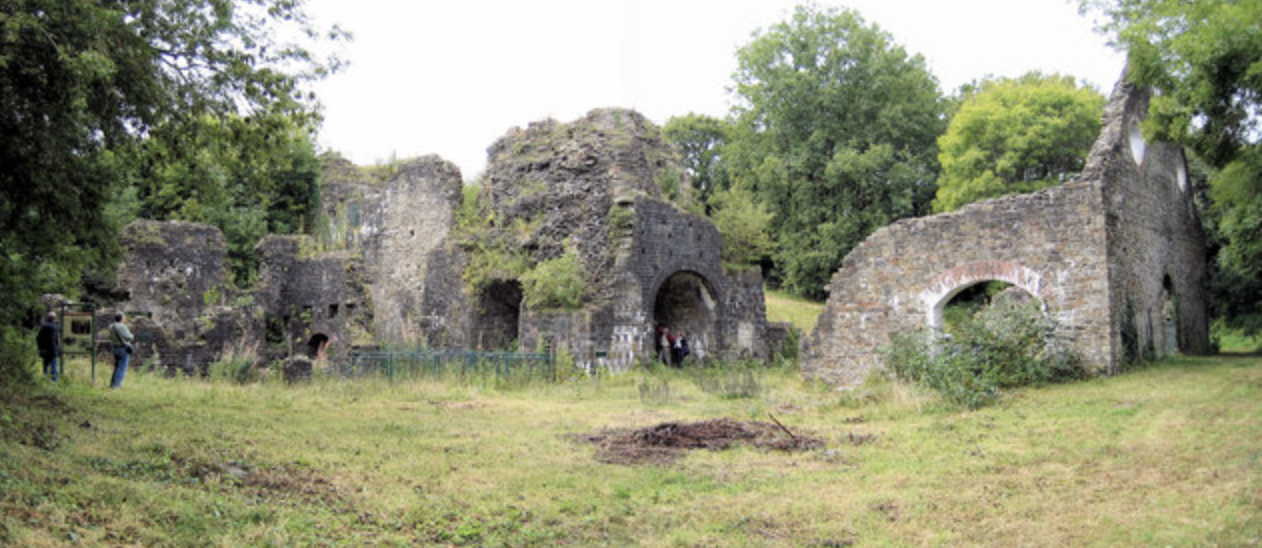
Bedford Iron Works Cefn Cribwr on the Glamorgan History Walks and Talks

One chapter of Glamorgan history better known than most is our industrial past.

We were behind so much. Lord Nelson insisted that the canon used by the Royal Navy were made from Merthyr Tydfil Iron. The anchor chains of choice were made in Pontypridd and when steam power took over from wind power, the furnaces on Naval ships would only burn coal from Welsh mines. And thats just one customer.

But the days of endless miles of pit winding towers and iron works are long gone. Today if you want to find clues to our industrial past you need to go on something of a voyage of discovery. And that is where the Glamorgan History Walks festival can come in handy. Because we uncover quite a few, and go to places where you can get a flavour of what it used to be like here.

The hang overs from a time a when coal was king are all around the county and are varied.

Our walks pass through many places which were once bustling mining communities and we uncover what is left to see as we visit them.

For example, at one time, a string of mines ran along the valleys of the Kenfig, Llynfi and Dyffryn Valleys north of Bridgend.

Cefn signal box has some fascinating momentoes of that time. With drams and exhibits and photographs to bring it all back to life for you.

We visit this amazing place as part of our Cefn Cribwr walk on [31st May]. Information on how to join this and any of our walks are available if you click the link (on the date).

Getting the coal from the valleys where it was mined to the end users all over the world was a gargantuant task. It resulted in the building of a maze of canals and railways.

We walk along the bank of the Glamorgan canal as part of our Llandaff walk  [5th June]…[21st Aug]. And we see one of these amazing old railways still being used by steam locomotives on the Brecon Mountain Railway which we pass on our Pant and Pontiscill walk [5th July]. We also get a great view of the Pontiscill viaduct on this walk.

All of those railways and canals wound their way south from the valleys to any one of the areas coal exporting docks.

Cardiff, Swansea, Newport to name but a few.

But on our walks, we visit the biggest of them all.

Barry Dock. In its day it was the biggest coal exporting dock in the world. We walk above it, taking in the modern version of the view you can see in this picture on our two Barry Island walks [18th May]…[19th June].

Victorian Docks in Barry

Then of course, there was the iron. Merthyr Tydfil was the iron capital of the world in its heyday, and we get to see the scars it made on the landscape on our Pant and Pontiscill walk [5th July]. We also visit the remains of the Bedford Iron Works as part of our Cefn Cribwr walk [31st May] which is pictured at the top of this item.

We also talk about the social impacts of this time and on the people who worked in these places. This poem being a great example of what life was like for the workers of this era.

A full list of walks in this year’s itinerary are available on this link. You can also read reviews of people who took part last year here.

So go ahead. Choose a walk. And I’ll see you there.

#glamwalks
Use the hashtag glamwalks to see Glamorgan History walks content on social media.

Posted on Leave a comment

Castles and Great Houses – Glamorgan History Walks

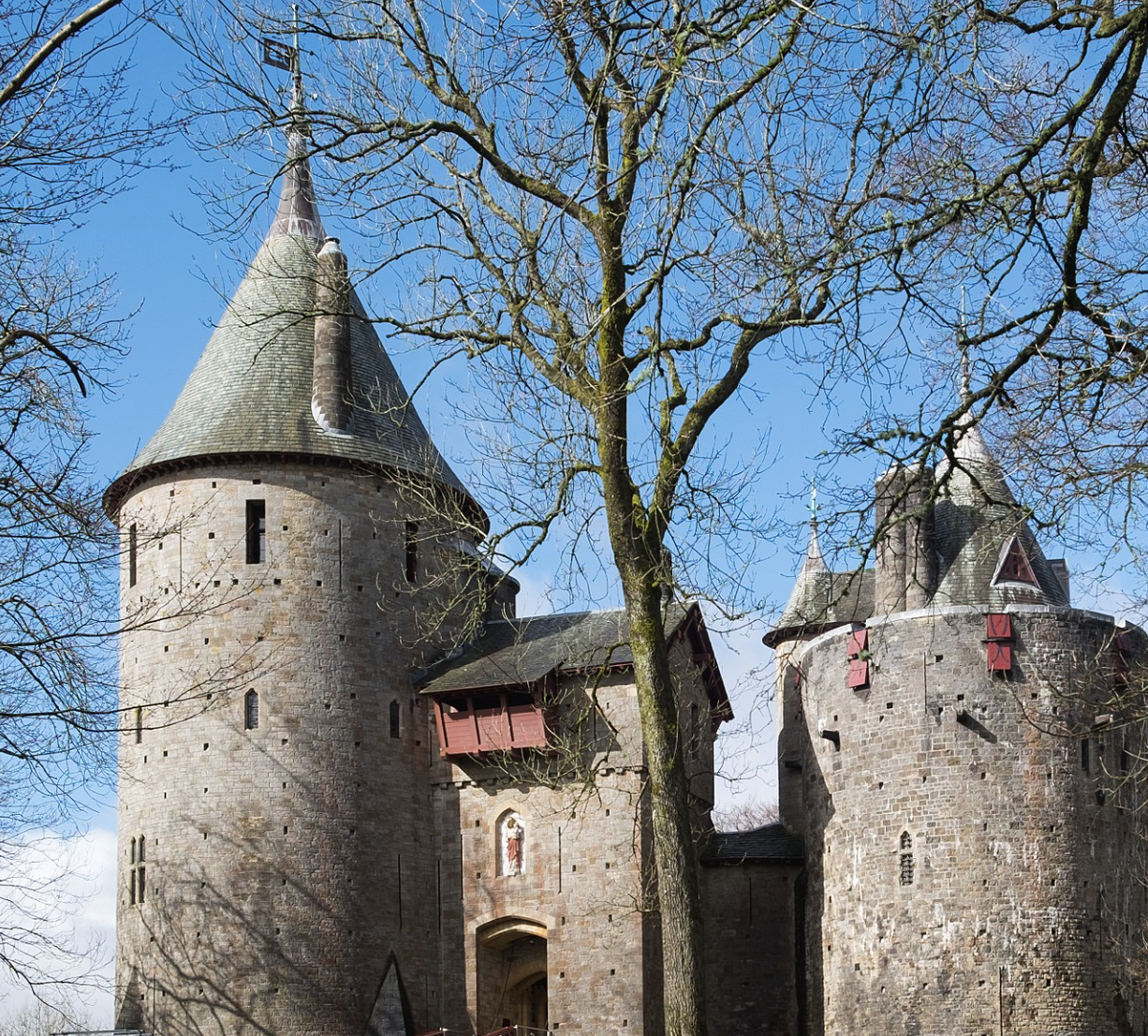
Castell Coch

Wales is famous for its castles. More per square mile than anywhere else in the world apparently. Over 600 in total and that doesn’t include those which are little more than bumps in the ground. Here in Glamorgan, it is safe to say “we’ve got loads”, but you may be surprised to hear that it’s difficult to put an exact number on it. For a variety of reasons.

For example Cyfartha Castle in Merthyr Tydfil. Pictured here. It may have the word ‘castle’ in its name. It may also have crenelations. But in reality it is a 19th Century mansion built by the Crawshay family to look like a castle. So, should we count that one?

We run into similar problems with the enigmatic Castell Coch pictured at the top of this item. The site this castle is built on has been a castle since the early medieval period. In fact we have a fabulous story about its inhabitant from the early 12th Century. The Welsh Lord of Senghenydd called Ifor Bach.

He took issue with William Fitz Robert, the Norman Earl of Glamorgan for taking his land. So he rode down to Cardiff Castle and kidnapped William, his wife, their son and the daughter of the Earl of Leicester, and held them all hostage until he received due compensation.

That sounds all together more ‘castley’ doesn’t it. (Probably not a real word) But then you have to take into account that the building where all this happened all those centuries ago is not the one you are looking at today. The building there now is more of a Victorian ‘folly’ than a medieval castle.

The reason; William Crichton Stuart, the Marquis of Bute, who owned this land was obsessed with gothic, medieval architecture. But not the genuine stuff we have loads of around here. But a fairy tale version of it. So he commission an architect called Burgess to build him a castle based on ‘his idea’ of what a medieval castle should be. Ironically Burgess had to pull down what remained of the real medieval castle to do it!

This structure owes its appearance to a visit to Carcassonne in southern France rather than to the original medieval castle it replaced.

Having said all that, there are a lot of very genuine medieval castles here too. Cardiff Castle for example. It may have started out as a Roman fort, but in the late 11th Century it was taken over and rebuilt by Robert Fitzhamon, Duke of Gloucester and became the Norman stronghold of the region. The keep and black tower in particular are fantastic examples of Norman/ Mid Medieval castle architecture.

Then of course you have the nearby Caerphill Castle. Occupying 30 acres, it is the largest castle in Wales. Built by Gilbert de Claire to protect his northern lands from raiding Welsh lords between 1268-71. As genuine and unique an example of medieval military architecture as you could hope to find any where.

Cardiff Castle Norman Keep
Aerial view of Caerphilly Castle

So, its not the number of castles we’ve got here that’s the important thing. It is the variety and breadth of architecture we have in Glamorgan. It is quite breath taking .

On the Glamorgan History Walks you get to visit some of the most interesting. To see them for your self, and to hear the stories of what happened there.

Beyond the castles of course, there are also plenty of significant manor house and great houses that we visit on our walks too. Just as impressive, just as much history and in many cases achingly beautiful.

So if you want to come along and explore them with us, here’s the list. It also tells you which walks you can see them on, and what dates they take place. Click on the dates to see more information on any of the walks and to buy tickets.

Please note that on our walks we will show you, or take you to these castles and houses, but in most cases we will not be going inside them.

Castles and related walks

Great Houses and related walks

For a full list of all the walks, click here. To read reviews of people who joined us on these walks last year, click here.

#glamwalks
Use the hashtag glamwalks to see Glamorgan History walks content on social media.
Posted on Leave a comment

Identify the landmarks and win Free tickets & T Shirts for the Glamorgan History Walks 2025.

Competition time

COMPETITION NOW CLOSED.

We are now just a few weeks away from the start of this year’s Glamorgan History Walks Festival. Here’s your chance to get some free tickets and free merch. And yes, it’s all absolutely FREE!

The Glamorgan History Walks festival is an award winning series of walks taking in sites of historic interest across South Wales. Each walk is led by an expert in the history of the places you will be visiting. This year the event includes over 50 walks, of varying lengths and accessibility from Gower to the border with Gwent. So there is something for everyone.

They include:

  • 18 castles
  • 13 Iron Age hill forts
  • 2 medieval pilgrimage routes
  • A Roman fort
  • 18 ancient burials
  • 6 Neolithic monuments
  • 11 great houses
  • 15 medieval churches and a cathedral
  • 3 battlefields
  • Sites of execution, lost settlements, and industrial landmarks
  • Even the earliest burial ever found in the UK!

Last year, this festival received a special award from Visit Wales. Read the reviews of people who took part here.

Visit Wales award
Visit Wales award
St Peters Church

Our lucky winner will receive

Two FREE tickets to take part in a walk of their choice

And

Two FREE & exclusive ‘Iolo Morganwg’ T-Shirts (As pictured below).

Saving you £40 if you were to buy these items.

The full list of walks is available on this link.

Glamorgan History walks Iolo Morganwg T ShirtGlamorgan History walks Iolo Morganwg T Shirt [BACK]

Below are a series of photographs of well known landmarks. They all feature in one or more of the Glamorgan History Walks. What you need to do is fill out the form at the bottom of the page. On it you must write:

  • The name the land mark is known by.
  • The name of any walk this landmark features in.
  • Complete your name, postal address (so you can receive your T shirts), preferred T shirt size and email address on the form and hit ‘send’.
  • The winner will be drawn at random from all the correct submission received before the closing date.

Closing date for submissions is midnight on Easter Sunday (20th April 2025). Entries after that will be ignored.

T-shirt prize is only available to postal addresses in mainland UK.

Only one entry per person.

1.

Dinas Rock Glyneath

2.

Fonmon Castle

3.

4.

Cardiff Castle western appartments

5.

6.

Pontsticill Reservoir

7.

Medieval murals in Llancarfan Church

8.

Ogmore castle

Go back

Your entry has been sent. Good Luck!

Warning
Warning
Warning
Warning.

Just fill out the form and hit the SEND button.

#glamwalks
Use the hashtag glamwalks to see Glamorgan History walks content on social media.

Posted on Leave a comment

Scars of World War II 80 years on

VE Day 80 years on

The 8th May 2025 marks 80 years since the end of the European leg of World War II. A series of official events are being planned all over the UK to mark the occasion. Everything from street parties to parades and marches. South Wales paid its own toll in the war. Not just through local people suffering as casualties on the front line, but also German bombing raids in 1941. Cardiff in January and Swansea in February.

VE day parade in Cardiff (May 1945)

You may be surprised at how many scars of the war are still available to see 80 years on, but if you know where to look they are all around us.

When we plan The Glamorgan History Walks festival, we try to ensure that there is a good mix of history topics to discuss. That means taking in a variety of sites which tell a story for each era.

So if the second World War is a subject you are interested in, especially in this important, commemorative year, here are the walks you can join and some of the sites you can see on them which are relevant to this important chapter in the history of the World.

There was a concern during the war, that the south Wales coast was a potential location for a German invasion. The Allies had already proven the viability of an amphibious landing at Sicily so it was not beyond the realms of possibility that the Germans might try the same here.

There were a couple of things that made south Wales viable. The sand on our beaches is very compact and forms a hard surface at low tide. Certainly hard enough to support the weight of armoured vehicles. Secondly, we are only a couple of hours drive from London. And Finally, the area, particularly when compared to the south coast of England, was poorly defended. Most of the military bases here were just training centres.

The result of this way of thinking was the re-enforcement of what few defences we had and the building of a chain of new defences. Concrete bollards nicknamed ‘dragons teeth’ sprung up along wide beach heads and routes out of the area. You can see examples on Gileston Beach which features as part of our St Athan walk on 3rd July. Bunkers and gun emplacements also sprung up along the coast.

If you come on the Glamorgan History Walks, you can visit them. They include various ‘pill boxes’ and bunkers on our walks at Llantwit Major on 12th June, St Athan on 3rd July and Monknash to St Donats on 19th July and 17th August. We also visit the site of WWI artillery gun emplacement which housed an ACAC Gun in WWII on our Barry Island walks on 18th May and 19th June. There is also a far more substantial gun battery on Lavernock Point which we visit on our Sully/Cosmeston walk on 16th August.

WWII Bunker near Llantwit Major
The bombed out shell of Llandaff Cathedral (Jan 1941)

There is also the opportunity on our walks to visit places that were changed for ever as a result of the Second World War.

In January 1941, Cardiff suffered its own blitz. The city was an obvious target as it housed one of Europe’s most significant coal exporting docks, and coal was still vital in the 1940s to Britain’s ability to wage war. It was what the Royal Navy needed to power its ships, what our trains used to move equipment, personnel and materials around the country and it was what powered our industry.

One of the casualties of these bombing raids was Llandaff Cathedral. It suffered a direct hit and had to be substantially rebuilt after the war. Here it is pictured in the aftermath.

We have walks that incorporate a visit to Llandaff Cathedral on 5th June and 21st August.

We also visit the cenotaph and garden of remembrance in Cathays Park on our Cardiff City Centre walks on 8th June and 10th July where we see more of the human cost of the war, albeit in a beautiful setting.

There were bases housing American GIs in the Porthcawl area and we also see evidence of that on a couple of our other walks. On our Kenfig and Sker walks on 24th May, also on 27th July and 14th September we see the old service road to the camp which is still there. Along with the remains of a sentry bunker. We can also see where the old air base was at nearby Stormy Down.

Meanwhile on our walks from Newton to Candleston on 7th June and also 21st September we pass through the old rifle range they trained on.

But by far the most exciting monument we have from the entire era is the wonderful Isalnd Farm POW Camp near Bridgend.

A lot of the camp has now been demolished but Hut Number 9 still stands and is a protected site. We visit it as part of our Merthyr Mawr walk on 10th May.

It is an incredible place and served several functions during the war. It started out as a dormitory for workers at the munitions factory in Bridgend. At the time, the biggest in Europe. It then became a base for US Service Personnel.

However, it is remembered in the history books for the period when it was a prisoner of war camp for high ranking German officers. Notoriety was guaranteed the night when 70 German POWs tunnelled out and escaped.

The single biggest break out of enemy soldiers in mainland Britain for the entirety of the war.

Oops!

Isalnd Farm POW Camp

What ever period of history you are interested in though, there is something for everyone on the Glamorgan History Walks. The full calendar of events is now published and tickets are on sale. Just click on this link to see them all. And if you need convincing how good these walks are, just read the feedback from people who came last year on Trip Advisor.

This video explains everything the festival of walks, history and storytelling has to offer:

#glamwalks
Use the hashtag glamwalks to see Glamorgan History walks content on social media.

Posted on Leave a comment

Step Into History: Glamorgan History Walks Festival Returns For 2025.

Glamorgan History walks 2025

This summer, history lovers and outdoor enthusiasts have an exciting reason to lace up their walking boots. The award-winning Glamorgan History Walks Festival is back, running from May to September, with over 50 fascinating guided walks just announced.

What Is the ‘Glamorgan History Walks’ Festival?

It’s a walking festival like no other—a series of expert-led guided walks that explore the rich history of Glamorgan. Instead of reading about history, participants will walk where it actually happened, with each route ending at a charming old pub—because history is best enjoyed with a tidy pint!

Glamorgan History walkers exploring Ogmore Castle

All walks are hosted by renowned historian, author, and broadcaster Graham Loveluck-Edwards. Last year’s festival was a huge hit, earning a special award from Visit Wales. It turns out that discovering the history behind places you’ve passed a hundred times before—while strolling through stunning landscapes—is a winning formula.

What’s New for 2025?

The festival has expanded to meet demand! Last year, tickets sold out fast, so more dates have been added for the most popular walks. There are also brand-new routes.

Many walks last year were over six miles long, which wasn’t ideal for everyone. This time, there are 33 routes, including 9 walks under four miles. Six of these are even wheelchair and pushchair-friendly. So, whether you’re a keen hiker or a casual stroller, there’s a walk for you.

What Will You Discover?

Glamorgan is packed with hidden history, and these walks reveal incredible sites, including:

  • 18 castles
  • 13 Iron Age hill forts
  • 2 medieval pilgrimage routes
  • A Roman fort
  • 18 ancient burials
  • 6 Neolithic monuments
  • 11 great houses
  • 15 medieval churches and a cathedral
  • 3 battlefields
  • Sites of execution, lost settlements, and industrial landmarks
  • Even the earliest burial ever found in the UK!

Last year these walks were hugely popular as these great reviews on TRIP ADVISOR will confirm.

Glamorgan History Walks and Talks logo

How to Join a Walk

All walks must be prebooked online. The festival’s website offers easy search options by date or location. Each walk listing provides details on distance, difficulty level, places visited, and historical topics covered—plus the best places to park.

Opening Walk: 3rd May in Llangynwyd

The festival begins on Saturday, 3rd May, with a spectacular walk in Llangynwyd, north of Bridgend. This route features:

  • A church established in the 6th-century
  • The remains of a Norman castle
  • A breathtaking Iron Age hill fort
  • A possible site for the Arthurian Battle of Badon Hill
  • Ancient burials, standing stones, and legends—including the famous Maid of Cefn Ydfa

Tickets for this and all other walks are on sale now.

Book Your Spot Today!

Don’t miss the chance to step into history. Explore, learn, and enjoy a great pub at the finish line!

For more details and to book tickets, on this link.

Here is a video to explain more…

#glamwalks
Use the hashtag glamwalks to see Glamorgan History walks content on social media.