Posted on Leave a comment

King Arthur’s legacy on the Glamorgan History Walks

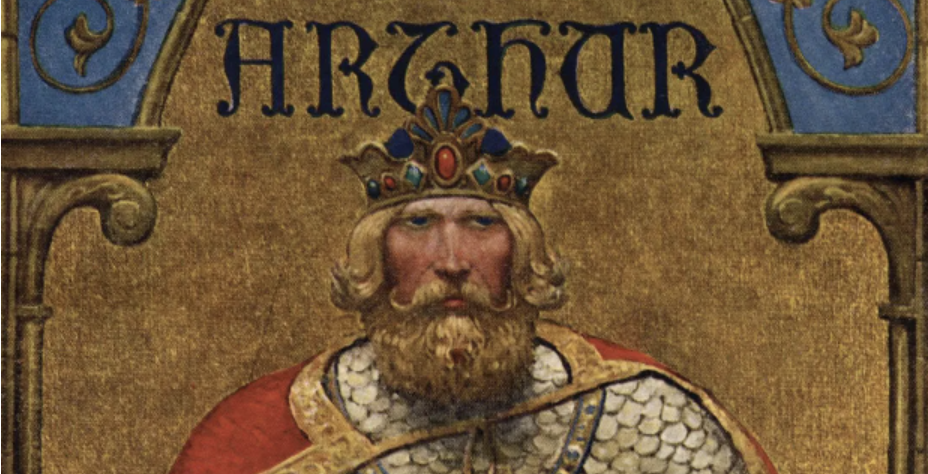
Arturos Rex (King Arthur) on his thrown

We could not possible organise a series of history walks in Glamorgan without taking in places associated with that most famous, local, kingly character; Arturos Rex. Better known as King Arthur. His enduring appeal is incredible.

The earliest written reference we have of him is a 6th Century Welsh poem called ‘Y Gododdin’. It’s not about him. He’s not even a character in it. It’s a poem about a disastrous military campaign where a gruff old warrior is described thus; “he was no Arthur”. No doubt illustrating how unsophisticated he was.

This reference, though fleeting, suggests that the name at least was already in the ether even then. And here we are, over 1,500 years later and if you do a search for him by name on any TV streaming service you are confronted with an endless parade of films, dramas and documentaries which attempt to pull together some real history from it all.

Contradictions and fake news

A lot of the stories we know about King Arthur come from a book called “The History of the Kings of Britain” written in the 12th Century. 600 years after Y Gododdin.

Despite the title of this book, there is very little in the way of genuine history in it. Before it gets on to Arthur it talks about how Britain was discovered by two Greek explorers who had to rid the island of giants before they could colonise it.

It also claims that a King of the Britons called ‘Morvidus’ was eaten by a sea monster around 336AD.

So not what you might describe as ‘reliable’.

The author, a monk called Geoffrey of Monmouth, sites a dark age predecessor called ‘Gildas the Wise’ as a source of his history about Arthur. Yet he contradicts Gildas on some really key events. Not least of which, the battle of Mons Badonicus, AKA the Battle of Baden Hill. According to Geoffrey of Monmouth this landmark battle which stoped the Saxon invasion of Britain in its tracks, was won by King Arthur. According to Gildas though (who was writing within 100 years of the battle) it was a man called Ambrosius Aurelianus. Arthur was not even mentioned as a footnote.

This is why I am instantly suspicious of anyone who claims to know deffinetavely who Arthur was. Every year, someone comes forward with yet another theory about where Camelot was or where Arthur’s tomb is. All of them interesting. But genuine history? Not so much.

Glamorgan’s Arthurian links

Having said that, we in Glamorgan are blessed with a treasure trove of places people have associated with the Legends of Arthur down the centuries. For some reason which I cannot fathom we do not seem to celebrate them in the same way as their English counterparts. If you have ever been to Glastonbury or Tintagel, you cannot move for references to their Arthurian connections. There is a gift shop on every street corner packed with roundtable mugs and Merlin figurines. There are signs up everywhere broadcasting their links and telling the stories. Even statues.

Arthurs stone Reynoldston

By contrast, you could visit Criag Y Ddinas or Llandaff Cathedral and be completely oblivious to their connections to the legendary king. We in Wales are very poor at promoting such things. And even worse at monetising them in the same way they do in England.

So we on the Glamorgan History Walks are determined to do our bit. To take you to the places in the county associated with Arthur, explain the links and tell you the stories to bring them to life. These are the ones you can visit with us and when we go there.

If you click on any of the dates in purple below, it will open a more detailed pages about the walk. It tells you how long the walk is in miles, what level of walker it is suited to, and the places we visit. You can also buy tickets.

Which Glamorgan history walks visit sites of Arthur’s stories

Come and join us on any of our walks. We’d love to see you.

A full list of walks in this year’s itinerary are available on this link. You can also read reviews of people who took part last year here.

So go ahead. Choose a walk. And I’ll see you there.

Glamorgan History Walkers
#glamwalks
Use the hashtag glamwalks to see Glamorgan History walks content on social media.

#kingarthur #arthurian #merlin #wizard
Posted on Leave a comment

The legends of King Arthur’s Stone on Gower

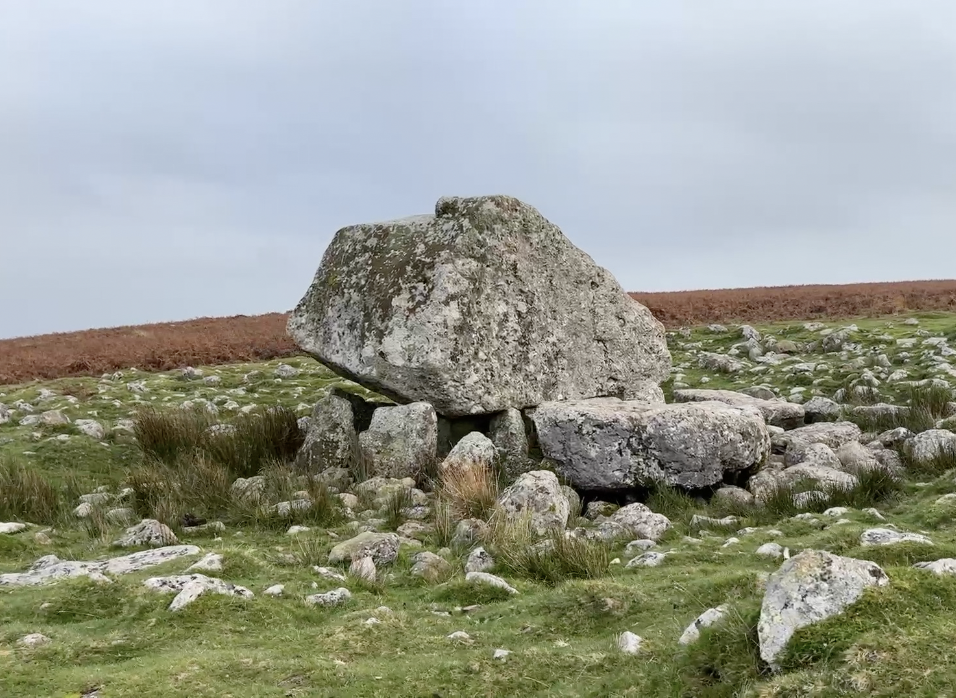
Arthurs stone Reynoldston

King Arthur’s Stone near Reynoldston on the Gower peninsular is only a few miles from the city of Swansea but it feels like a world and several millennia away. It sits on a peak towering above the north Gower coastline with commanding views. There is something deeply etherial about the area. I know nothing about things like ley lines but if someone were to tell me this place was riddled with them I wouldn’t doubt it. 

We have many sites in South Wales associated with Arthurian legend but this place is one of the most picturesque and dramatic.

It got its name as the result of an old legend. It was said that on his way to the Battle of Camlan, Arthur felt a stone in his shoe. He removed it and threw it to one side, but such was the magic he possessed that as it travelled through the air it grew and grew until it became this vast boulder.

King Artrhur

In reality, this is the cap stone of a collapsed Bronze Age burial chamber. There are loads of them dotted around the area suggesting that to the ancient Welsh, this was a place of spiritual importance.

There is also a wonderful custom or tradition associated with the stone according to Marie Trevelyan. It was believed that if a maiden wanted to know if her betrothed would be faithful to her, she should crawl on her hands and knees around the rock three times. If he then appeared to her he would always be true. If not he’d be off tomming at the drop of a hat. Just like the rest of them!

I have made a video on this very subject. The legends of the stone, not male infidelity. Please excuse the buffering sound but it is a very windy place.

If you enjoy stories on Welsh folklore you will love this book called “Legends and Folklore of Bridgend and the Vale“.

Map showing Cairns around King Arthur's Stone

Plenty more videos full of nonsense on my YouTube channel.

Posted on Leave a comment

Unique discovery tells us about life in Wales 1,500 years ago.

In the last month, several significant archaeological finds here in the Vale of Glamorgan have made headline news. The BBC TV programme ‘Digging for Britain’ has helped publicise these amazing discoveries to a global audience. They centre around an incredible burial site dating to the 5th and 6th century in the grounds of Fonmon Castle. To put that into some wider historical context, this is the point in history when King Arthur would have been around, and when the people of Wales would have just started to turn from pagans to Christians. And the Vale of Glamorgan played a very important role at that time, in that transformation.

When this burial site would have been in use, nearby Llancarfan Abbey (founded by the early Christian missionary; St Cadoc –  who Cadoxton is named after) would have been at its height of influence. It is believed that there is a link between the ancient abbey and this burial site and this also tallies with other archaeological finds in the general area of the parish boundaries of Llancarfan. Much of the material which has been uncovered in Fonmon however is absolutely unique and tells us a story never before told. And that is why these finds have been headline news.

I interviewed the project leader; Dr Andy Seaman of Cardiff University and asked him what it was he had found that was so significant.

“Organic and fragile archaeology such as human remains and animal bones don’t tend to survive that well in Wales as the soil is acidic in most places. But here in the Vale of Glamorgan we have this wonderful limestone geology which has kept these burials and the other materials associated with this site in remarkably good condition. That combined with recent advances in technology have given us a unique opportunity to tell the story of who these people were, where they might have come from and how they lived.”

The recent advances in technology Dr Seaman has at his disposal are mind blowing. Not only can these remains be accurately dated and aged, but DNA can now be captured and used to detect sibling groups and ethnicity. All of which is ground-breaking. Had these remains been found just 5 years ago, this technology would not have existed.

Other material found on the site indicate that the people who were using the site were part of a very sophisticated society. These were people of high status. The sort of evidence we have to support this, include glass fragments that date to the 6th C. This glass itself would have been fabricated in Egypt and then fashioned into a banqueting goblet in southern France. Before being shipped to these people in Wales.

This will come as a surprise to many people as the period of history these materials date from is an episode of British history known as the Dark Ages. For centuries we have all been taught in history lessons at school that during this period the ancient Britons effectively rewound the clock and abandoned civilisation. Like some post-apocalyptic scene from Mad Max.

The revered historian Sir Frank Stenton wrote “between the end of Roman government in Britain and the emergence of the earlier English kingdoms, there stretches a long period of which history cannot be written”. Well, that history is finally getting written. These finds and the work of Dr Seaman’s team back at the labs in Cardiff University to interpret what they tell us are finally filling in the gaps. A picture is emerging that the Dark Ages were nothing like as dark as we had been led to believe. Here in the Vale of Glamorgan at the very least. And the really exciting thing is that so far only 2 points of interest on the site have been excavated. There are still another 5 which will be explored later this year. So, watch this space. There are plenty more chapters to this story to be written.

If you want to hear my interview the Dr Andy Seaman in full, just click to watch this video below.

The topics we discussed include:

  • Why did they choose to explore Fonmon Castle in the first place?
  • What exactly did they find?
  • What did they find besides skeletons?
  • Why are these discoveries headline news?
  • What sorts of testing are you doing with your discoveries?
  • What more is there to be done on this site?

This interview was first broadcasted on my radio show; History On Your Doorstep on Bro Radio on Monday 28th January 2024. For more information about my media work please click here to see my website.

6th Century cemetery Archeology at Fonmon Castle
Posted on Leave a comment

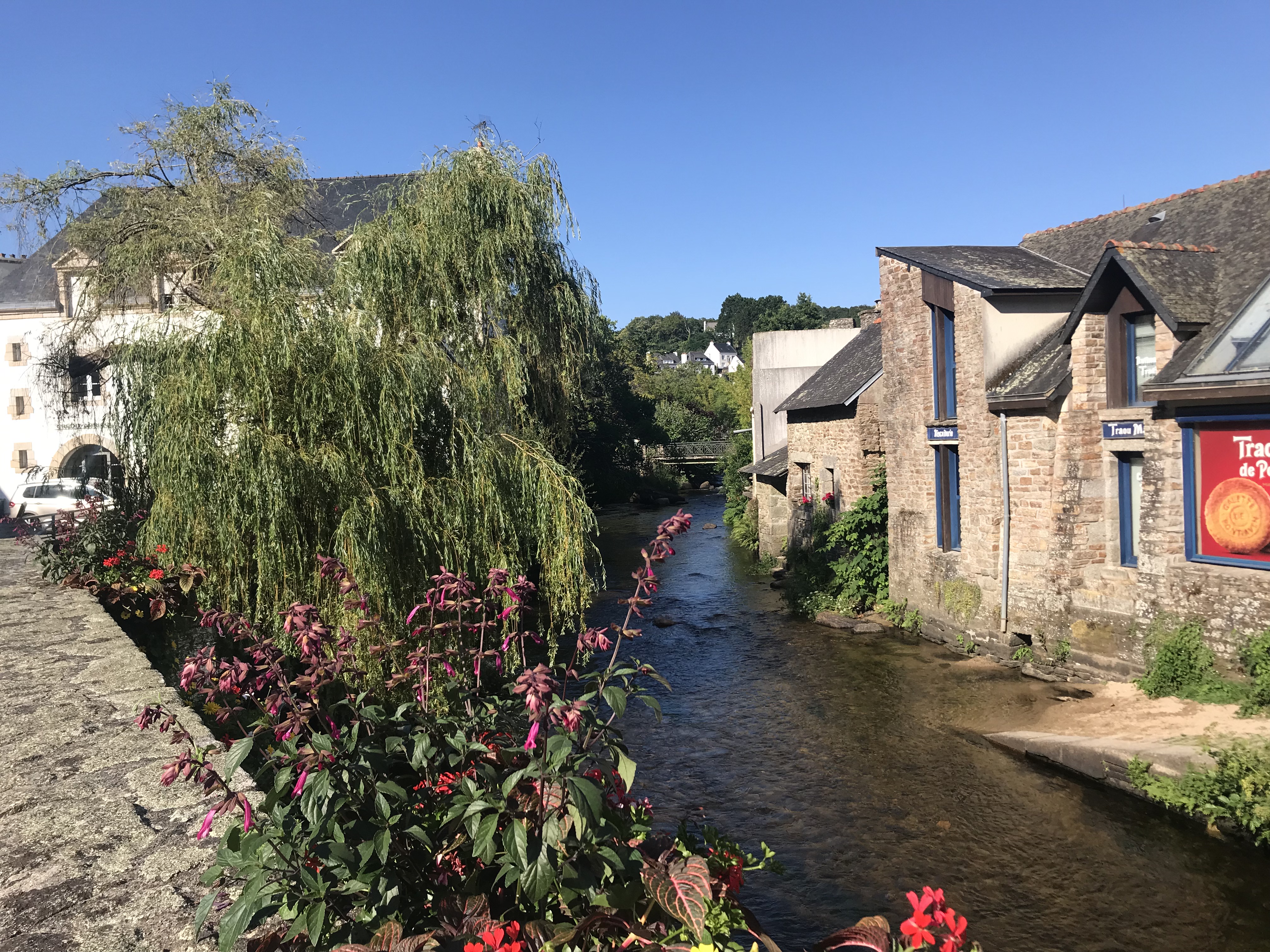
The shared history of Wales and Brittany

Bonjour, good morning, bore da, and demat dit

Over the past few weeks I have been researching the many historic and cultural links between Wales and Brittany. Its shown me that we have a shared history going back to the Stone Age. I find is staggering how little people seem to know about it.

So I have made a film which pulls the lid off all this shared history, culture and language and explores the following in more depth:

  • Neolithic standing stones
  • The arrival of the Celts and the tribes who settled in both places
  • The language we share and why
  • The place names you find in both countries
  • The co operation between both nations in the wars against the Saxons in Briton and the Franks in France
  • The Welsh saints who established the Breton church
  • King Arthur’s place in both nation’s history
  • What we have to show for it all today

Across 30 minutes we visit the places where all the action happened and the sources of all this information.

I also should pre-warn you that there are some beautiful beaches and pretty towns filled with mediaeval architecture in this video which might promote a need to go on holiday – I can only apologise.

Feel free to share on social media, please please please subscribe to my YouTube channel if you haven’t already and if you want to find out more about any of the places or stories featured in this video, then please scroll dwon past the video it self to where I have shared all you need to know.

Click above to watch the video about Wales and Brittany and their connections in history from King Arthur to Geoffrey of Monmouth.

Further Information on the places in this video

Hopefully you have enjoyed the content of this video, but I can understand if you are curious to know more about where it was filmed and the places mentioned.

Carnac

Carnac appears several times in this video. The opening beach sequences were filmed on La Grande Plage De Carnac but I also feature shots of the Kerlescan Standing Stones and Dolmen. The stones at Carnac have made the area a UNESCO World Heritage site. There is a bigger concentration of neolithic monuments in the area than anywhere else in Europe. If you visit, you will need to go the the visitor centre called ‘Maison de Megalithes’ where guided tours around the different sites can be organised. These days all the sites are fenced off so wandering about isn’t an option.

For more information click here to visit the Carnac Tourism website.

Other standing stones featured

In the item about standing stones I also featured standing stones in Trellech in Monmouthshire and at Pentre Ifan. Click on the hyperlinks to see more information on those places.

Vannes

Vannes (or Gwened in Breton) is a beautiful, fortified medieval town and port in southern Brittany.

It was named after the Venetti tribe who the Romans described as being the inhabitants of the area before the Roman invasion.

From a vistors perspective the town is very picturesque with loads of nice bars and restaurants. The old town walls are something special. For more information visit the toursim website by clicking here.

Places associated with Welsh Saints

Iles de St Cado is near the town of Belz in southern Brittany. It is where St Cadoc is remembered for his part in establishing the church in Brittany. You can get more information by clicking here.

I also featured the story of St Teilo and of St Gildas and included footage of the churches which now stand on the site of the medieval monastery at Llantwit Major and the Abbey and Llancarfan. Click on the links in blue in this paragraph for more information on each.

Posted on Leave a comment

Walking in the footsteps of kings on the Glamorgan Ridgeway | In search of the legacy of King Arthur.

There is so much history on view on the Glamorgan Ridgeway, but are claims to King Arthur’s legacy true?

The Glamorgan Ridgeway is a footpath through millennia. Its verges festooned with ancient monuments dating back to the Bronze Age. Are we walking in King Arthur’s footsteps up here? I investigate two sites with claimed links. One more promising than the other.

You also get to meet my dog, Jasper – the history hound, as he loves a good walk.

In this video I cover:

The course of the Ridgeway, where it starts and finishes, the ancient hill fort and the battle against the Romans at Mynydd-Y-Gaer, Llanbedr-Yn-Y-Mynydd (also known as Peterston-Super-Montum) and the claim that it is the site of Avalon, Mynydd Baeden and it’s potential to be the site of the Battle of Badon Hill and lots of stuff about King Arthur and the war between the ancient Britons and the invading Angles and Saxons. And the conspiracy that this period in history has been deliberately suppressed.

This video is written, presented and published by Welsh author, columnist, broadcaster and historian; Graham Loveluck-Edwards. I produce a series of videos about history, myths and legends from South Wales. I hope you enjoy this one. And if you do, please subscribe to this channel and feel free to share on social media.