Glamorgan History Walks & Talks | Summer 2025

Walker safety Information
On this page you will find all the information you need to make the right choice when choosing a walk. It will also give you safety information to help give you a peace of mind. This event is meant to be a bit of fun for everyone so lets make sure we all get to enjoy them without needless injury or stress.
Are these walks demanding?
All of these walks have been planned, risk assessed and graded. This is to help you decide if they are right for you. Some are suitable even for beginners or people who do not walk in the countryside regularly. Others are more suited to people with walking experience or who walk regularly. No challenging or dangerous routes have been selected. But please remember that we are in the countryside. There will be mud, livestock, barbed wire fences, waterways and styles that will need to be climbed over. There will also be the odd steep hill, so if you are concerned about your personal fitness levels please seek professional, medical advice before committing to a walk.
What should I look out for? How do I know which walk is right for me?
Every walk has its own webpage. Click here for a full list. On each page you will see all the information you need to choose a suitable walk. The page title will give you an indication of the key geography or components of the walk. The headings below the header ‘hero’ photo are as follows:
- History topics discussed
All these walks have a history theme, so this heading will give you an idea of what periods of history are likely to be covered. Or folklore re-told. It could be anything from the Stone Age to World War II to the Industrial Revolution. So if you have a particular interest in a particular topic, you can choose the walk where it is discussed.
2. Places we visit
Pretty self explanatory this one. It gives you an indication of the route we will be taking and the order we will be approaching points of interest in. It will also help you make sense of the next heading, just below it which is (3.) Map of the route.
4. Route information and data
This is a summary of the key information about the walk. What time and where are walkers to meet for the walk. Where the best place to park is. How far will we be walking (in miles), if there are hills involved, how high an elevation will we be climbing (in feet). And roughly how long do we expect to be walking for. Walking time allows for the fact that we will be stopping to talk about history and folklore and to highlight points of interest. Also allowing for refreshment and toilet stops on our way round.
5. Walker experience level advised: This walk is suitable for…
This is the important one. Every walk is graded to let you know if it is one anyone can enjoy, or if it would be more suited to seasoned walkers. Here are the grades to look out for and what they mean:
The “All Abilities’ button tells you that even people who do not walk in the countryside regularly should be able to enjoy this walk. Components that determine this level grading include:
- Approximately 5 miles or less in distance
- Less than 50% of the terrain is cross-country
- No tricky terrain such as boulders or anything which involves clambering
- Not too many styles to climb over and none of them more than 5 foot high.
- Fairly flat with no more than 1 steep hill (if any)
Some of these walks are suitable for wheelchairs and push chairs. Look out for the symbol onn thr calendar of walks.
The ‘Experienced Walkers’ button tells you that a walk may not be suitable to inexperienced walkers. May be they are longer than 5 miles, or are mostly on rough or hilly terrain. You get an explanation in each walk page what the reason for the orange button is. Having said all that, I want to make it clear the orange button does not mean that they are some sort of extreme endurance event. No one is going to get sponsored by Red Bull because they did an orange level walk.
So please, don’t be scared of the orange ‘experienced’ routes. Just be sensible.
Top tips for walkers
- You take part in these walks at your own risk.
- Please make sure you bring a water bottle with you to stay hydrated.
- The morning of the walk, make sure you have checked the weather forecast for the day. Dress for the weather we are expecting.
- Wear proper walking boots rather than trainers or shoes. They give you better ancle support, they grip the terrain better and in most cases they keep your feet dry.
- Even if the weather forecast suggests a damp or over cast day, bring a high factor sunscreen. At this time of year, even a short burst of sunshine is enough to burn.
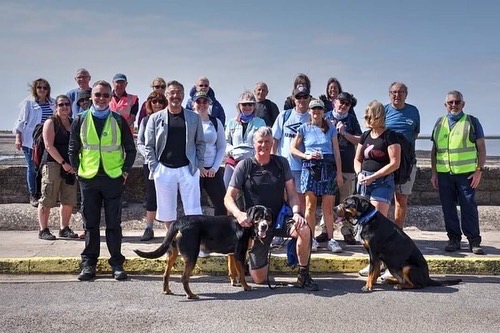
- If you bring dogs, please keep them on a lead and under control
- If you want to bring a pushchair go for a green walk, or if you do go for an orange one, double check if I have said in the walker level paragraph if the walk you want to go on is suitable. Also, only bring pushchairs that are designed for challenging terrain.
- Please obey the country code at all times. Here is a link to refresh your memory.
- Every effort is taken to make sure that you are kept safe on these walks. However, we can only do what can be reasonably expected of us. You will be warned about foreseeable hazards but due to the existence of chance, acts of God and unforeseeable hazards you are warned that you take part in these walks at your own risk and we cannot be held liable for loss of property, injuries or death.
- Please make sure the organisers are aware of any medical conditions which may have an impact on the walk.
- If you are walking alone, be sure that you have notified someone that you are attending and that you share their contact details with the organisers on the day in case of an emergency.
Peace of mind
Graham Loveluck-Edwards (your walk leader) is a qualified first aider [click to view certificate] and has event liability insurance [click to view certificate]. Hopefully neither of these things will be needed, but you may find it comforting to know these things exist.
So now it’s time to choose your walk. Click here for the index of walks.