One chapter of Glamorgan history better known than most is our industrial past.
We were behind so much. Lord Nelson insisted that the canon used by the Royal Navy were made from Merthyr Tydfil Iron. The anchor chains of choice were made in Pontypridd and when steam power took over from wind power, the furnaces on Naval ships would only burn coal from Welsh mines. And thats just one customer.
But the days of endless miles of pit winding towers and iron works are long gone. Today if you want to find clues to our industrial past you need to go on something of a voyage of discovery. And that is where the Glamorgan History Walks festival can come in handy. Because we uncover quite a few, and go to places where you can get a flavour of what it used to be like here.

The hang overs from a time a when coal was king are all around the county and are varied.
Our walks pass through many places which were once bustling mining communities and we uncover what is left to see as we visit them.
For example, at one time, a string of mines ran along the valleys of the Kenfig, Llynfi and Dyffryn Valleys north of Bridgend.
Cefn signal box has some fascinating momentoes of that time. With drams and exhibits and photographs to bring it all back to life for you.
We visit this amazing place as part of our Cefn Cribwr walk on [31st May]. Information on how to join this and any of our walks are available if you click the link (on the date).
Getting the coal from the valleys where it was mined to the end users all over the world was a gargantuant task. It resulted in the building of a maze of canals and railways.
We walk along the bank of the Glamorgan canal as part of our Llandaff walk [5th June]…[21st Aug]. And we see one of these amazing old railways still being used by steam locomotives on the Brecon Mountain Railway which we pass on our Pant and Pontiscill walk [5th July]. We also get a great view of the Pontiscill viaduct on this walk.
All of those railways and canals wound their way south from the valleys to any one of the areas coal exporting docks.
Cardiff, Swansea, Newport to name but a few.
But on our walks, we visit the biggest of them all.
Barry Dock. In its day it was the biggest coal exporting dock in the world. We walk above it, taking in the modern version of the view you can see in this picture on our two Barry Island walks [18th May]…[19th June].

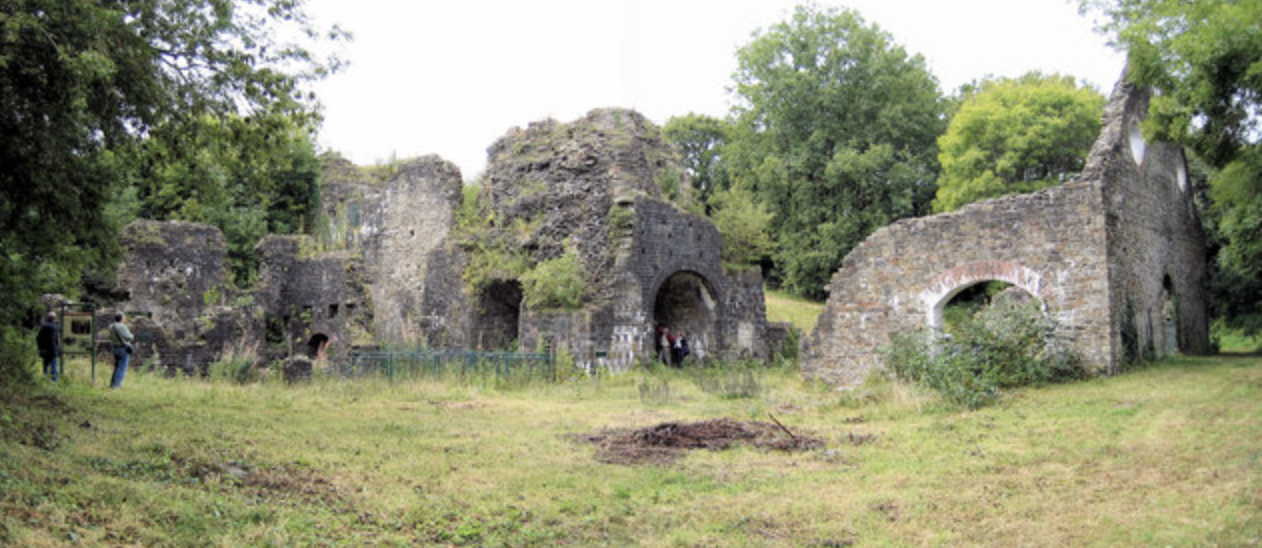
Then of course, there was the iron. Merthyr Tydfil was the iron capital of the world in its heyday, and we get to see the scars it made on the landscape on our Pant and Pontiscill walk [5th July]. We also visit the remains of the Bedford Iron Works as part of our Cefn Cribwr walk [31st May] which is pictured at the top of this item.
We also talk about the social impacts of this time and on the people who worked in these places. This poem being a great example of what life was like for the workers of this era.
A full list of walks in this year’s itinerary are available on this link. You can also read reviews of people who took part last year here.
So go ahead. Choose a walk. And I’ll see you there.
